
Are Amazon Bubble Mailers Recyclable? It Depends on the Material
Yes, Amazon bubble mailers are recyclable, but most cannot go in your curbside bin. The white and blue plastic bubble mailers are made from polyethylene film, usually Low-Density Polyethylene (LDPE #4), which jams sorting machinery at Materials Recovery Facilities. These mailers should instead be taken to store drop-off bins that accept plastic film. Amazon's paper padded mailers, by contrast, are fully curbside recyclable because they are made from multi-layer Kraft paper with water-based cushioning. Before recycling either type, remove or cut off shipping labels and make sure the mailer is clean and dry. Understanding the material difference is the first step to keeping e-commerce packaging waste out of landfills and avoiding consumer recycling confusion.
The Anatomy of E-Commerce Mailers
To understand why some packaging can be tossed in a household blue bin while other types cause havoc at recycling facilities, it helps to examine how modern shipping envelopes are engineered. Over the past decade, e-commerce giants have shifted away from bulky corrugated cardboard boxes for lightweight items, opting instead for flexible mailers that decrease shipping weight and dimensional freight volume.
However, this logistical efficiency has introduced significant complexity into municipal waste streams. Amazon uses three primary categories of mailers, each with completely distinct recycling pathways:
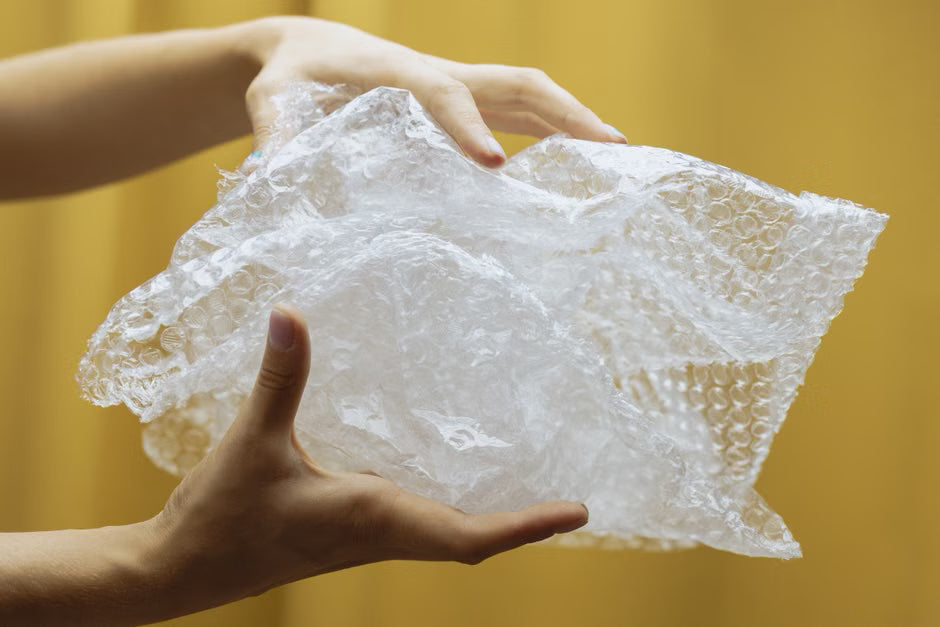
- All-Plastic Bubble Mailers (LDPE #4): These are flexible, lightweight mailers with a white exterior, a blue or grey interior lining, and an integrated bubble layer. Made from Low-Density Polyethylene, they are waterproof and shock-resistant. While LDPE resin is chemically recyclable, its thin, stretchy film structure makes it unsuitable for standard mechanical sorting systems.
- Paper Padded Mailers (Cushioned Kraft): Introduced to eliminate single-use plastics, these mailers consist entirely of multi-layered Kraft paper with a water-based, aerated cushioning material sandwiched in between. They provide protective shock absorption comparable to plastic bubble wrap, but break down into clean wood pulp during standard hydrapulping paper recovery processes.
- Composite/Hybrid Bubble Mailers (Paper Exterior with Plastic Bubble Lining): Older or third-party seller mailers often feature a brown or yellow Kraft paper outer shell bonded tightly to an inner plastic bubble wrap lining. These composite materials represent the most challenging packaging waste because separating the bonded plastic film from the paper fiber is virtually impossible for domestic recyclers. As a result, hybrid mailers are neither curbside recyclable nor accepted in store film drop-offs.
Why Plastic Bubble Mailers Wreak Havoc on Curbside Sorting Facilities
Many consumers engage in "wishcycling"—the well-intentioned practice of tossing non-recyclable items into curbside bins in the hope that workers will somehow process them. When flexible plastic mailers enter a municipal Materials Recovery Facility (MRF), they create immediate operational hazards.
Modern MRFs rely on high-speed conveyor belts, spinning disc screens, optical sorters, and magnetic separators designed to separate rigid containers (like milk jugs, aluminum cans, and PET soda bottles) and flat cardboard. Thin plastic film acts unpredictably in these mechanical environments:
- Equipment Entanglement: Flexible polyethylene wraps around spinning shafts, discs, and rotating screens within minutes, choking the sorting machinery.
- Operational Downtime: Facilities are often forced to shut down their entire processing lines multiple times a day so technicians can manually cut out tangled plastic films using box cutters and utility knives.
- Material Stream Contamination: Film plastics can float or wrap around cardboard and paper bales, downgrading the quality of recyclable paper pulp and rendering entire truckloads unmarketable to paper mills.
Because of these mechanical risks, municipal recycling guidelines strictly prohibit plastic mailers, plastic shopping bags, dry cleaning bags, and stretch wrap from curbside bins.
How Store Drop-Off Film Recycling Works
While curbside recycling excludes LDPE #4, dedicated store drop-off streams handle plastic film efficiently. Retail drop-off bins—commonly found at grocery stores, supermarkets, and big-box home improvement centers—bypass municipal sorting facilities entirely.
When you deposit clean, dry plastic mailers into these bins, the collected material is baled together on-site with clean commercial stretch film and pallet wraps. Because this stream contains only flexible polyethylene films without rigid plastics, glass, or metals, it does not pass through mechanical sorting screens. Instead, recyclers shred, wash, and pelletize the film into clean polyethylene resin pellets. Manufacturers then use this post-consumer resin to produce new plastic items, including outdoor composite decking, commercial trash liners, agricultural sheeting, and new shipping bags.
Step-by-Step Guide: Preparing Mailers for Proper Disposal
Ensuring that packaging successfully passes through the recycling supply chain requires minimal preparation before disposal:
- Inspect the How2Recycle Label: Look at the printed label on the bottom corner or back of the Amazon envelope. A label stating "Store Drop-Off" indicates an LDPE plastic mailer. A label indicating "Curbside Recyclable" or "Paper / Cardboard" confirms it can go directly into your municipal paper bin.
- Empty the Mailer Completely: Remove all packing slips, receipt slips, promotional flyers, stickers, and product inserts.
- Manage the Shipping Label: Thermal shipping labels contain non-recyclable adhesives and synthetic backing. For paper mailers, peeling or cutting out the dense shipping label prevents adhesive contamination during pulping. For plastic film mailers, cut away the thick paper shipping label prior to dropping the envelope in a retail collection bin.
- Keep It Clean and Dry: Oil, food residues, or trapped moisture can cause mold growth or ruin entire recycling batches. Only recycle envelopes that are completely dry and free from liquid contamination.
- Remove Tear Strips or Non-Paper Components: If a paper padded mailer includes reinforced plastic tear strips or synthetic pull strings, snip them off before placing the paper envelope into your home recycling container.
Frequently Asked Questions About Amazon Bubble Mailers
Can I put Amazon bubble mailers in my curbside recycling bin?
Plastic Amazon bubble mailers should not go in your curbside recycling bin under any circumstances. They are made from LDPE #4 plastic film, which easily wraps around the high-speed rotating discs, gears, and sorting screens at municipal Materials Recovery Facilities. This causes machinery jams, maintenance delays, and worker safety risks. However, Amazon paper padded mailers made entirely of multi-layer Kraft paper and water-soluble cushioning are fully curbside recyclable and can safely be placed in your regular residential recycling cart alongside cardboard and mixed paper.
Where can I recycle plastic Amazon bubble mailers?
Plastic Amazon bubble mailers can be recycled at dedicated store drop-off locations that accept flexible polyethylene film. Most national supermarket chains, large pharmacy retailers, and home improvement stores feature collection receptacles near their main entrances or customer service desks. These programs consolidate flexible packaging directly for specialized film recyclers. You can find convenient collection bins in your area by searching the Plastic Film Recycling directory.
Are Amazon paper padded mailers really recyclable?
Yes, Amazon paper padded mailers are fully recyclable in municipal curbside programs. Unlike traditional bubble mailers that glue plastic bubble wrap to an outer paper shell, these newer envelopes are engineered entirely from natural wood pulp fibers. The interior protective cushioning uses a water-based, expandable glue matrix that suspends air pockets between Kraft paper sheets. When processed at a commercial paper recycling mill, the water-based binder dissolves during the hydrapulping process, allowing 100% of the paper fibers to be reclaimed for new cardboard, paperboard, and boxboard production.
What should I do with the shipping label on an Amazon mailer?
You should remove or cut off the shipping label before recycling any Amazon mailer. Most shipping labels are manufactured with thermal coatings, synthetic polymers, and heavy pressure-sensitive adhesives. On plastic film mailers, a paper label acts as a contaminant in the polyethylene melt stream. On paper padded mailers, large sticky adhesive patches can create sticky residue ("stickies") that gum up paper mill screening systems. The simplest method is using scissors to snip out the small corner containing the shipping label and discarding that piece in the regular trash before recycling the rest of the envelope.
Can I reuse Amazon bubble mailers instead of recycling them?
Yes, reusing packaging is even more environmentally beneficial than recycling because it requires zero energy to reprocess the material. Amazon plastic bubble mailers and paper envelopes are tear-resistant and durable enough for multiple journeys. You can reuse them to ship personal packages, mail gifts to friends, pad fragile items during household moving, or store delicate holiday ornaments. Simply cover or black out the original barcode and recipient address with a permanent marker or paste a new shipping label directly over the old one.
What is the difference between LDPE #4 and other plastics?
LDPE #4 stands for Low-Density Polyethylene, a thermoplastic known for its flexibility, low tensile strength, and high moisture resistance. It is commonly used to produce bread bags, dry cleaning covers, stretch wrap, and e-commerce bubble mailers. In contrast, rigid plastics such as PET #1 (clear water and soda bottles), HDPE #2 (milk jugs and detergent bottles), and PP #5 (yogurt cups and medicine containers) possess rigid molecular structures that hold their shape. Municipal sorting equipment is built to handle rigid containers, which bounce and separate cleanly on mechanical screens, while flexible LDPE film flattens, floats, or tangles around moving equipment.
Does Amazon have a packaging recycling program?
Amazon does not currently offer a direct mail-back or take-back program where consumers return empty packaging to Amazon fulfillment centers. Instead, the company focuses on redesigning packaging upstream to eliminate hard-to-recycle materials. In recent years, Amazon has increasingly phased out plastic air pillows and plastic bubble mailers in favor of curbside-recyclable paper padded mailers, paper dunnage, and custom-fit cardboard boxes. Consumers holding plastic mailers rely on the broader national retail drop-off recycling infrastructure.
How can businesses choose recyclable mailers?
Businesses shipping products should consider how easily their end customers can dispose of shipping materials responsibly. While plastic film mailers offer low upfront purchasing costs and waterproof protection, they place the burden of store drop-off recycling on the customer, which often results in envelopes ending up in the landfill.
Paper-based packaging options—such as rigid cardboard envelopes, corrugated presentation boxes, and curbside-recyclable padded paper mailers—provide a frictionless disposal experience for consumers because they can go straight into any household recycling bin. For luxury goods, jewelry, and delicate items, businesses frequently pair recyclable outer paper mailers with durable, reusable gift boxes and protective inserts. Choosing unlaminated, single-material packaging with clear recycling instructions helps brands reduce their environmental footprint while building positive customer goodwill.