
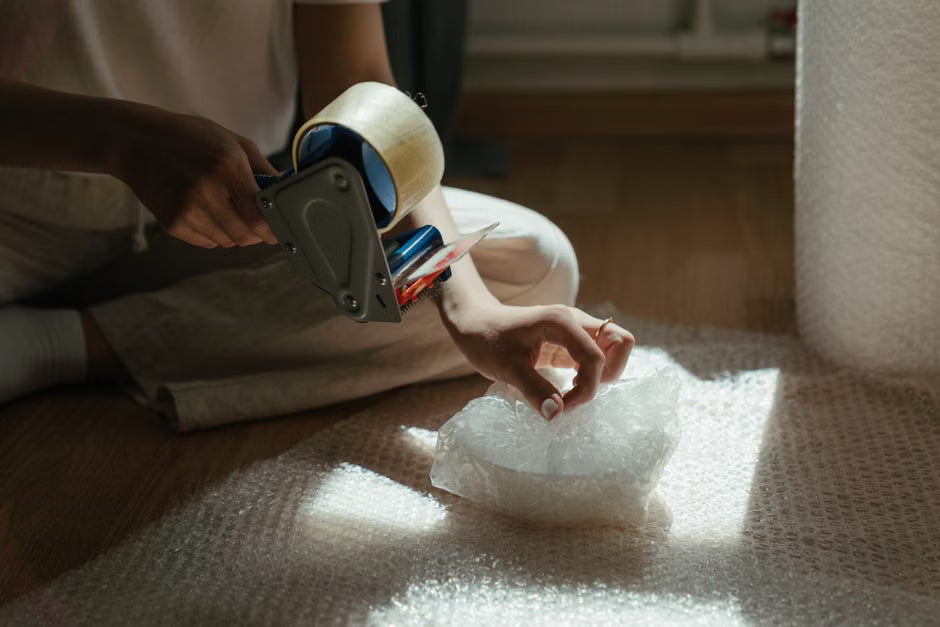
What Is the Best Tape for Bubble Wrap Packaging?
The best tape for bubble wrap packaging is polypropylene packing tape formulated with hot-melt synthetic rubber adhesive for heavy parcels or acrylic adhesive for long-term storage, while low-tack painter's tape is best for delicate presentation boxes. Because bubble wrap is made of low-density polyethylene (LDPE) film with naturally low surface energy, weak or dried-out adhesives peel off over time.
Using high-performance industrial box sealing tape specifications ensures high tensile strength and split resistance when wrapping parcels. The table below compares the standard tape varieties used for securing bubble wrap:
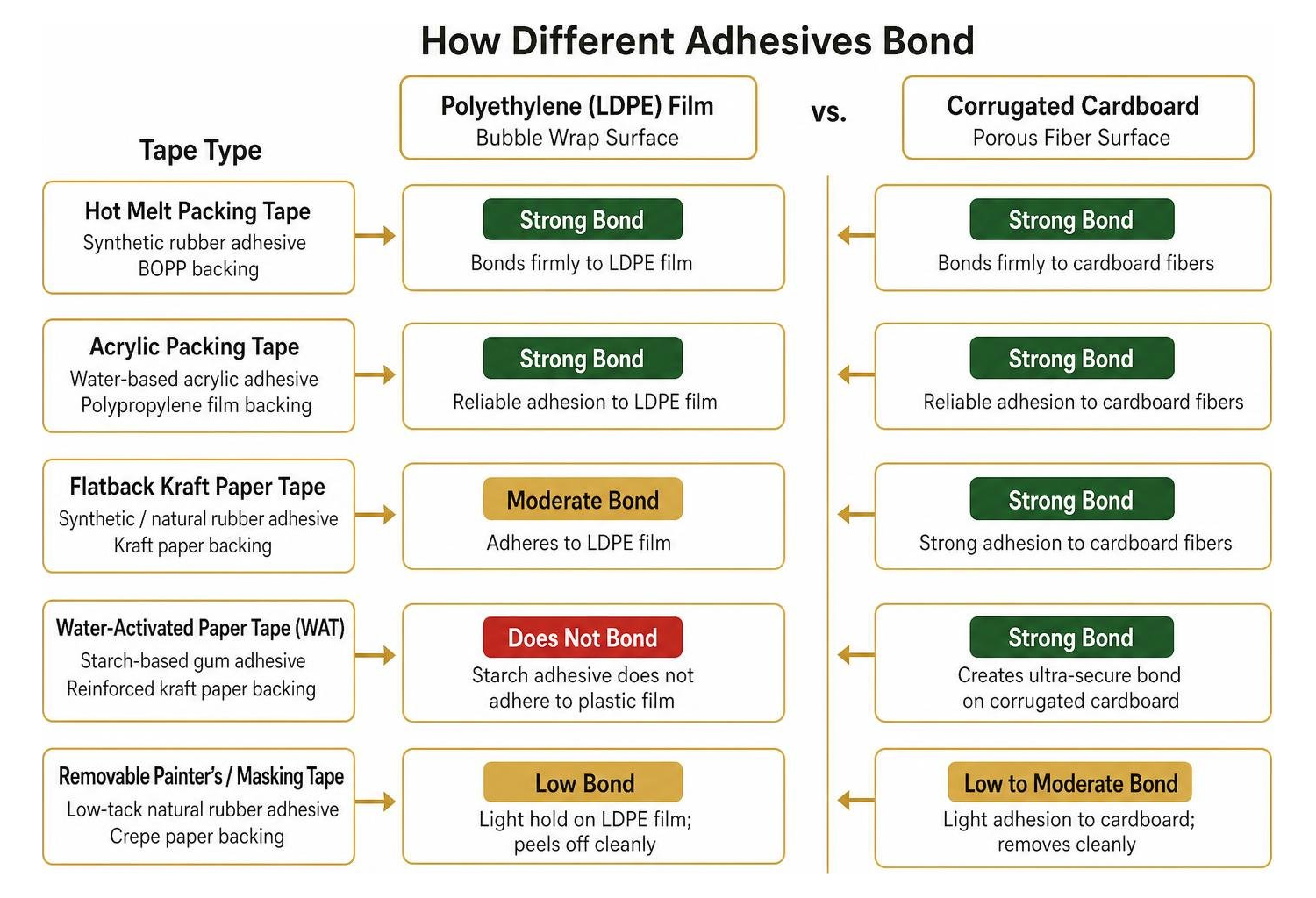
| Tape Type | Adhesive Chemistry | Backing Material | Best Use Case | Clean Removal |
|---|---|---|---|---|
| Hot Melt Packing Tape | Synthetic rubber | Biaxially oriented polypropylene (BOPP) | Heavy parcels, moving boxes, high-tack hold | Low (Bonds firmly to LDPE) |
| Acrylic Packing Tape | Water-based acrylic | Polypropylene film | Long-term storage, UV/temperature swings | Moderate (Tears bubble wrap if pulled fast) |
| Flatback Kraft Paper Tape | Synthetic / natural rubber | Kraft paper | Eco-conscious shipping, hand-tear packing | Moderate |
| Water-Activated Paper Tape (WAT) | Starch-based gum | Reinforced Kraft paper with fiberglass | Corrugated box sealing (Not for plastic film) | Low (Bonds only to porous fibers) |
| Removable Painter's / Masking Tape | Low-tack natural rubber | Crepe paper | Luxury unboxing, jewelry boxes, temporary hold | High (Peels cleanly without residue) |
Acrylic vs Hot Melt Clear Packing Tape
Clear plastic packaging tape typically relies on either acrylic or hot-melt synthetic rubber adhesives:
- Hot-Melt Adhesive Tape: Offers instant tack and high shear strength. It forms an immediate, permanent bond to polyethylene bubble wrap and rough fiberboard. It performs exceptionally well when bundling thick layers of protective wrap under tension.
- Acrylic Adhesive Tape: Features outstanding UV resistance and temperature stability. As highlighted in high-grade acrylic carton sealing tape data, quality acrylic formulations operate across a wide temperature range (typically 35°F to 200°F). Acrylic is the top choice if your wrapped packages will sit in unheated storage or endure humid shipping transit over extended periods.
Kraft Paper Tape and Water-Activated Options
Self-adhesive flatback Kraft paper tape offers quick application because it can be torn cleanly by hand without needing a blade. While water-activated gummed tape (WAT) creates an ultra-secure, tamper-evident bond on corrugated cardboard boxes, starch adhesives do not adhere to smooth plastic film. When working directly with bubble wrap, opt for pressure-sensitive self-adhesive paper tape rather than water-activated rolls.
Low-Tack Painter's Tape and Removable Adhesives
For small retail parcels, delicate items, and jewelry gift boxes, standard heavy-duty packing tape can create an aggressive bond that turns opening the package into an ordeal. High-grade painter's tape or low-tack masking tape provides sufficient hold to keep bubble wrap folded around a jewelry insert or presentation box while peeling away effortlessly upon arrival.
Selecting Tape by Item Weight and Fragility
Every package presents unique shipping challenges. Heavy, dense items require maximum tensile containment, while delicate luxury goods require neat presentation and surface scratch prevention.
Choosing the Best Tape for Bubble Wrap on Heavy Shipments
When wrapping heavy tools, metal decor, or bulky home goods, your tape must withstand significant transit vibration and shifting weight:
- Select heavy-duty packing tape boasting a tensile rating between 30 lb/in and 47 lb/in with a total thickness of 3.0 mil to 3.1 mil.
- High-tack tapes formulated for weights up to 80 pounds keep dense multi-layer bubble wrap from bursting at the seams during carrier drops.
- Wrap the tape completely around the circumference of the bundle so the tape anchors back onto its own backing.
Choosing the Best Tape for Bubble Wrap on Fragile Jewelry and Collectibles
When shipping delicate items such as rings, watches, or luxury accessories from collections like Sardinia, your wrapping must protect fine finishes:
- Pair small 3/16-inch bubble cushioning wrap with neat, lightweight tape strips.
- Fold an edge of the tape back onto itself by 1/4 inch to create an easy-peel pull tab for your customer.
- Keep the tape strictly on the outer plastic wrap so no adhesive comes into contact with the jewelry box, velvet pouch, or tarnishing-sensitive metals.
Step-by-Step: How to Properly Apply Tape to Bubble Wrap
Correct Bubble Orientation and Surface Buffers
Always lay the bubble wrap flat with the bubbles facing upward before placing your item on top:
- Bubbles Inward: Wrapping with the air pockets facing inward cushions the item directly and prevents friction against the outer packaging.
- Smooth Side Outward: The smooth outer plastic layer creates an even, flat surface that allows tape adhesives to make full contact.
- Add a Buffer for Sensitive Finishes: Plastic bubble cushioning can leave circular pressure marks on high-gloss TV screens, polished lacquer, or varnished wood during temperature spikes. Wrap sensitive surfaces in a protective layer of unprinted packing paper before applying the bubble wrap.
The Perimeter Banding Technique
A single patch of tape over a seam can work loose during rough shipping handling. Use the perimeter banding technique instead:
- Fold the bubble wrap snugly around the item, tucking in open side ends like a gift parcel.
- Unroll your tape and wrap it completely around the horizontal midpoint of the package.
- Overlap the starting point of the tape by at least 2 to 3 inches.
- Add a secondary vertical band around the folded ends to lock in the sides and seal the cushioning securely.
Using Tape Dispensers and Packaging Accessories
Using the right packaging tools speeds up fulfillment and keeps your workspace organized:
- Handheld Tape Guns: Feature an adjustable tension brake to ensure consistent stretch without tearing the film.
- Fall-Back Tabs: Built-in dispenser tabs stop the loose tape edge from curling back onto the roll, ending the frustration of searching for lost tape ends.
- Ergonomic Hand Dispensers: Lightweight pistol-grip dispensers reduce hand fatigue when preparing high-volume daily shipments.
Common Bubble Wrap Taping Mistakes to Avoid

Taping Directly Onto Finished Surfaces and Electronics
Never apply packing tape directly across wood, painted metal, leather, or electronic screens. Heavy-duty acrylic and rubber adhesives can strip wood finishes, pull paint away, and leave sticky residues that attract dirt. For sensitive electronics, use specialized antistatic bubble wrap (distinguished by its pink color) to prevent electrostatic discharge, and ensure tape only touches the outer wrap.
Over-Taping and Popping Air Cells
Wrapping a box in a continuous cocoon of tape wastes material and compromises protection:
- Applying excessive tension crushes the air cells, destroying the cushioning properties of the wrap.
- It creates an unpleasant unboxing experience for your customer, who may resort to sharp knives that can scratch the delicate products inside.
- A single, well-placed band of 2-inch tape around the perimeter provides superior structural hold without crushing the air pockets.
Sustainability and Packaging Recyclability
Clear bubble wrap is manufactured from Low-Density Polyethylene (#4 LDPE plastic). Because LDPE film can tangle sorting machinery, it must be recycled through dedicated grocery store drop-off bins rather than standard curbside bins:
- When using paper packing tape with bubble wrap, customers must separate the paper from the plastic wrap before recycling.
- Using a single strip of clear polypropylene packing tape allows the entire plastic wrap bundle to remain within the #4 flexible film recycling stream at designated drop-off locations.
Frequently Asked Questions About Bubble Wrap Tape
What is the easiest way to remove tape from bubble wrap without popping bubbles?
The cleanest removal technique is creating a folded "pull tab" on the tape edge during packing. If you are opening an incoming package without tabs, slide the rounded tip of scissors gently under the tape seam and snip along the band rather than pulling aggressively or stabbing into the air cells with a utility blade.
Does standard packing tape stick permanently to polyethylene bubble wrap?
Yes. Heavy-duty packing tape with hot-melt synthetic rubber or solvent-free acrylic adhesive forms a permanent mechanical bond with low-density polyethylene film. While it may pull apart cleanly if peeled immediately, the bond strengthens over several hours, ensuring it remains intact throughout domestic and international transit.
Can you use duct tape to secure bubble cushioning?
Duct tape is not recommended for securing bubble cushioning or shipping parcels. Duct tape uses a thick rubber adhesive on a woven cloth backing that degrades quickly under temperature fluctuations, leaving a sticky, gummy residue on surfaces. Additionally, duct tape does not create a reliable, long-term bond with cardboard shipping boxes.
Conclusion
The right packaging materials turn a potentially stressful delivery into a seamless unboxing experience. By pairing proper wrapping techniques with durable protective bubble wrap and the right adhesive tape, you ensure every piece of fine jewelry, delicate keepsake, or fragile gift arrives safely, securely, and ready to impress.