

Why Felt Lined Jewelry Trays Are Essential for Drawer Organization
To make custom felt lined jewelry trays at home, measure your drawer interior, cut a rigid base and interlocking divider strips from 1/8-inch MDF or basswood, wrap each component tightly in dense wool felt with fabric glue, and assemble the padded grid into your drawer.
Opening a drawer to find a tangled heap of fine chains, scratched watch crystals, and misplaced earring backs is a universal frustration. Every time a standard drawer pulls out or pushes shut, loose items shift, colliding and causing micro-abrasions across polished metals and soft gemstones.
Lining compartments with dense, soft fabric acts as a shock absorber. The texture of felt naturally grips items, preventing them from sliding across rigid wooden or plastic drawer bottoms. Furthermore, isolating individual pieces in padded, dedicated compartments eliminates metal-on-metal friction entirely.
| Lining Material | Fiber Source | Durability & Lifespan | Cushioning & Pile | Best Application |
|---|---|---|---|---|
| Merino Wool Felt | 100% natural sheep wool | High; naturally resilient, anti-pilling | Dense, firm, matte texture | Luxury watches, fine gold, everyday valet trays |
| Synthetic Craft Felt | Polyester or acrylic | Moderate; can thin out under heavy friction | Soft, lightweight, flat pile | Budget DIY drawer dividers, lightweight jewelry |
| Plush Velvet | Woven silk, rayon, or polyester | High; luxurious look, delicate nap | High plushness, deep cushion | Ring rolls, high-end display cases, gemstones |
Benefits of Merino Wool and Soft Fabric Linings
When engineering premium organizers, Merino wool felt stands out as an exceptional lining choice. Unlike synthetic alternatives that can wear down or pill over time, natural wool fibers feature natural crimp and elasticity. A 3mm thick merino wool felt sheet provides dense, non-abrasive padding that holds its shape under the weight of heavy bangles and chronographs.
The soft, non-abrasive surface protects anti-reflective watch crystals and delicate finishes. For high-end accessories and timepieces, pairing protective felt trays with soft watch pillows ensures that leather bands and metal bracelets retain their form without suffering drawer scuffs.
Comparing Felt, Velvet, and Suede Storage Materials
Choosing between felt, velvet, and faux suede depends on your collection's aesthetic and practical needs. Velvet features a raised pile that reflects light beautifully, making it a classic choice for traditional Velvet Jewelry Boxes. It creates a plush bed that cradles rings and diamond pavé pieces securely.
Felt, on the other hand, delivers a clean, modern, architectural look. Its flat, dense structure makes it significantly easier to cut cleanly with a rotary blade without the fraying edges typical of woven velvets. For watch lovers and modern vanity setups, pairing felt drawer dividers with padded cushions creates a structured, streamlined presentation that balances soft protection with crisp lines.
Tools and Materials for Custom DIY Organizers
Building bespoke drawer inserts requires only a few accessible tools and materials. Choosing stable, rigid substrates ensures your insert retains its structure over years of daily drawer movement.
- Core Material: 1/8-inch or 1/4-inch Medium-Density Fiberboard (MDF) or lightweight basswood sheets.
- Lining Fabric: 2mm to 3mm thick wool felt or high-density synthetic crafting felt.
- Measuring & Cutting Tools: Heavy-duty steel ruler, self-healing cutting mat, and a 45mm rotary fabric cutter or sharp utility knife.
- Adhesives: Acid-free spray adhesive, fabric glue, or high-tack double-sided adhesive sheets.
- Padding & Ring Rolls: Closed-cell foam dowels, pipe insulation, or dense quilt batting.
- Base Finishing: Natural adhesive cork sheeting for non-slip tray bottoms.
Selecting Base Trays and Rigid Core Materials
A durable tray starts with a stable structural core. Solid wood options like Canadian oak or walnut deliver unmatched beauty for freestanding tabletop designs. For interior drawer inserts, dense MDF board or smooth basswood offers flat, warp-resistant stability at a fraction of the weight and cost.
If you prefer to bypass cutting base boards entirely, you can customize existing empty wooden or acrylic trays by lining them with hand-cut felt inserts and modular dividers tailored to your accessories.
Choosing Wool Felt, Cork Backing, and Adhesives
When assembling your materials, consider using an adhesive-free approach for the main floor of the tray. Precision-cutting dense wool felt allows it to sit perfectly flat under its own weight. This makes it easy to lift the liner out for quick dusting or to switch color schemes later on.
If you are affixing felt to vertical divider walls, always select a non-toxic, acid-free spray adhesive or fabric glue to avoid off-gassing, which can accelerate metal oxidation. Adding a natural cork sheet to the exterior underside of your tray prevents sliding inside drawers and protects delicate dresser tops from scratches.
Step-by-Step Guide to Building Custom Drawer Inserts
Creating a custom jewelry insert allows you to tailor every square inch to your personal collection. Follow these practical steps to build your own.
Designing Custom Compartments for Felt Lined Jewelry Trays
Start by auditing your collection. Group your accessories into categories: small daily earrings, cocktail rings, long pendant necklaces, rigid bangles, and watches.
Plan your compartment grid accordingly:
- Small square grids (2" x 2" to 3" x 3"): Ideal for stud earrings, cufflinks, and delicate charms.
- Elongated channels (8" to 10" long x 2.5" wide): Perfect for laying tennis bracelets, leather watch straps, and chain necklaces flat without tangling.
- Open deep wells: Great for oversized hoops, sunglasses, or statement cuff bracelets.
Integrating specialized modular organizers into your overall layout ensures that both small studs and large statement accessories have dedicated, non-overlapping homes.
Preparing the Base and Cutting Precision Dividers
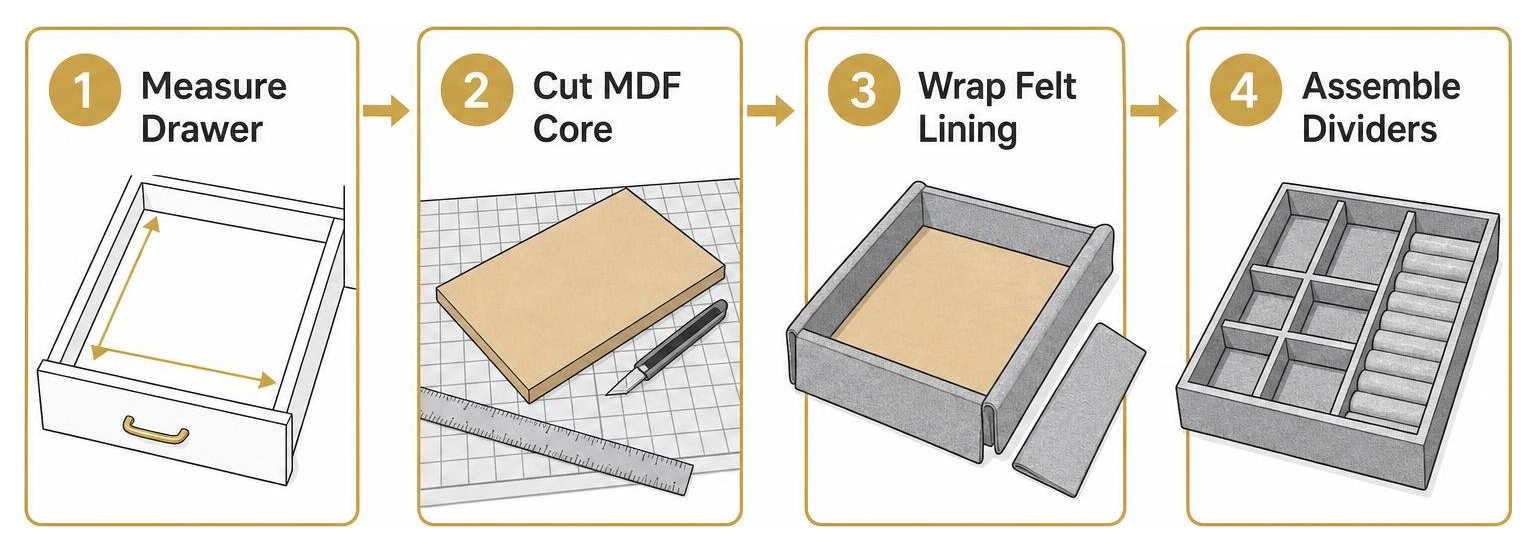
- Measure the Drawer Interior: Measure your drawer's inside width, depth, and vertical clearance twice. Subtract 1/8 inch (3mm) from the total width and depth to ensure your base slides in smoothly without binding.
- Cut the Base Board: Using your steel ruler and utility knife, score and cut your 1/8-inch MDF or basswood sheet to the final dimensions on your cutting mat.
- Cut Internal Divider Strips: Cut divider strips to your desired height (typically 1.5 to 2 inches). For interlocking cross-sections, mark half-way slots along the intersecting strips and cut small 1/8-inch notches so they slot together securely in an egg-crate pattern.
- Dry-Fit the Assembly: Place your bare base and interlocking grid into the drawer to verify that the fit is flush and square before applying fabric.
Wrapping Inserts and Assembling Ring Rolls
- Wrap the Base Board: Cut your base felt piece 1/2 inch larger than the MDF board on all four sides. Lightly apply spray adhesive to the board, center it onto the felt, and smooth out any air bubbles. Miter the corners with scissors, fold the 1/2-inch margins over the back edges, and press firmly.
- Wrap the Divider Grid: Cut strips of felt wide enough to wrap around both sides of each divider strip. Apply fabric glue smoothly, wrap the felt tightly over the top edge of each strip, and trim any excess flush at the base. Slot your notched dividers together.
- Build Custom Ring Rolls: Cut foam dowels or rolled cotton batting strips to the width of your designated ring section. Wrap each roll in felt, securing the seam underneath with fabric glue. Place multiple rolls side-by-side inside the compartment; the tension between the rolls will hold your rings upright, similar to a dedicated retail Ring Display.
- Final Base Bonding: Secure the wrapped divider grid to your felt-lined base board using a thin bead of craft glue along the bottom edges.
Modular Stacking and Multi-Room Organization Ideas
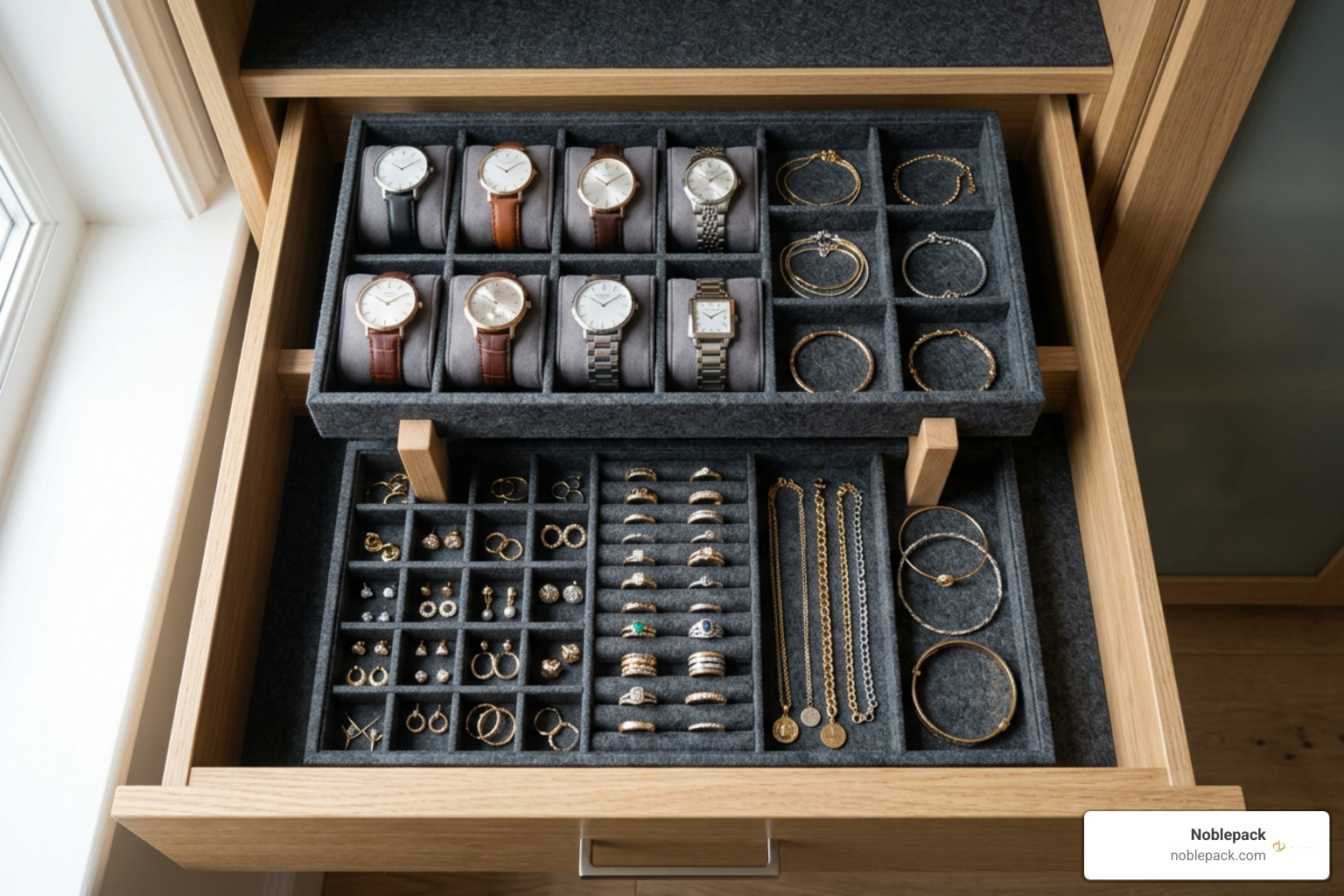
Drawer organization does not have to be limited to a single flat layer. By taking advantage of vertical space, you can multiply your storage without taking up more square footage.
Layering Modular Inserts in Deep Drawers
Standard wardrobe drawers often range between 6 and 8 inches deep, leaving substantial vertical space unused if you only line the bottom. Building low-profile, 2-inch high trays allows you to stack two or three tiers neatly in a single drawer.
- Top Tier (High-Rotation Items): Keep everyday wedding bands, daily stud earrings, and your favorite watch in a half-width top tray that slides effortlessly left to right.
- Lower Tier (Occasion & Heirloom Pieces): Store statement necklaces, seasonal brooches, and sentimental items in the bottom tray.
- Drawer Slide Compatibility: If you use heavy drawers, pairing tiered inserts with 100 lb soft-close drawer slides ensures that rapid opening and closing movements do not shift stacked tiers.
For those managing extensive collections or displaying pieces commercially, utilizing stackable Presentation Trays provides a practical way to keep inventory sorted, dust-free, and easy to access.
Creative Uses for Felt Lined Jewelry Trays Beyond the Wardrobe
Felt-lined organizer trays provide utility across the entire home:
- Entryway Console Valet: A shallow oak and charcoal wool tray catches car keys, pocket knives, sunglasses, and daily rings right at the door.
- Office Desk Organizer: Keep premium metal pens, wireless earbuds, smartwatches, and charging cables from rattling across hard desktop surfaces.
- Bedside Nightstand Catchall: A soft felt dish on your nightstand provides a gentle resting place for reading glasses, rings, and watches before bed.
For gifting or safely storing specific standalone items on open shelves, pairing individual trays with elegant Jewelry Boxes 1 creates a coordinated, beautiful setup throughout your living space.
Cleaning and Caring for Felt Storage Inserts
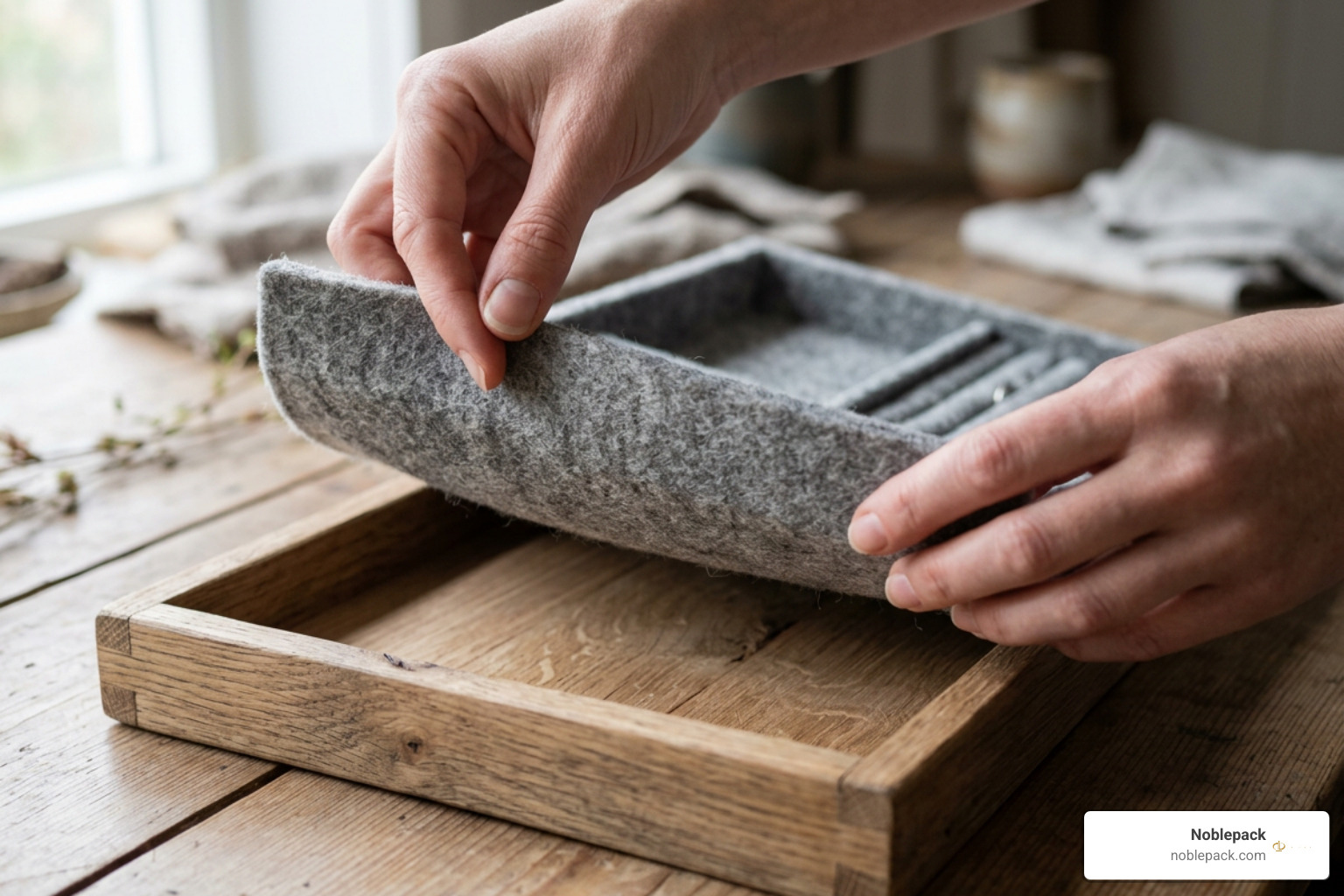
Felt is durable, but its soft, fibrous texture can collect dust, lint, and pet dander over time. Proper maintenance keeps your trays clean without damaging the fabric fibers.
- Routine Dry Dusting: Use a standard sticky lint roller or a piece of low-tack painter’s tape wrapped around your fingers to lift dust and dander from the tray compartments.
- Adhesive-Free Liner Maintenance: If your base felt is not glued down, simply lift the precision-cut wool insert out of the tray every few months. Shake it out over a wastebasket, wipe down the underlying wood or MDF base with a dry microfiber cloth, and drop the felt back in place.
- Spot Cleaning Stains: If makeup or lotion transfers onto the felt, do not soak the tray. Dampen a clean microfiber cloth with cool water and a tiny drop of wool-safe detergent. Gently dab the spot—never scrub—and allow it to air-dry completely away from direct sunlight or heat sources.
- Vacuuming Tight Corners: Attach a soft brush nozzle to your vacuum cleaner and run it on low suction across the divider grooves and ring rolls to clear out trapped particles without loosening the fabric.
Frequently Asked Questions About Felt Jewelry Storage
How do you clean dust and debris from felt jewelry trays?
The safest way to clean felt organizers is with a standard sticky lint roller or a mini vacuum brush attachment on low suction. For unglued, precision-cut wool felt liners, lift the fabric out of the base, shake it out, wipe the empty tray base with a dry microfiber cloth, and replace the insert. Avoid wet washing or saturating felt with water, as moisture can weaken structural adhesives and cause natural wool fibers to shrink or warp.
Can felt lined inserts prevent fine jewelry from tarnishing?
Felt-lined inserts slow down the tarnishing process by creating a clean, low-friction barrier and shielding metals from airborne dust inside closed drawers. Because tarnishing is primarily driven by exposure to sulfur compounds and humidity in the air, storing pieces inside enclosed, felt-lined compartments limits the air circulation that causes oxidation. For high-tarnish items like sterling silver, pairing felt organizers with anti-tarnish storage strips or placing them inside closed drawers offers the most reliable long-term protection.
What is the average cost to build versus buy felt drawer inserts?
Making a custom DIY felt drawer insert typically costs between $15 and $35 in raw materials (such as MDF boards, craft glue, and premium wool felt sheets). Pre-made commercial drawer inserts generally range from $25 to over $150 depending on craftsmanship, materials (such as solid oak or genuine merino wool), hardware slides, and overall dimensions. DIY builds offer complete size customization for odd-sized vintage drawers, while ready-made commercial trays save assembly time.
Conclusion
Customizing your drawer space with tailored felt inserts turns a cluttered accessory drawer into a tidy, practical, and beautiful setup. By selecting dense wool felt, cutting sturdy divider cores, and planning compartments around the jewelry you wear most, you protect your collection against scratches, tangles, and daily wear.
Whether you want to build a custom multi-tiered drawer insert or elevate your retail presentation counters, exploring professional showcases and displays from Noblepack will help you find the right foundation, packaging, and organizational tools for every piece in your collection.