
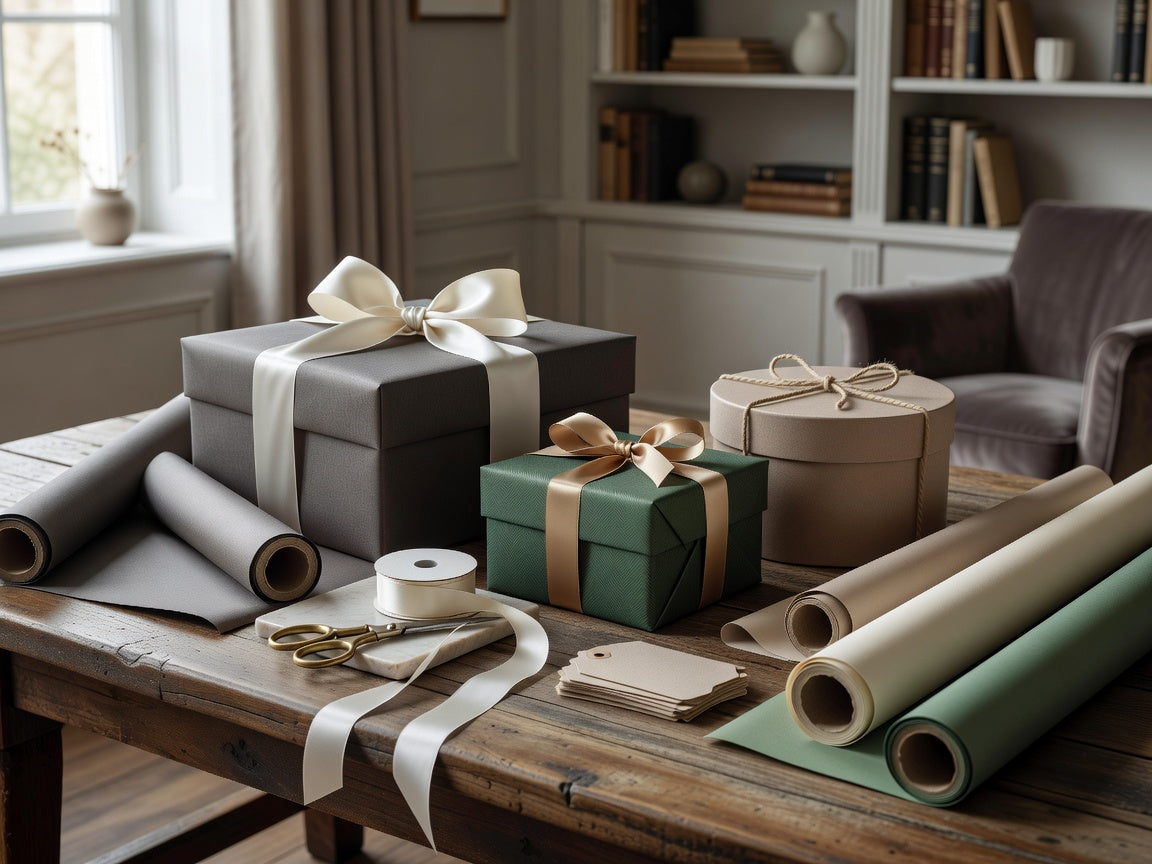
Gift Box Wrapping Paper: The Fast Path to a Boutique Holiday Look
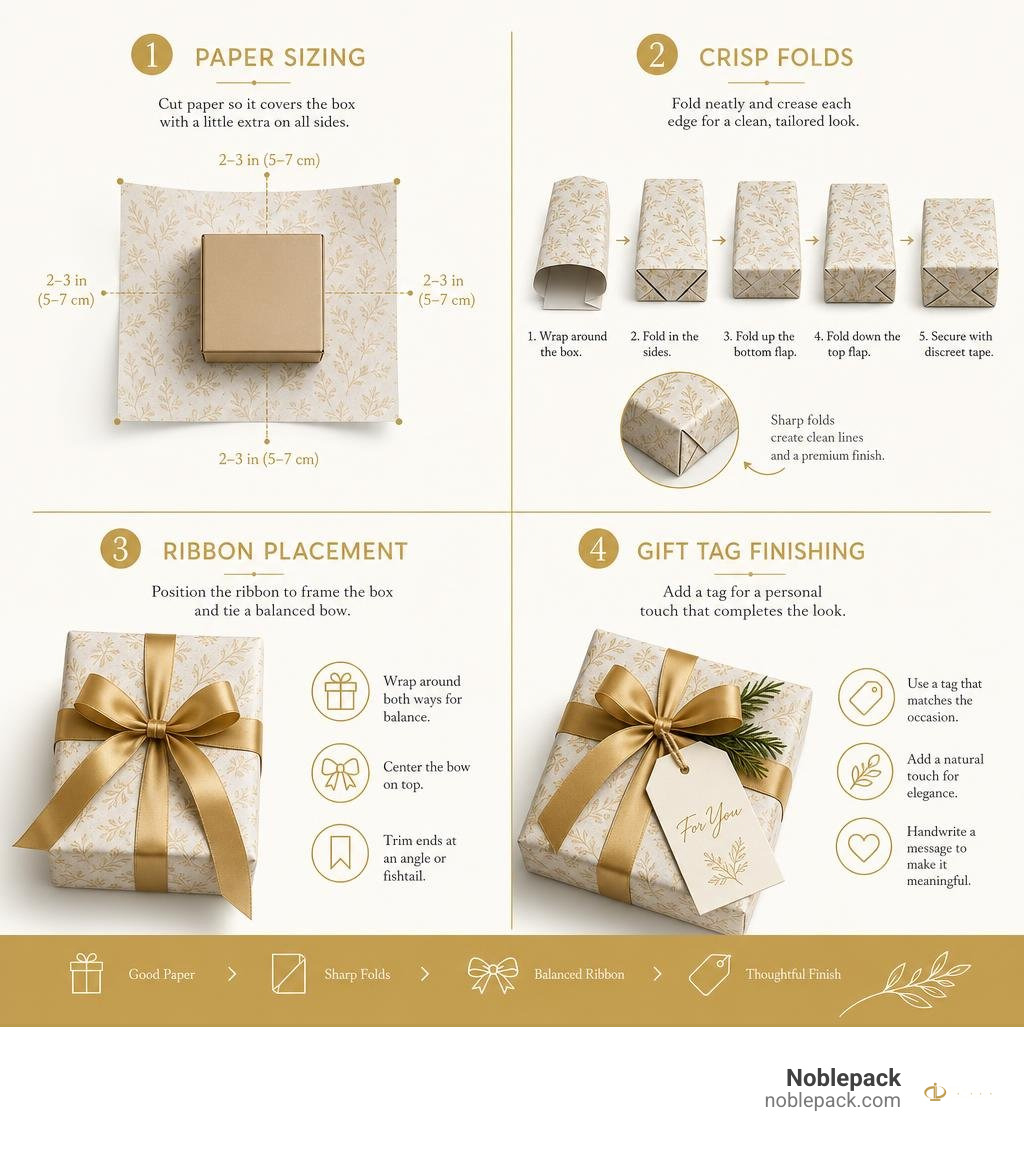
To wrap a gift box like a pro, choose paper that suits the occasion, cut enough to cover the box with a small overlap, pull it snug, and crease every fold before securing it with discreet tape. Finish with a ribbon and a simple tag. Clean edges and balanced proportions matter more than expensive decorations.
For a high-end look, use sturdy paper that resists tearing and holds a sharp crease. Matte, metallic, patterned, and natural kraft gift box wrapping paper can all work well - the best choice depends on your holiday color palette, the size of the box, and the feeling you want the recipient to have when they open it.
For jewelry retailers and boutique owners, the wrap is part of the product experience. A well-wrapped box helps an affordable item feel considered, branded, and ready to give.
I'm Dannah Davies, and I'll show you how to create polished holiday gift presentation with practical materials and repeatable techniques.
Choosing the Best Gift Box Wrapping Paper for Any Occasion
The secret behind high-end retail packaging isn't magic—it comes down to material science. If you have ever tried wrapping a sharp-cornered jewelry box with flimsy department store wrap only to watch it rip at the edges, you know how frustrating light paper can be.
When shopping for paper, always inspect the weight and finish. Paper weight is measured in grams per square meter (gsm). Standard budget wraps often sit below 60gsm, leading to accidental tears and transparency where dark inner boxes show through. Premium gift wrap typically features a 90gsm weight or heavier. A 90gsm fine art paper provides total opacity, resists tearing over sharp corners, and produces the razor-sharp creases needed for a tailored, boutique appearance.
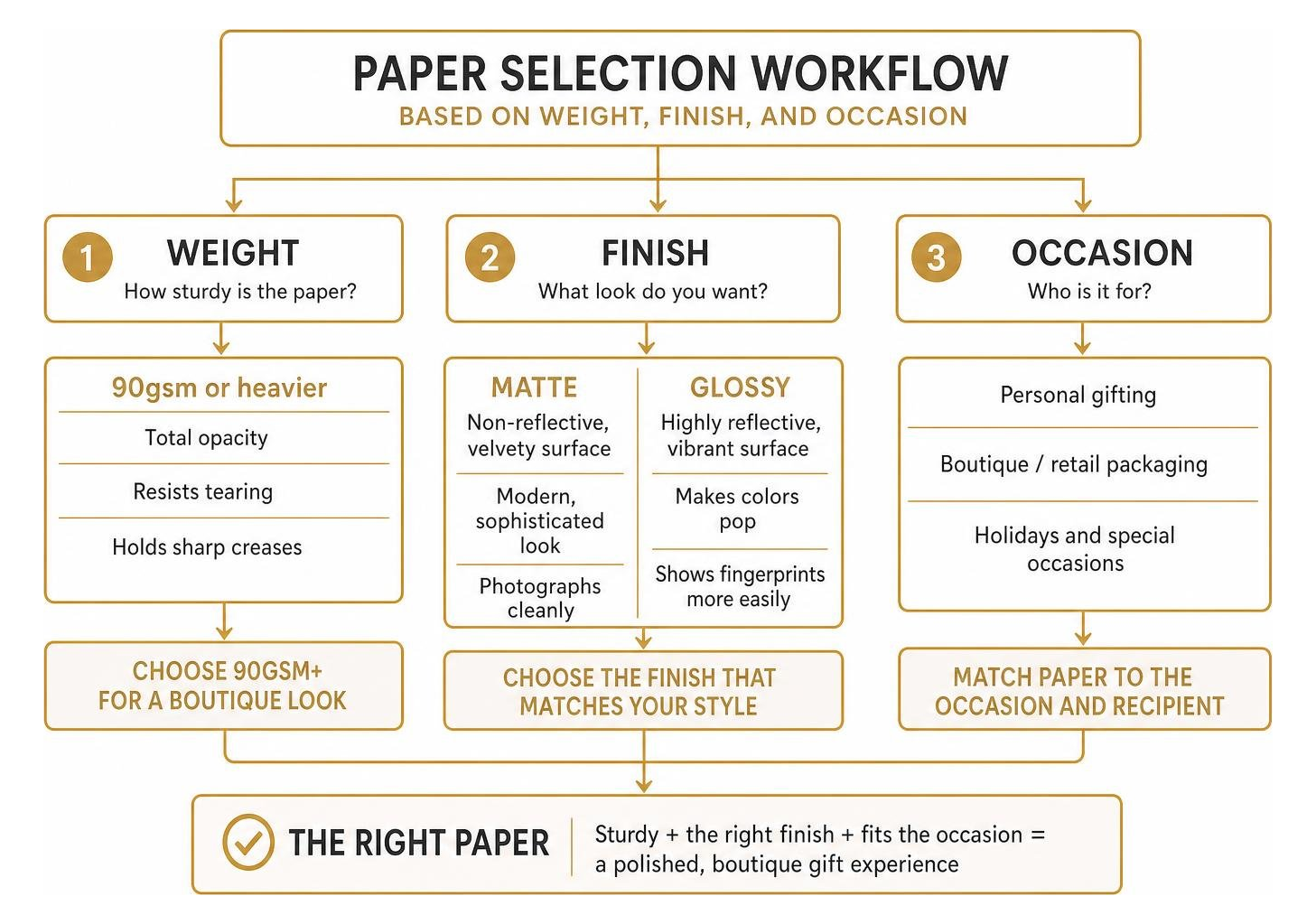
Beyond weight, consider the paper's finish and environmental credentials:
- Matte Finish: A non-reflective, velvety surface that diffuses light beautifully. Matte paper offers a modern, sophisticated aesthetic and photographs cleanly under bright indoor holiday lighting.
- Glossy Finish: Highly reflective and vibrant. Glossy papers excel at making deep jewel tones and dynamic colors pop, though they show fingerprints more easily than matte alternatives.
- FSC Certification: The Forest Stewardship Council (FSC) mark confirms that the wood pulp used to manufacture the paper comes from responsibly managed, sustainable forests. As eco-friendly packaging now accounts for roughly 35% of new product launches in the gift sector, certified sustainable papers are an excellent standard for modern gift-giving.
- Metallic and Foil Finishes: Perfect for winter celebrations, metallic accents (like foil stamping on heavy emerald or navy grounds) reflect ambient light and make modest boxes look instantly luxurious.
- Curated Gift Wrapping Sets: Many collections pair complementary rolls, satin ribbons, and coordinated tags together. For those who want curated variety without the guesswork, exploring curated wrapping sets provides ready-to-use color harmonies right out of the box.
To help you match the right wrap to your celebration, review this comparison of standard paper grades:
| Paper Type | Typical Weight | Surface Texture | Best Occasions & Uses | Key Benefits |
|---|---|---|---|---|
| Fine Art Matte Wrap | 90–120 gsm | Smooth, non-glare | Luxury jewelry, weddings, corporate gifts | Holds crisp folds, hides box graphics |
| Foil / Metallic Paper | 100–140 gsm | Mirror or brushed sheen | Winter holidays, milestone anniversaries | Dramatic light reflection, festive feel |
| Heavyweight Patterned | 80–100 gsm | Coated semi-gloss or satin | Birthdays, Christmas, family gatherings | Broad design variety, tear resistance |
| Natural Kraft Paper | 70–90 gsm | Uncoated, tactile | Rustic holidays, sustainable branding | Fully recyclable, pairs well with twine |
| Printed Tissue Paper | 15–25 gsm | Delicate, translucent | Box filler, inner wrapping, gift bag accents | Protects delicate surfaces, adds volume |
For specialized holiday palettes, luxury rolls with intricate botanical styling on heavy bases add timeless elegance, while iconic shades such as robin's egg blue instantly evoke upscale jewelry heritage. Alternatively, classic metallic foil and patterned collections offer dependable seasonal versatility for all types of gift exchanges.
Sourcing Bulk and Budget-Friendly Supplies
Whether you are running a boutique preparing for holiday orders or outfitting your home wrapping station for dozens of family presents, buying supplies piecemeal gets expensive fast. Sourcing high-volume rolls and wholesale supplies ensures consistency across all your gifts while significantly dropping your per-unit cost.
If you regularly present delicate accessories, sourcing jewelry gift boxes bulk gives you a stable, uniform foundation to work with. Pairing rigid boxes with high-density white tissue paper (often sold in 35-sheet value packs) cushions the contents against shifting during transit and creates a multi-layered reveal.
How to Wrap a Box Like a Professional: Step-by-Step Guide
Gift-wrapping professionals rely on exact measurements and structured hand movements rather than quick improvisation. Achieving an immaculate presentation is an orderly sequence where each fold builds directly on the previous one. For an in-depth look at box construction and presentation foundations, refer to our jewelry packaging ultimate guide 2026.
Measuring and Cutting Your Gift Box Wrapping Paper
The most common cause of messy, bulky wrapping is using too much paper. Excess material bunches at the ends, creating lumpy sides that refuse to tape flat.
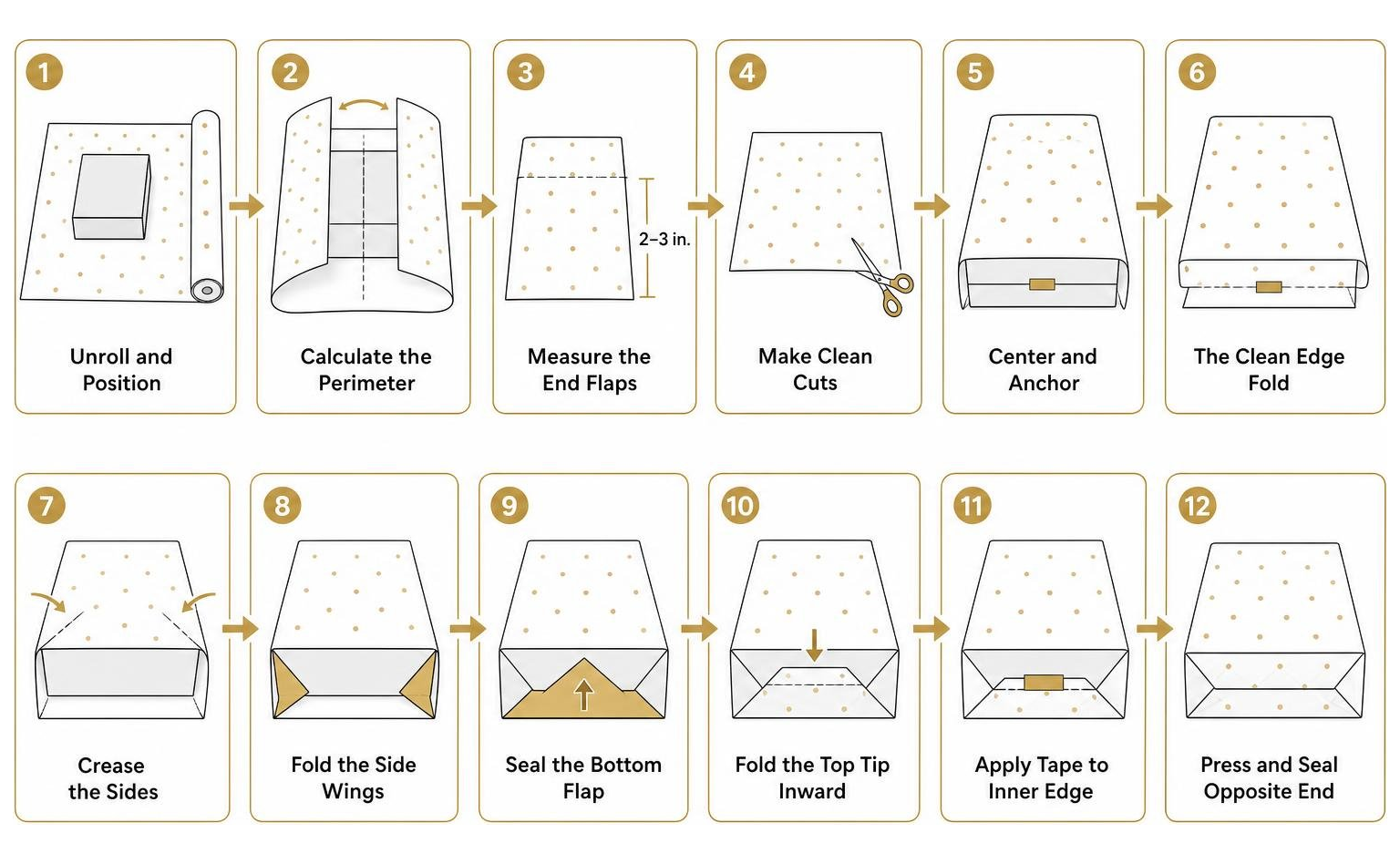
- Unroll and Position: Unroll your paper pattern-side down on a wide, clean table. Place your gift box upside-down in the center. Placing the box upside-down ensures all seam lines and tape rest on the bottom of the box, keeping the top immaculate.
- Calculate the Perimeter: Pull the roll end up and over the top of the box until it covers about half the surface. Bring the roll side over to meet it. You need just enough paper to wrap around all four sides with a 1-to-2-inch overlap along the bottom seam.
- Measure the End Flaps: For the ends of the box, use the 4-finger rule (or measure approximately 2 to 3 inches beyond the box edge). The side paper should extend roughly three-quarters of the box's vertical height. If the side flap extends longer than the box is tall, trim the excess; otherwise, the flap will fold awkwardly over the opposite side.
- Make Clean Cuts: Hold the paper taut and slide sharp scissors straight across the sheet. If your paper features a printed grid on the back, follow the gridline to maintain square corners.
Folding, Creasing, and Securing Flaps
Once your paper is cut to exact dimensions, assemble the wrap using clean tension:
- Center and Anchor: Align the longest sides of the box parallel to the cut edges of your paper. Pull the first side up tightly across the bottom of the box and secure it with a small piece of double-sided tape placed along the center.
- The Clean Edge Fold: Take the opposite edge of the paper and fold the cut edge inward by half an inch. This creates a neat, factory-finished seam that hides any jagged scissor cuts. Pull this folded edge firmly over the initial sheet and secure it with double-sided tape.
- Crease the Sides: Turn to one open end of the box. Using your index fingers and thumbs, push the top edge of the paper downward against the box side, creating two crisp 45-degree angled wings (trapezoids) on the left and right sides.
- Sharpen Every Edge: Run your thumbnail or the side of a bone folder along every fold to form razor-sharp creases.
- Fold the Side Wings: Fold the left and right triangular wings inward flat against the box.
- Seal the Bottom Flap: Fold the bottom triangular flap upward. For a clean finish, fold the raw top tip of this flap inward by 1/4 inch, apply a strip of double-sided tape along its inner edge, and press it firmly against the box side. Repeat this process on the opposite end.
Elevating Your Presentation with Ribbons, Bows, and Tags
Once your base box is neatly wrapped, embellishments provide texture, depth, and contrast. Selecting ribbons and accents should match the proportions of the box: small jewelry boxes require delicate 3/8-inch or 1/4-inch ribbons, while large apparel boxes look best with wide 1.5-inch to 2-inch double-faced satin or grosgrain bands.
- Satin and Grosgrain Ribbon: High-density satin creates a sleek, reflective finish that complements matte wrapping paper. Grosgrain introduces a ribbed, tactile texture that pairs naturally with rustic or patterned wraps.
- The Classic Cross Wrap: Cut a length of ribbon roughly five times the length of your box. Center the ribbon across the top of the box, wrap both ends underneath the box, cross them over each other on the bottom, bring them back up over the sides at a 90-degree angle, and knot them tightly in the center.
- Hand-Tied Bows: Instead of sticking a plastic peel-and-stick bow on top, tie a classic bow using the remaining ribbon ends. Form two even loops, cross and knot them as you would a shoelace, then cut the ribbon tails at an acute 45-degree angle or inverted "V" notch to prevent fraying.
- Tonal Layering: Create depth by layering ribbons. Lay a wide, neutral ribbon (such as pewter gray or cream) flat against the box, then center a narrower metallic or jewel-toned ribbon directly over it before tying your final knot.
- Gift Tags and Personalization: Place a heavy cardstock tag beneath the ribbon knot. Use simple calligraphy or ink stamps for the recipient's name. For retail displays or branded gift-giving, integrating custom packaging for jewelry allows you to showcase embossed logos, hot-stamped branding, and matching color schemes effortlessly.
Creative Techniques for Irregular Shapes and Sustainable Gifting
Not every holiday gift arrives in a convenient square box. When wrapping plush items, cylindrical containers, or unusually shaped goods, standard wrapping paper can easily tear if forced over sharp angles.
- The Tissue Paper Cushion Method: For fragile or odd items, never stretch wrapping paper directly across irregular contours. Wrap the item in three to four layers of protective tissue paper, nestle it securely inside a rigid outer container or cardboard tube, and wrap the exterior box using standard methods.
- Cylinder and Tube Wrapping: When wrapping bottles or candle containers, cut the paper width to wrap around the circumference plus 1 inch. Leave enough paper on both ends to cover the radius. Fold the bottom paper inward in small, overlapping pleats, securing the center with a single tape disc. Repeat on top, or gather the top paper together and tie it securely with ribbon like a holiday cracker.
- The Origami Gift Bag: If you lack a box entirely, convert a sheet of heavy wrapping paper into a bespoke gift pouch. Fold the paper into a tube, fold the bottom upward by 3 inches, open the bottom fold into a diamond shape, crease the top and bottom corners inward past the centerline, and tape flat. Drop your gift inside, fold the top over twice, and punch two holes for a ribbon handle.
Eco-Friendly and Alternative Gift Box Wrapping Paper Options
Sustainable gift wrapping has expanded well beyond dull brown parcels. With a few design choices, eco-friendly wrapping can rival the most luxurious department store presentations:
- Natural Kraft Paper: Uncoated kraft paper is 100% recyclable and compostable. Its warm, neutral tone acts as a canvas for botanicals. Pair natural brown kraft with dark green velvet ribbon, natural jute twine, or fresh winter greenery (such as pine needles, eucalyptus, or dried orange slices).
- Furoshiki Fabric Wraps: Furoshiki is a traditional Japanese technique that uses reusable square cloths (such as cotton bandanas, linen napkins, or silk scarves) to wrap gifts. The fabric is gathered and tied in decorative knots across the top, eliminating the need for single-use tape or paper entirely.
- Recycled and Seed Paper: Post-consumer recycled papers and plantable seed papers provide a tactile, artisan finish while keeping materials entirely out of landfills.
Common Gift Box Wrapping Mistakes and How to Avoid Them
Even seasoned wrappers occasionally encounter uneven seams or loose folds. Keep an eye out for these five frequent pitfalls:
- Using Too Much Paper: As highlighted in our measurement guide, excess paper creates bunched, messy side flaps. Always measure your sides to match three-quarters of the box height and trim off any excess.
- Visible, Yellowing Tape: Clear household tape often appears glossy, yellow, and obvious on matte or luxury paper. Always use double-sided adhesive tape positioned entirely beneath the paper folds, or opt for a satin-finish invisible tape.
- Dull Cutting Blades: Dull scissors catch and tear high-gsm fine art paper, leaving frayed, jagged edges. Use dedicated craft scissors or a rotary cutter, and keep blades sharp.
- Loose, Baggy Paper: If paper is not pulled firmly against the box during the initial fold, the completed package will feel hollow and shift during transit. Keep your non-dominant hand firmly pressed on the box while pulling the paper taut with your dominant hand.
- Ignoring Pattern Alignment: When using directional or geometric patterns (such as stripes, plaid, or holiday trees), align the pattern squarely across the top plane of the box before applying tape. A crooked pattern instantly undermines an otherwise neat wrap.
Frequently Asked Questions about Gift Box Wrapping
What paper weight is best for a luxury gift box look?
A paper weight between 90gsm and 120gsm represents the gold standard for luxury gift wrapping. Papers in this weight bracket are completely opaque, preventing dark inner boxes or branding from showing through. They also hold razor-sharp, crisp creases along box edges and resist corner punctures when handled.
How do you wrap fragile or irregularly shaped items without a standard box?
The safest method is to wrap the fragile item in several sheets of acid-free tissue paper for internal cushioning, then place it inside a sturdy two-piece gift box. If a rigid box is not available, place the item inside a gusseted kraft gift bag filled with crinkle paper, or use the Furoshiki fabric wrapping technique to pad and secure the item softly without stressing rigid seams.
Can holiday wrapping paper be recycled or reused?
Plain, uncoated wrapping paper and natural kraft paper can be placed directly in curbside recycling bins. However, papers with metallic foil stamping, glitter, synthetic gloss coatings, or residual plastic tape cannot be recycled in standard facilities. To reuse high-quality paper, carefully slice through the tape seams, flatten the sheet, and gently iron the reverse side on the lowest heat setting with no steam to remove wrinkles.
Conclusion
Creating a boutique-quality gift presentation at home does not require complicated gadgets or expensive services. By selecting a durable, high-gsm wrapping paper, taking a few seconds to measure precise margins, and sharpening every fold with clean double-sided adhesive, you can turn any holiday present into a memorable unboxing experience.
Whether you are preparing family presents for the holiday tree or outfitting your retail shop for seasonal shoppers, elevate your presentation today with our premium gift box wrapping paper collection.