
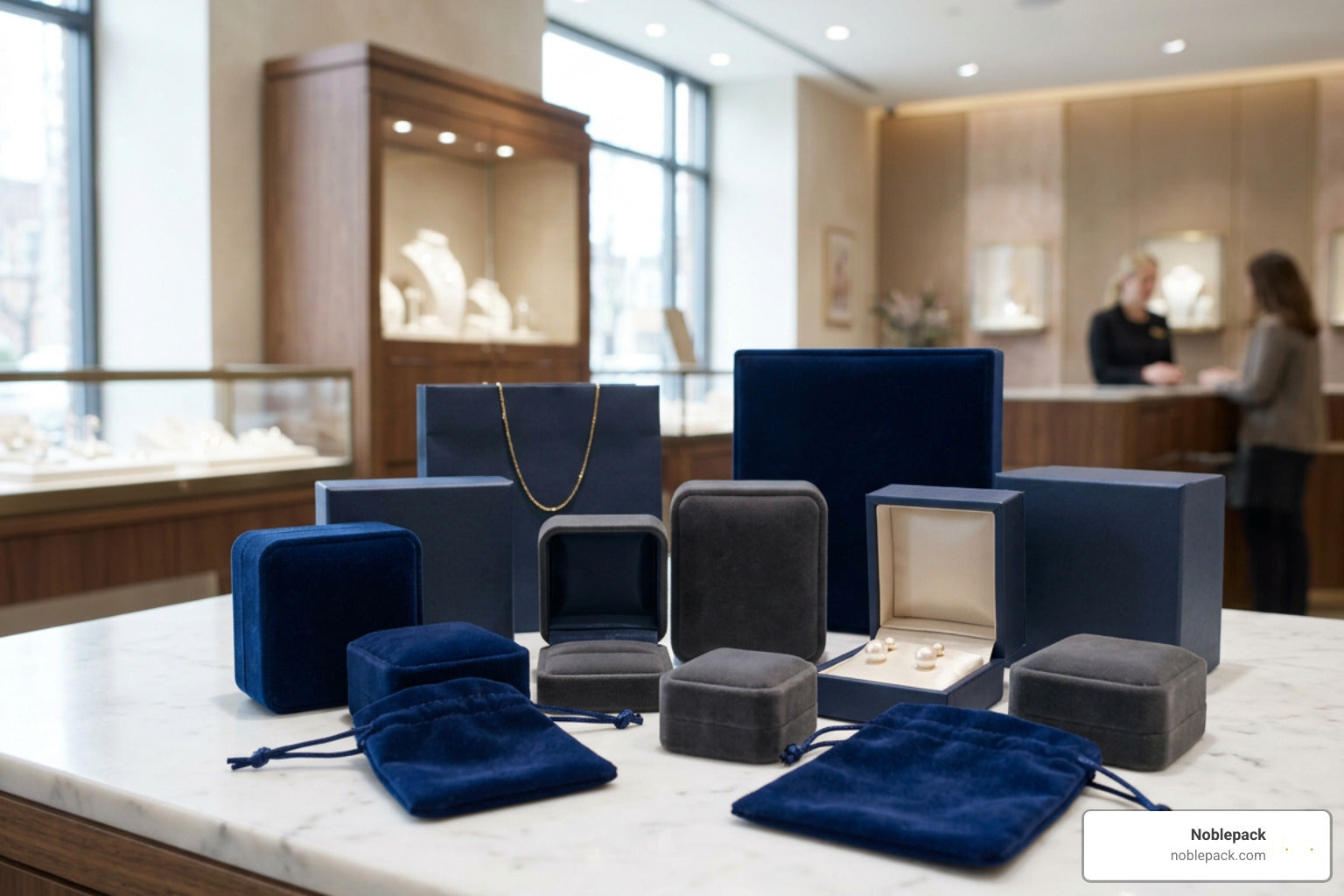
Why Choosing the Right Jewelry Packaging Distributor Matters
A jewelry packaging distributor is one of the most important — and most overlooked — partners for any jewelry retailer or boutique owner.
Here's a quick answer to what a jewelry packaging distributor does and what to look for:
What is a jewelry packaging distributor? A jewelry packaging distributor sources, stocks, and supplies packaging products — like boxes, pouches, bags, and displays — to retailers and brands, usually at wholesale or bulk pricing.
What to look for when choosing one:
- Product range — Boxes, pouches, bags, ribbon, tissue, and display options for every jewelry type
- MOQ flexibility — Low minimum order quantities, especially important for small or emerging brands
- Customization — Logo printing, hot stamping, embossing, and material choices
- Pricing structure — Bulk discounts, transparent pricing, no hidden fees
- Lead times — Fast shipping and reliable stock availability
- Sustainability — Eco-friendly, FSC-certified, or recycled material options
- Quality control — Consistent materials and finishes across bulk orders
The global jewelry packaging market was valued at around USD 8.5 billion in 2023 and is projected to hit USD 13.2 billion by 2030. That growth reflects something simple: packaging is no longer just a container. It's part of the product experience.
Over 90% of jewelry retailers say premium packaging is essential for enhancing perceived value and customer experience. And it makes sense — a ring or necklace sitting in a flimsy bag sends a very different message than one nestled in a well-crafted, branded box.
For boutique owners and retailers, the challenge isn't just finding packaging. It's finding the right distributor — one who can match your brand, your budget, and your order volumes without making you jump through hoops.
This guide walks you through exactly what to evaluate.
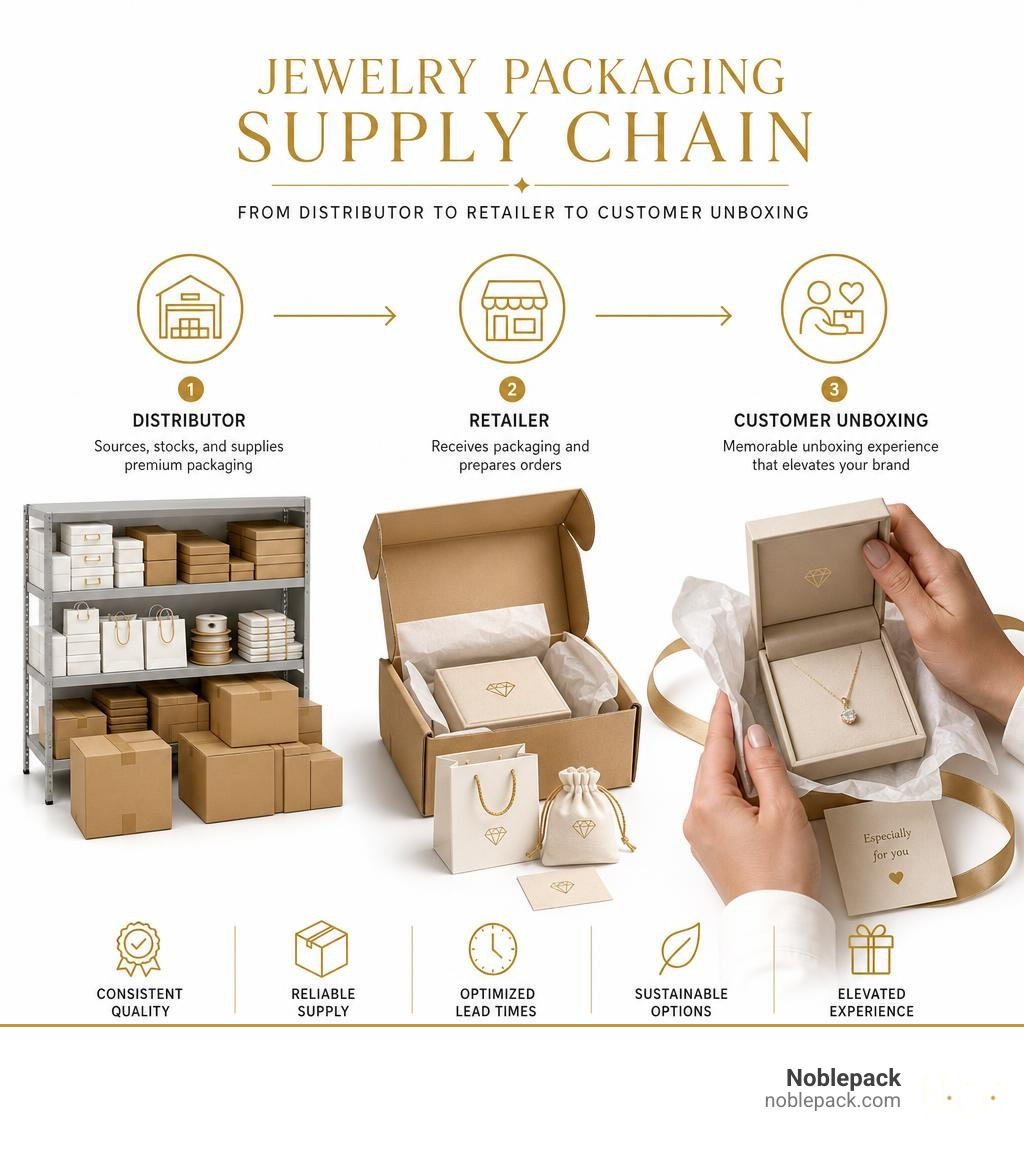
Key Capabilities of a Professional Jewelry Packaging Distributor
When you partner with a specialized jewelry packaging distributor, you are not just buying boxes; you are securing a vital link in your supply chain. A professional distributor understands that jewelry requires distinct handling, presentation, and protection compared to general retail goods.
Working with a dedicated distributor ensures your bulk ordering runs smoothly, your inventory remains stocked during peak seasons (like the holidays or Valentine's Day), and your retail presentation remains flawless. Understanding the different types of packaging and how they impact retail and packaging dynamics is the first step toward building a cohesive brand.
Evaluating the Inventory of a Jewelry Packaging Distributor
A distributor's catalog is the window into their capabilities. A robust inventory should cover a wide array of styles, materials, and price points to support your business as it grows. When browsing options, look for:
- Jewelry Boxes: The cornerstone of retail presentation. This includes classic cotton-filled kraft boxes, elegant hinged velvet boxes, modern leatherette cases, and rigid cardboard drawer boxes.
- Pouches and Drawstring Bags: Excellent lightweight alternatives or companions to boxes. Common materials include microfiber, soft velvet, cotton, satin, and organza.
- Shopping Bags and Gift Wrapping: Coordinated paper bags, tissue paper, ribbons, and bows that complete the retail checkout experience.
- Displays and Trays: In-store presentation tools like ring cones, T-bars for necklaces, and velvet-lined trays that help you showcase your collections on the counter.
To explore how these elements work together to build a memorable brand, you can read our deep dive into jewelry packaging. Regional availability, warehouse location, and inventory depth can also affect shipping speed, so it is worth asking any distributor how quickly they can ship to your store or fulfillment center.
How a Jewelry Packaging Distributor Customizes Your Brand Experience
Customization is where your brand truly comes to life. Did you know that custom jewelry boxes with logo printing can increase repeat purchase rates by up to 25%? It transforms a generic container into a silent ambassador for your business.
A high-quality jewelry packaging distributor should offer robust customization options to help you scale from simple stock styles to fully bespoke creations. Here are the primary techniques they should support:
- Hot Foil Stamping: Applies a metallic foil (typically gold, silver, rose gold, or copper) using heat and pressure. This is the industry standard for a clean, reflective, luxury finish.
- Blind Debossing and Embossing: Presses your logo directly into the material (debossing sinks it, while embossing raises it) without ink or foil, creating a subtle, highly tactile effect.
- Silk Screen Printing: Ideal for flat surfaces, fabric pouches, and multi-color logos that require vibrant, solid ink coverage.
- UV Spot Gloss: Applies a shiny, protective liquid coating to specific areas of your design, creating a beautiful contrast against matte paper.
Whether you want to explore custom jewelry packaging for your first collection or require ultra-premium luxury jewelry packaging crafted with elevated design sensibilities, your distributor should guide you through material selection, such as Saffiano leatherette, linen, or high-density cardboard, to match your brand's aesthetic.
Key Factors to Evaluate: MOQs, Pricing, and Customization
Finding a distributor with beautiful products is only half the battle. The other half is ensuring their business model aligns with your financial reality.
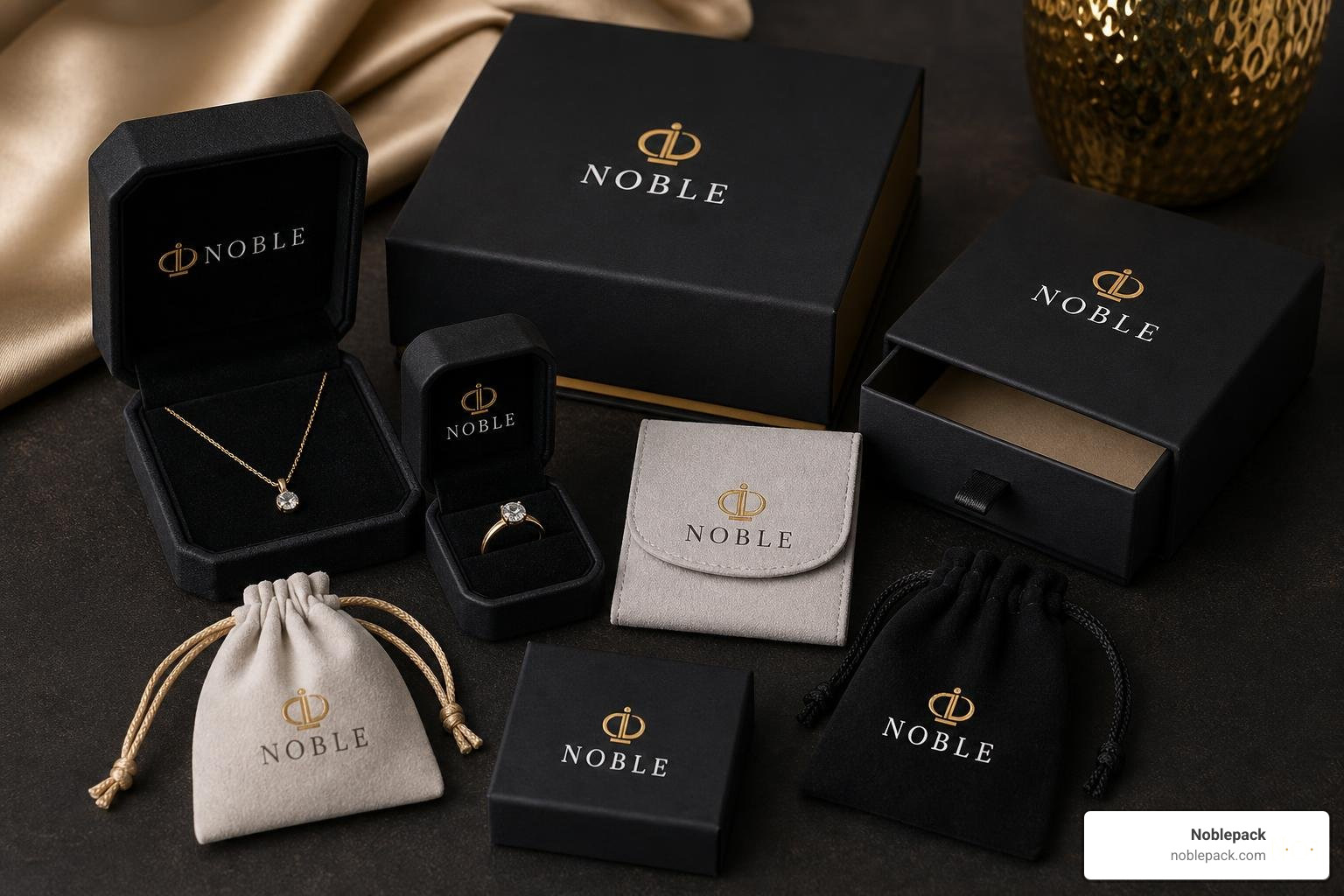
For a startup or boutique, ordering 10,000 custom boxes is rarely feasible. Conversely, a large retail chain cannot rely on a supplier that only stocks small quantities. Balancing price, minimum order quantities (MOQs), and lead times is crucial when planning your packaging strategy.
If you are just starting out, check out our resources on small business jewelry packaging and explore creative jewelry packaging ideas for small business.
To help you decide which path is right for your current business stage, here is a quick comparison of stock versus custom packaging:
| Feature | Stock Packaging | Custom Branded Packaging |
|---|---|---|
| Typical MOQ | Low (often 1 case or ~50-100 pcs) | Moderate to High (typically 300 - 500+ pcs) |
| Lead Time | Fast (ships in 1-5 business days) | 2 to 6 weeks (depending on complexity) |
| Setup Fees | None | One-time plate or mold fee |
| Unit Price | Standard wholesale pricing | Higher initial cost, but drops with bulk volumes |
| Brand Impact | Clean and professional | High-end, memorable, drives repeat purchases |
Understanding Minimum Order Quantities (MOQs) and Pricing Structures
MOQs exist because of manufacturing setup costs. For custom printing, a technician must create a printing plate (or die), set up the machinery, and calibrate the alignment. This setup takes the same amount of time whether they print 50 boxes or 5,000.
A flexible jewelry packaging distributor will offer tiered pricing structures:
- Stock Styles with Logo Printing: Many distributors keep bulk stock of pre-made boxes in their warehouses and print your logo on demand. This allows them to offer lower MOQs (often starting around 100 pieces) and fast turnaround times.
- Fully Bespoke Customization: If you want a completely unique box shape, custom-dyed fabric, or a specialized layout, the project will typically require a higher MOQ (usually 500+ pieces) because the box must be built from scratch.
- Bulk Discounts: The general rule of packaging is simple: the more you buy, the less you pay per unit.
When comparing wholesale stock packaging options, look beyond the headline unit price. Factor in setup fees, freight, storage needs, reorder timing, and whether the distributor can keep your preferred styles consistently available.
Quality Control and Bulk Consistency Standards
There is nothing worse than ordering 1,000 custom boxes only to find that the logo is off-center on half of them, or the glue is peeling at the corners. Consistent quality control is what separates a reliable distributor from a headache.
When evaluating a distributor's quality standards, ask about their testing processes:
- Tarnish Testing: Jewelry is chemically sensitive. Certain glues, paper pulps, and synthetic fabrics release gases (outgassing) that accelerate the tarnishing of silver, gold, and brass. A specialized distributor uses certified anti-tarnish materials in their box inserts and linings.
- Color Consistency: Your brand colors must look identical across every batch. Distributors should use standardized color matching systems, like the Pantone Matching System (PMS), to ensure your brand's signature blue or pink remains consistent year after year.
- Structural Integrity: Hinges should snap shut cleanly, drawer boxes should slide smoothly without sticking, and custom-cut foam inserts must hold your jewelry securely without crushing delicate chains.
These details matter because jewelry packaging is often reordered over months or years. A dependable distributor should be able to maintain consistent materials, colors, finishes, and print placement across repeat bulk orders.
Logistics, Supply Chain, and Eco-Friendly Packaging Solutions
Once you have finalized your designs and agreed on pricing, the focus shifts to logistics. How do those boxes get from the warehouse to your storefront or fulfillment center? And how does your packaging choices affect the environment?
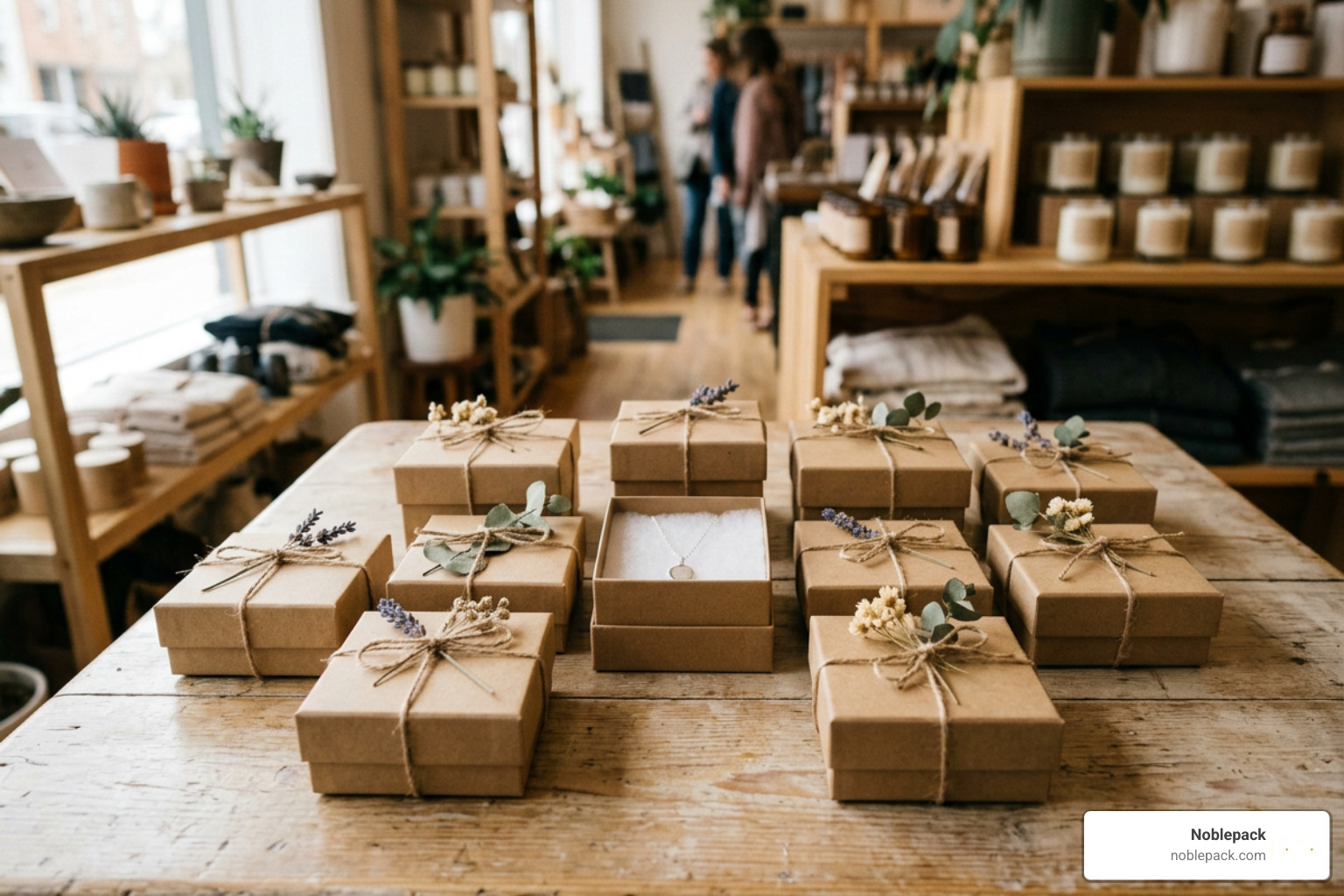
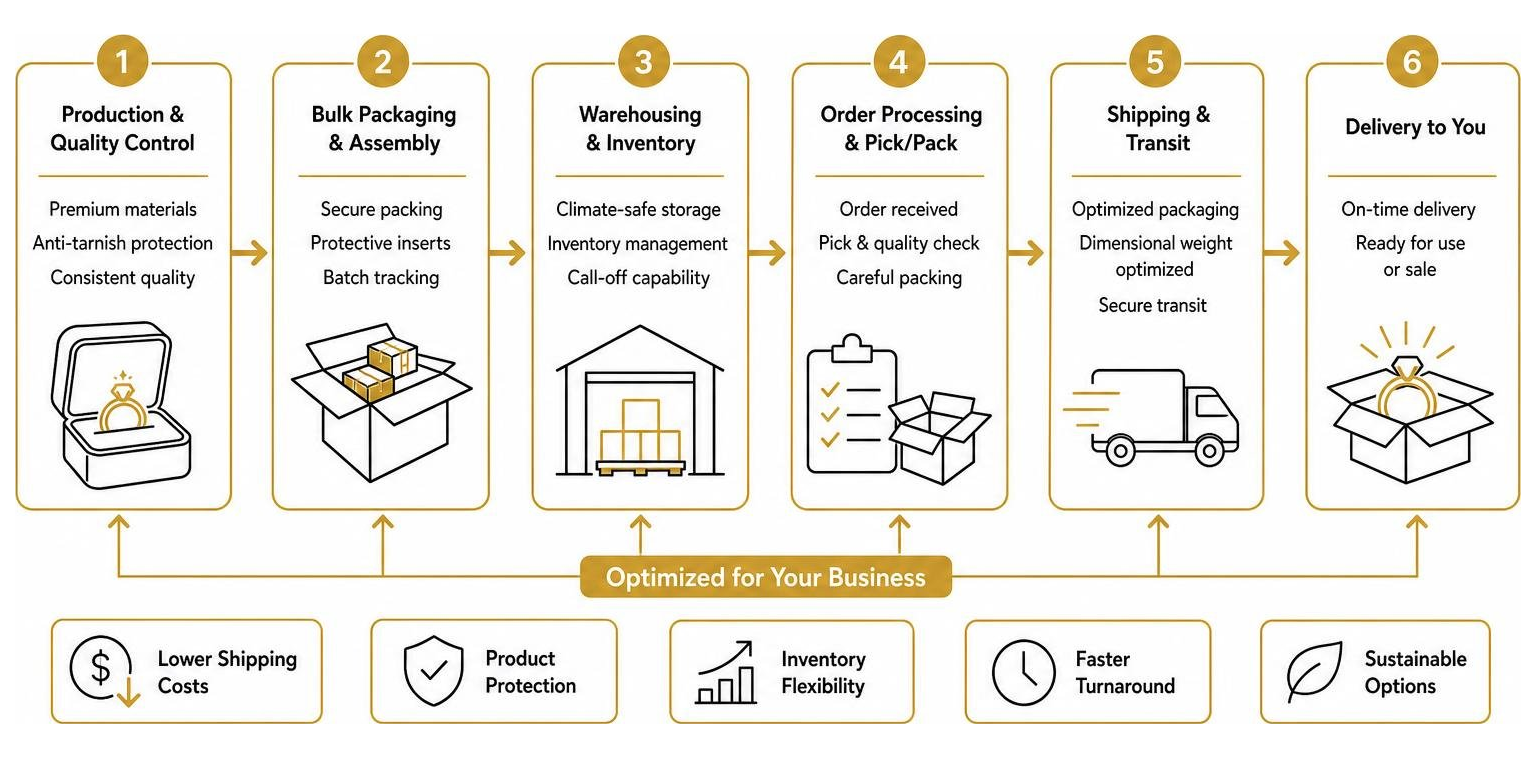
Shipping, Warehousing, and Inventory Management
Packaging is bulky. Storing 5,000 rigid gift boxes takes up a massive amount of physical space - space that many small boutiques and e-commerce sellers simply do not have.
This is where a distributor's logistics capabilities become a lifesaver. Some distributors offer warehousing and "call-off" ordering, where they store your custom packaging in their facilities and ship it to you in smaller batches as you need it.
Additionally, smart shipping practices can save you a fortune. For example, if you are shipping jewelry directly to customers, optimizing your jewelry shipping packaging and choosing the right jewelry shipping boxes can significantly lower your dimensional weight (DIM weight) freight costs.
Sustainable and Eco-Friendly Packaging Options
Modern consumers care deeply about the environmental footprint of their purchases. In fact, sustainable and eco-friendly packaging options are requested by more than 60% of modern jewelry buyers.
A forward-thinking distributor should offer a robust selection of green packaging solutions that do not sacrifice that premium feel:
- FSC-Certified Paper: Paper sourced from forests certified by the Forest Stewardship Council, helping support responsible forest management.
- Recycled and Recyclable Cardboard: Rigid boxes made from post-consumer recycled materials that can be easily recycled again by the end consumer.
- Biodegradable and Organic Fabrics: Pouches made from organic cotton, linen, hemp, or biodegradable microfiber.
- Water-Based Inks: Soy or water-based inks for logo printing, which are far less harmful to the environment than traditional petroleum-based inks.
Transitioning to eco-friendly jewelry packaging is a fantastic way to align your brand with modern consumer values while maintaining a beautiful, luxurious presentation.
Frequently Asked Questions About Jewelry Packaging Distributors
What is the typical MOQ for custom jewelry boxes?
For stock boxes that are simply printed with your logo, MOQs typically range from 100 to 300 pieces. For fully custom, bespoke box structures (where the size, shape, and materials are designed from scratch), factories usually require a minimum of 500 to 1,000 pieces due to the setup costs of cutting dies and manufacturing molds.
How do distributors prevent jewelry from tarnishing in transit?
Reputable distributors strictly use anti-tarnish materials for their inserts, foam, and fabric linings. They test their glues and papers to ensure they do not undergo chemical outgassing, which can react with metals like sterling silver and cause them to discolor or tarnish while sitting in storage or during transit.
Can I get samples before placing a bulk order?
Yes! Any professional distributor should offer a sampling process. This typically involves two options:
- Stock Samples: A physical sample of an existing box style so you can check the material quality, hinge strength, and color in person.
- Custom Prototypes: A pre-production sample of your exact custom box with your logo printed on it. While this may involve a small prototyping fee, it is highly recommended for large custom orders to ensure everything is perfect before mass production begins.
Conclusion
Choosing a jewelry packaging distributor is a strategic decision that shapes how customers perceive your brand. The right partner provides more than just boxes; they offer design expertise, reliable supply chains, consistent quality, and scalable solutions that grow alongside your business.
At Noblepack, we are dedicated to helping jewelry brands shine. Operating with decades of industry experience, we understand the unique demands of jewelry retailing. We offer an extensive selection of classic and contemporary packaging, including our featured premium collections like Sardinia.
For budget-conscious brands and quick turnarounds, we also provide fantastic discounted clearance items on discontinued premium products — allowing you to elevate your presentation without breaking the bank.
Ready to find the perfect look for your brand? Browse our selection of jewelry packaging today to explore our options and start customizing your packaging!