

Paper Wrapping a Gift: A Simple Way to Make Every Box Look Polished
To wrap a gift neatly, start with a box, cut paper that covers all sides with a small overlap, and crease each fold firmly before taping. Fold the long sides first, then make two sharp triangular flaps at each end. Use double-sided tape to hide the final seam, then add a ribbon or tag.
For jewelry retailers and boutique owners, a well-executed paper wrapping gift does more than conceal a box. It creates a tactile first impression, protects premium packaging, and makes even a small purchase feel considered. You do not need advanced skills or expensive tools - the right paper, accurate measuring, and clean folds do most of the work.
This guide covers the fundamentals, from choosing durable paper and finishes to wrapping awkward shapes and creating a refined retail presentation. For a broader overview of the craft, the gift wrapping entry explains how wrapping traditions and materials have evolved across cultures.
I am Dannah Davies, and I will walk you through the practical details that make gift wrapping look confident from the first fold.
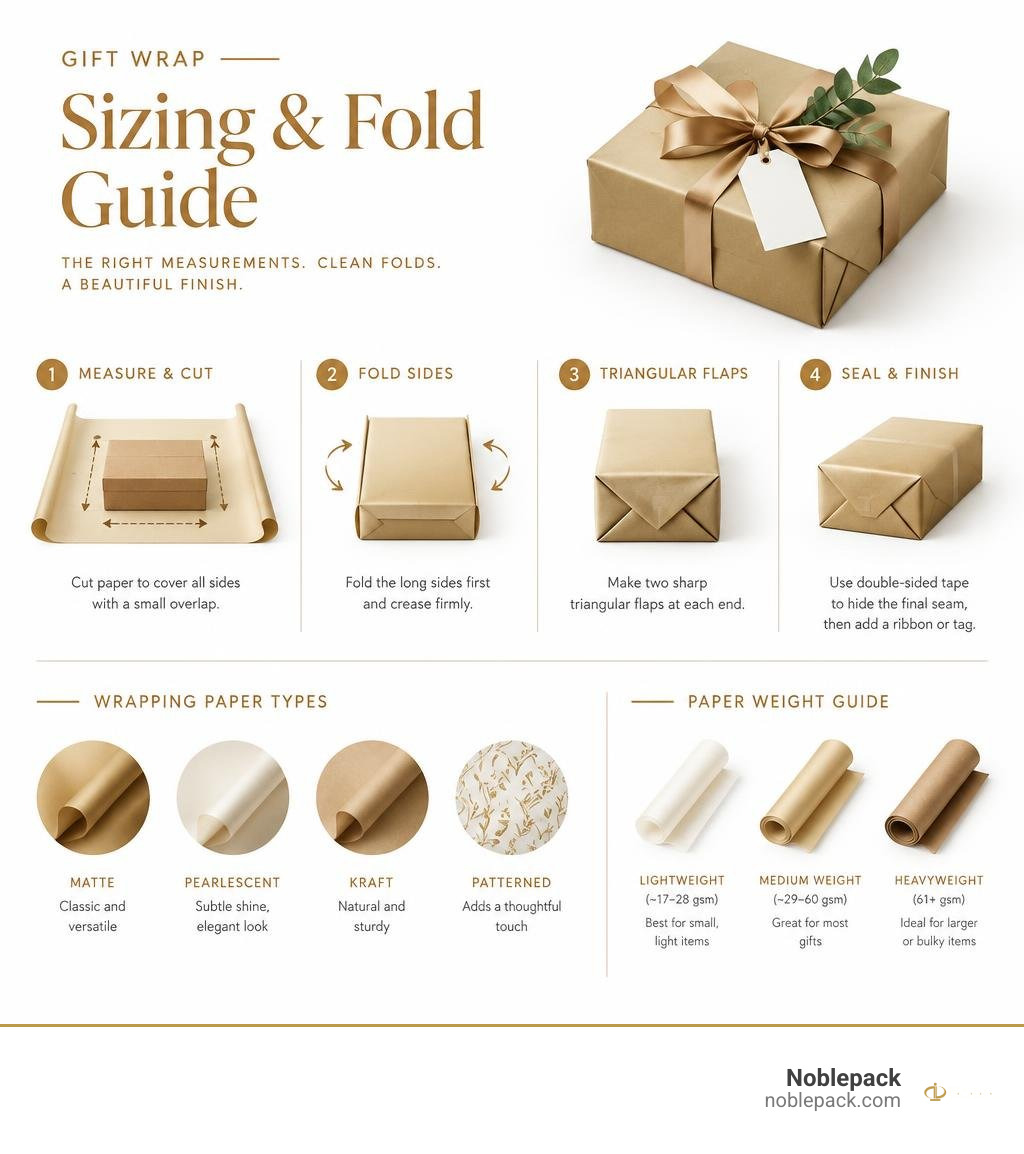
Essential Types of Wrapping Paper and Paper Weight Selection
The foundation of every beautifully wrapped present is the paper itself. Wrapping paper comes in varied formulations, and selecting the right substrate makes the difference between crisp, sharp corners and frayed, torn edges.
When evaluating paper stock, paper density is measured in grams per square meter (gsm) or pounds (lb). Understanding weight classifications ensures you never battle paper that is too thin to resist tearing or too stiff to fold cleanly:
- Lightweight Stock (50–60 gsm): Often found in standard tissue paper or budget rolls. While soft and flexible, it tears easily around hard box corners.
- Standard Coated Wrap (60–80 gsm / 60 lb gloss): The industry standard for commercial and retail wrapping. This stock provides balanced tensile strength, vibrant color reproduction, and effortless folding without cracking along the score lines.
- Premium Litho Stock (80–100 gsm): A heavier, luxurious paper favored by fine boutiques and jewelers. It offers complete opacity, ensuring high-contrast product branding or dark gift boxes do not show through.
- Heavy Specialty Kraft & Card (100+ gsm): Highly durable and tear-resistant, ideal for heavier parcels, though it requires firm pressure to hold crisp folds.
Beyond basis weight, consider whether continuous rolls or flat pre-cut sheets best suit your workflow. Continuous rolls offer sizing versatility for varying parcel dimensions, while pre-cut flat sheets streamline high-speed packaging stations in busy retail settings.
| Paper Type | Weight (GSM) | Finish & Texture | Best Use Case | Recyclability |
|---|---|---|---|---|
| Coated Gloss Litho | 60–80 gsm | Smooth, reflective, vibrant | High-end retail, vibrant prints, seasonal boxes | Check local rules; non-laminated is recyclable |
| Uncoated Matte Paper | 70–90 gsm | Soft, non-glare, sophisticated | Minimalist luxury, organic themes, jewelry boxes | 100% Curbside recyclable |
| Natural Kraft Paper | 50–80 gsm | Earthy, fibrous, sturdy | Rustic packaging, eco-friendly branding, hampers | 100% Biodegradable & recyclable |
| Metallic Foil / Pearl | 70–90 gsm | Lustrous, mirror-like, smooth | High-glamour events, gala favors, festive holidays | Requires specialty sorting / non-recyclable |
| Handmade Lokta Paper | 60–100 gsm | Fibrous, textured, deckled | Artisan goods, boutique gifts, keepsake packaging | 100% Compostable & sustainable |
Natural kraft paper delivers an organic, modern aesthetic with reliable burst strength. For a truly unique artisan presentation, handmade Lokta paper—crafted from the regenerative bark of Himalayan shrubs—offers rich texture and natural deckled charm without harming forest root systems.
Classic Patterns and Fine Finishes for Everyday and Festive Occasions
Color palettes and surface prints set the emotional tone of your gift. Selecting motifs tailored to the occasion ensures your presentation feels intentional.

For year-round celebrations, milestone moments, and anniversaries, versatile options like birthdays and occasions wrapping paper establish an upbeat, celebratory aesthetic. When winter holidays arrive, transitioning to dedicated holiday wrapping paper creates instant festive cheer across store displays and gift exchanges.
Geometric and minimalist patterns provide timeless refinement:
- Tailored Linework: Crisp patterns such as pinstripe wrapping paper deliver clean, architectural lines suitable for corporate gifts or modern keepsakes.
- Soft Visual Fluidity: Modern motifs like watercolor striped wrapping paper soften geometric lines with delicate gradients.
- Subtle Elegance: Monochromatic designs like white on white floral wrapping paper provide tactile dimension through tonal contrast.
- Modern Minimalism: For an understated presentation, an ultra-smooth matte wrapping paper eliminates harsh glare and pairs effortlessly with rich fabric ribbons.
Metallic, Specialty, and Custom Printed Paper Wrapping Gift Options
When a milestone calls for elevated drama, reflective substrates transform standard parcels into showstopping centerpieces. Premium metallic wrapping paper captures ambient light, adding instant luxury to fine jewelry boxes. Specialty prints such as metallic silver swirls designed jewellers wrapping paper elevate small packaging runs with refined ornamental linework.
Modern paper innovation also introduces eco-conscious stone paper, produced from calcium carbonate bonded with non-toxic resin. This yields a velvety, waterproof, and tear-resistant wrap that holds firm seams without fraying.
For commercial brands and corporate gift programs, custom-printed wrapping paper reinforces brand identity. When preparing vector artwork for bespoke production:
- Pattern Scaling: Set seamless step-and-repeat pattern tiles between 2 and 8 inches to ensure visual balance across both compact ring boxes and large gift hampers.
- Resolution & Specs: Maintain a minimum raster resolution of 300 dpi and provide vector logos in CMYK color modes (or specified Pantone spot colors) for razor-sharp reproduction.
- Lead Times: Custom short-run printing generally requires a standard lead time of 10–12 business days after digital proof approval, making early planning essential for seasonal campaigns.
Step-by-Step Guide to the Perfect Paper Wrapping Gift Technique
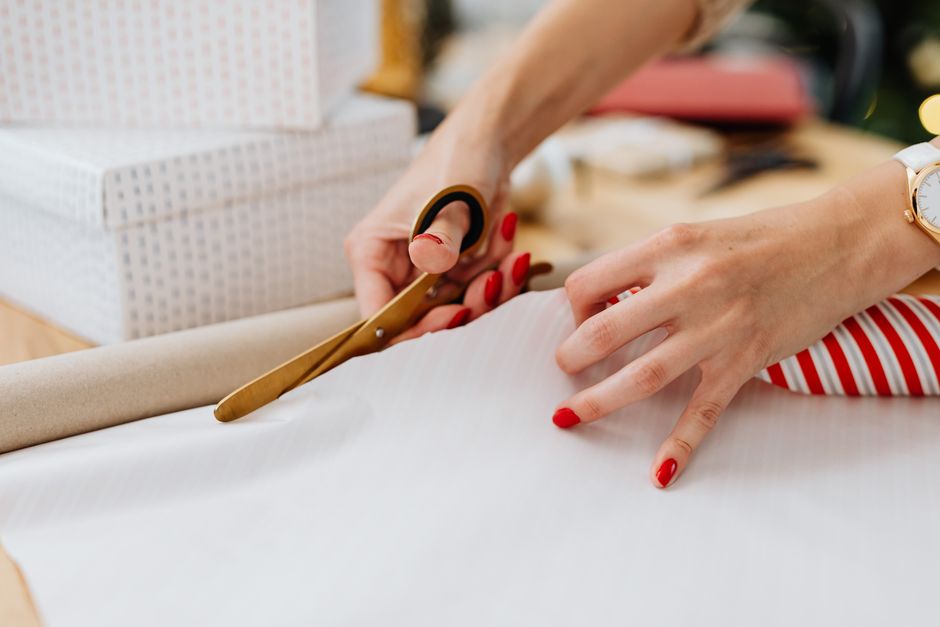
Wrapping a gift cleanly requires a reliable, repeatable sequence. Setting up on a clean, flat surface with sharp shears and double-sided tape ensures professional results every time.
Follow this fundamental process:
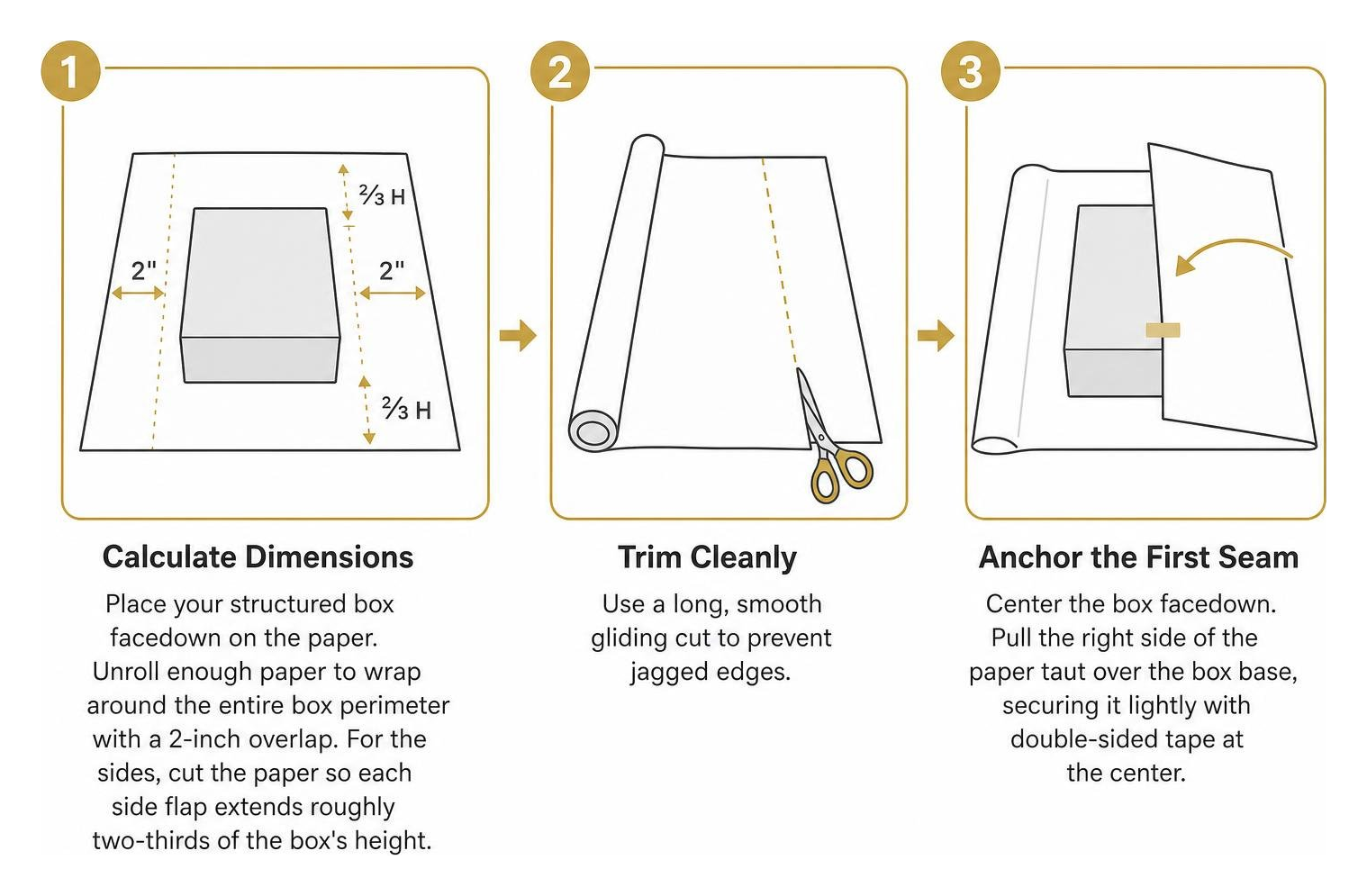
- Calculate Dimensions: Place your structured box facedown on the paper. Unroll enough paper to wrap around the entire box perimeter with a 2-inch overlap. For the sides, cut the paper so each side flap extends roughly two-thirds of the box's height.
- Trim Cleanly: Use a long, smooth gliding cut to prevent jagged edges.
- Anchor the First Seam: Center the box facedown. Pull the right side of the paper taut over the box base, securing it lightly with double-sided tape at the center.
- Create a Hidden Seam: Pull the left side over, folding the raw outer edge inward by half an inch to create a crisp, hemmed border. Secure this hemmed edge flush against the first panel using double-sided tape for an invisible finish.
Essential Paper Wrapping Gift Techniques for Clean Edges
Clean wrapping is defined by crisp folds and controlled tension. Sluggish, rounded edges compromise the structural silhouette of your box.
- Fingernail or Bone Folder Creasing: Once a fold is placed, firmly run your thumbnail or a bone folder along every box edge. This locks the paper to the contours of the box and prevents air pockets.
- The Trapezoid Side Fold: At each open end, push the top flap down firmly against the box side, creating two crisp 45-degree triangular wings on the left and right. Crease these wings flat against the table.
- Fold the Lateral Wings: Bring the left and right triangular flaps inward, smoothing them tightly against the side wall.
- Tuck the Bottom Apron: Fold the bottom flap upward. Fold its top raw edge inward by a quarter-inch to form a clean hem, pull it snug, and secure it with double-sided tape directly over the folded wings.
Wrapping Cylinders, Soft Items, and Irregular Shapes
Non-rectangular gifts present unique challenges, but simple adaptations yield pristine finishes:
- Pleated Cylinder Ends: For tubes or round tins, wrap the circumference first with a snug overlap. On the flat circular ends, fold the paper inward in small, overlapping accordion pleats toward the central axis. Secure the center point with a decorative seal or ribbon medallion.
- Candy-Twist Wrapping: For elongated soft items, wrap the central cylinder, leave 3 to 4 inches of excess paper on either end, gently twist the paper at the product boundaries, and cinch each end tightly with wired metallic ribbon.
- Box Structuring: Soft, shapeless items like knitwear or plush accessories are best placed into a rigid base box before wrapping. This provides crisp geometric corners for clean folds.
Creative Embellishments: Elevating Gifts with Ribbons, Bows, and Tissue
Once the paper is secured, decorative trims add depth, texture, and personality to your presentation.
Combining matte paper with lustrous satin, textured grosgrain, or natural twine introduces tactile contrast. For quick accents, decorative washi tape can secure hems, create striped color blocks, or anchor botanical sprigs like dried lavender and eucalyptus for a handcrafted touch.
Adding Dimensional Bows and Ribbons
A balanced ribbon treatment anchors the visual presentation of high-end gift wrapping.
For structured, dimensional loops that hold their form during transport, wired metallic glitter satin ribbons allow you to shape voluminous loops that will not crush. In retail environments, a metallic pull bow provides immediate, uniform volume with a single pull of the inner ribbon string.
If your aesthetic leans toward rich, classic luxury, a plush velvet curly gift bow adds tactile warmth to solid matte or metallic paper.
Interior and Exterior Layering with Decorative Tissue Paper
Premium packaging extends beneath the outer wrap. Lining boxes with decorative tissue cushions delicate contents and builds anticipation during the unboxing process.
- Reflective Glamour: Incorporating double-sided metallic tissue paper adds dynamic shimmer when the box lid lifts.
- Moisture Defense: For delicate items, cosmetics, or florals, elite waxed water resistant tissue paper protects box linings from dampness.
- Patterned Interiors: Using graphic sheets such as elite designed spot on interleave tissue paper or elite designed printed medallions tissue paper introduces contrasting design elements inside neutral boxes.
- Textured Themes: Pairing casual outer wraps like denim patchwork printed wrapping paper with crisp white or metallic tissue creates an appealing blend of casual and refined textures.
Sustainability, Recycling Rules, and Commercial Branding Uses
As sustainable packaging remains a key consideration for consumers, selecting environmentally responsible gift wrap is essential for both retail operations and conscious home gifting.
Prioritize papers certified by the Forest Stewardship Council (FSC) or manufactured using high percentages of post-consumer recycled (PCR) pulp. Uncoated kraft papers printed with water- or soy-based vegetable inks can be composted or recycled in standard municipal curbside collections.
To determine if a wrapping paper is curbside recyclable, use the simple Scrunch Test:
- Crumple the wrapping paper firmly into a tight ball in your hand.
- Open your hand. If the paper remains crumpled in a dense ball, it is generally composed of natural wood fibers and can be recycled.
- If the paper springs open or resists creasing, it likely contains laminated plastic film, synthetic coatings, or metallic foils that require specialty sorting.
For retail boutiques and e-commerce stores, branded gift wrapping delivers a direct return on investment. Signature packaging turns counter transactions into shareable brand moments, elevating perceived value and driving organic customer advocacy online.
Frequently Asked Questions About Gift Wrapping
How much wrapping paper do I need to cut for a standard gift box?
To size your paper accurately, calculate the box perimeter plus an overlap margin: cut the length to equal the full circumference of the box (width + height + width + height) plus 2 inches for a clean seam. Cut the width so the side flaps extend roughly two-thirds the height of the box on each end. This ensures full coverage without excess bulk that can distort corner folds.
Can metallic and glitter wrapping papers be recycled in curbside bins?
Most metallic foils, glitter-encrusted sheets, and high-gloss plastic-laminated wraps cannot be processed in standard municipal paper recycling streams because synthetic coatings cannot be separated in hydropulping tanks. Opt for uncoated kraft, vegetable-ink printed litho paper, or reusable fabric wraps when curbside recyclability is a priority.
What is the easiest way to keep tape invisible on gift wrap?
Apply double-sided tape along the underside of a folded 1/2-inch hem rather than taping over the outer face. Alternatively, loop standard clear tape back on itself with the adhesive facing outward, tucking it completely under the seam so no tape is visible on the surface.
Conclusion
Mastering the art of gift wrapping elevates a simple present into a polished, memorable experience. By choosing the right paper weight, measuring accurately, and creasing every fold with intention, anyone can produce crisp, boutique-worthy results.
Explore our curated collection of premium wrapping paper to discover distinctive finishes, patterns, and coordinating accessories designed to make every gift unboxing exceptional.