
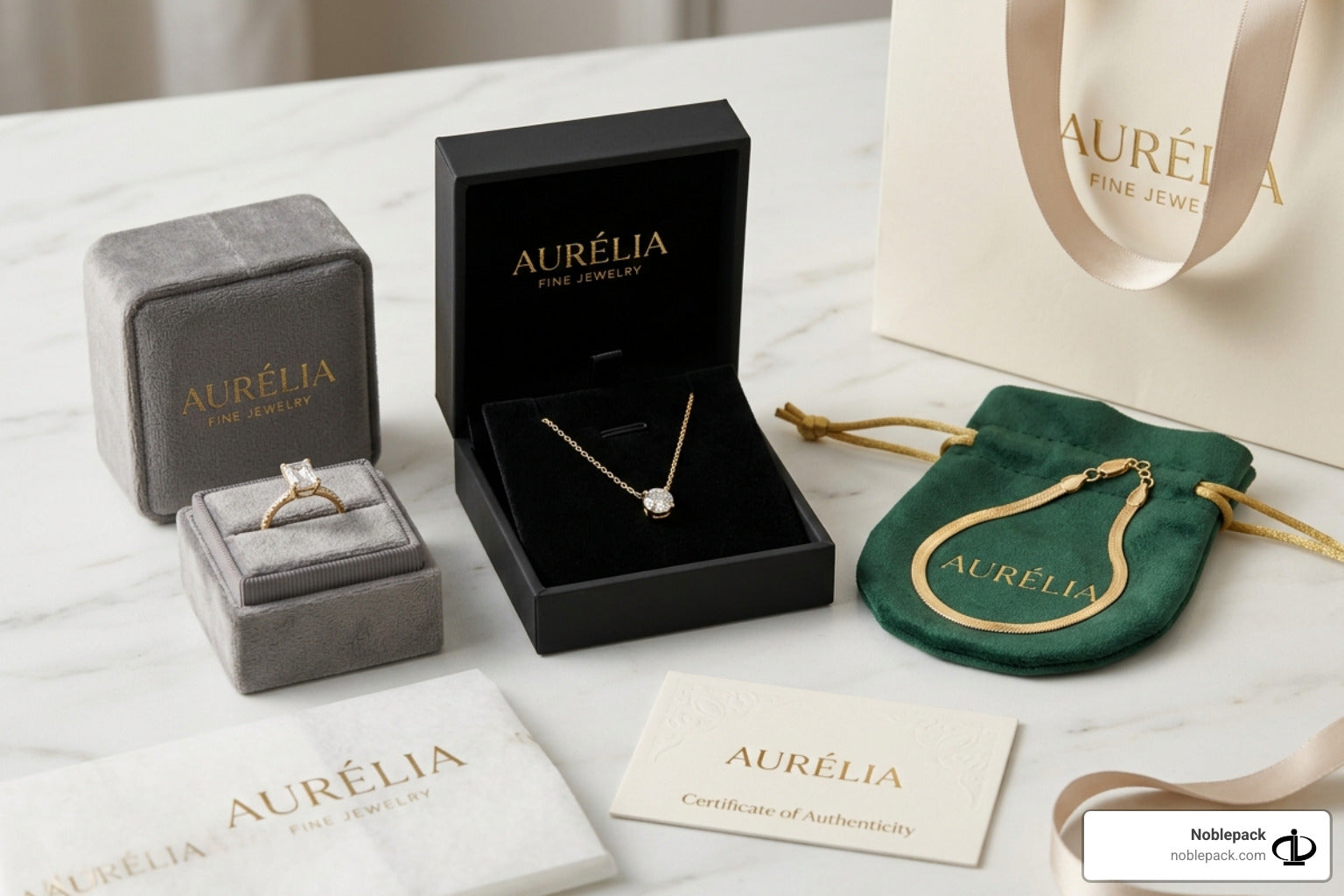
Why Private Label Jewelry Packaging Is a Game-Changer for Your Brand
Private label jewelry packaging refers to stock packaging structures — boxes, pouches, inserts — that a supplier manufactures and you brand with your own logo, colors, and identity. It sits between generic wholesale packaging and fully bespoke custom manufacturing.
Here's a quick breakdown of what it means in practice:
- What it is: Pre-made packaging you customize with your logo and branding
- Who it's for: Jewelry retailers, boutique owners, and small brands wanting a professional look without high tooling costs
- Minimum orders: As low as 50–500 pieces depending on the supplier and product type
- Lead times: Typically 10–25 business days after artwork approval
- Cost range: Per-unit prices can start under $0.50 for bulk orders; setup fees around $99 for logo printing
- Key benefit: You get branded, retail-ready packaging — fast and affordably
Here's the reality: jewelry is an emotional purchase. The box it comes in is part of the experience.
"Jewelry packaging is so much more than just a box or a bag — it's the first impression your product makes." That's not just marketing talk. In 2026, unboxing videos drive real sales, and customers remember how a package feels before they even see what's inside.
But for small jewelry brands and boutique owners, the path to premium branded packaging has always come with friction. High minimum order quantities. Long lead times. Expensive custom tooling. A choice between generic packaging that undercuts your brand or bespoke production that breaks your budget.
Private label packaging closes that gap. And understanding how it works — the materials, the printing methods, the suppliers, the costs — is the first step to using it well.
This guide covers everything you need to know.
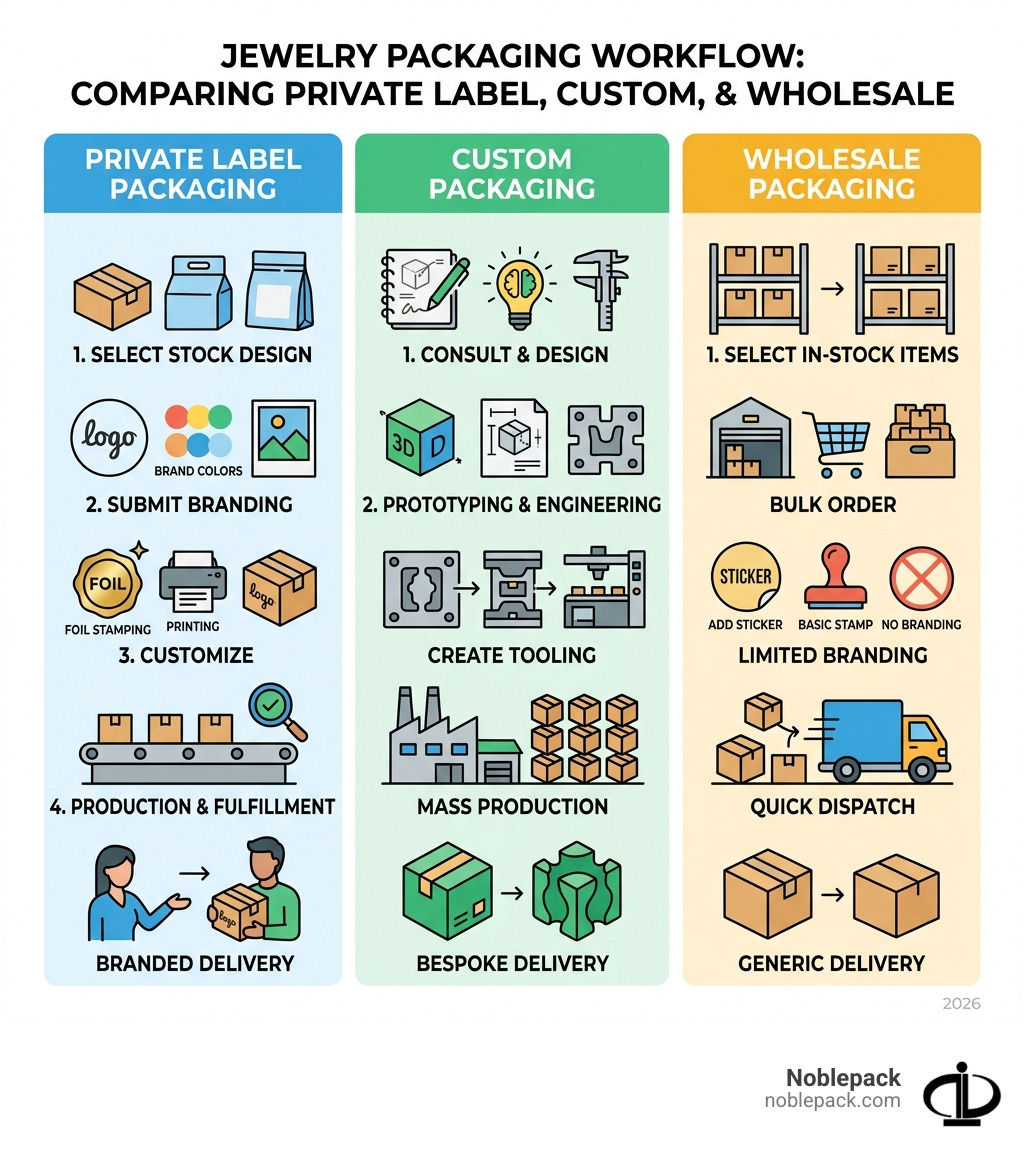
What is Private Label Jewelry Packaging?
In the jewelry industry, the terms "custom," "wholesale," and "private label" are often used interchangeably, but they represent very different business strategies. Private label jewelry packaging is the "sweet spot" for most growing brands. It involves taking a high-quality, pre-existing jewelry packaging design—such as a specific style of rigid box or velvet pouch—and applying your unique brand assets to it.
Unlike wholesale packaging, which is often unbranded and generic, private label gives you full branding rights over the final look. Unlike bespoke custom packaging, you aren't paying for the engineering or "tooling" of a brand-new box shape; you are leveraging proven, types of jewelry boxes that are already in production.
| Feature | Wholesale Packaging | Private Label Packaging | Bespoke Custom Packaging |
|---|---|---|---|
| Design | Generic / No Logo | Stock Design + Your Logo | 100% Original Structure |
| MOQ | Low (often 1 unit) | Moderate (50–500 units) | High (2,000+ units) |
| Lead Time | Immediate | 2–4 Weeks | 3–6 Months |
| Branding | None | High (Logo/Colors) | Total Control |
| Setup Fees | $0 | Low (~$99) | Very High |
Differentiating Private Label from Bespoke Solutions
The primary difference lies in the "bones" of the packaging. Bespoke solutions require creating new molds and die-cuts from scratch. If you want a box shaped like a dodecahedron with a secret hidden drawer, that's bespoke.
However, most brands find that personalized jewelry packaging achieved through private labeling is more than sufficient. By choosing from a catalog of pre-made structures—like the classic lid-off box, a magnetic closure box, or a sliding drawer—you save thousands in development costs while still achieving a "white-label" look that feels exclusive to your brand.
Key Benefits of Private Label Jewelry Packaging for Small Brands
For a startup or a boutique jeweler, cash flow is king. You can't always afford to tie up $10,000 in a massive order of custom boxes that will take six months to arrive. This is where private label jewelry packaging shines.
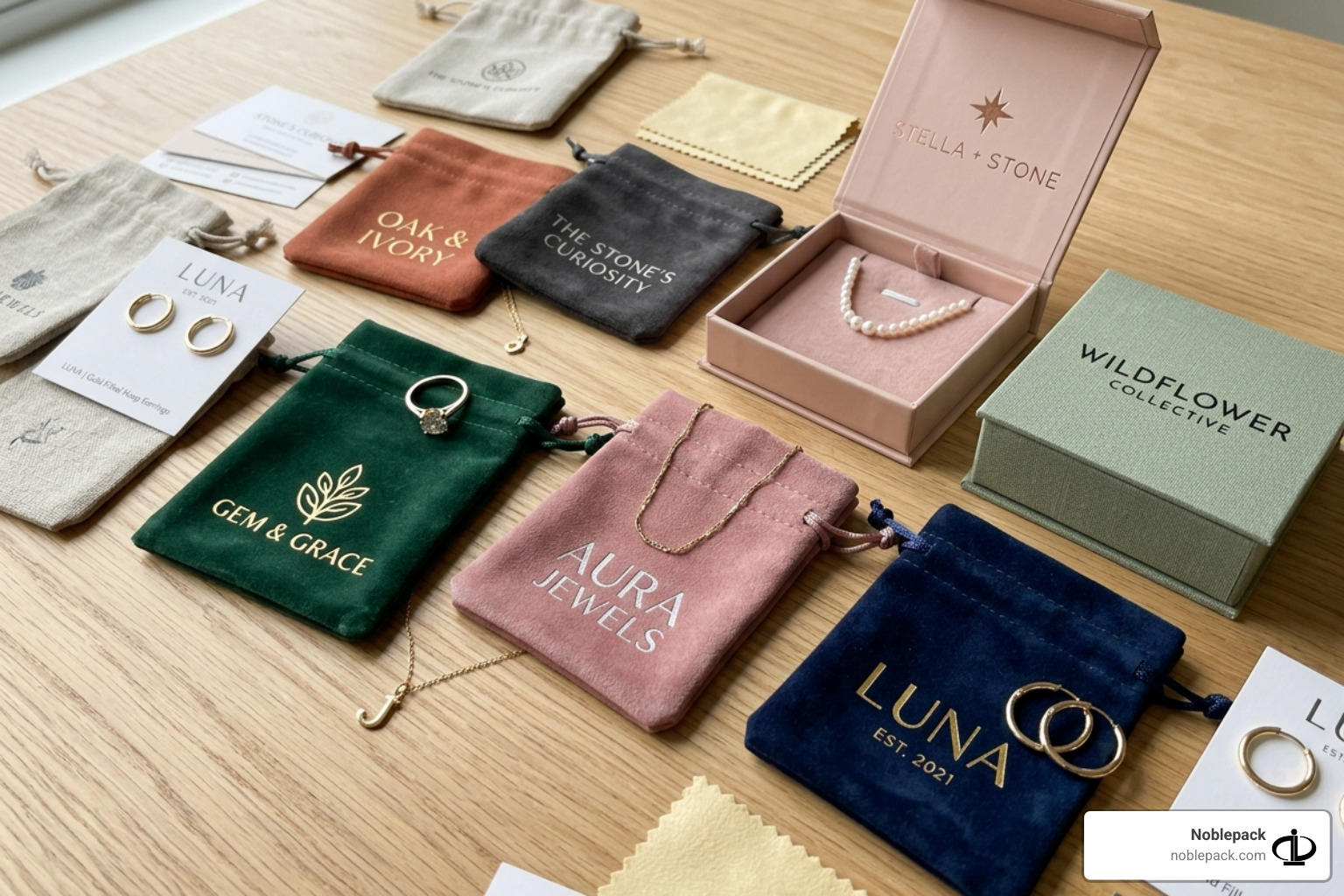
1. Low Minimum Order Quantities (MOQs)
One of the most significant barriers for small businesses has historically been the MOQ. Today, many suppliers offer private label services with minimums starting as low as 50 pieces. This allows you to test different collections or seasonal branding without a massive financial commitment. It’s one of the best jewelry packaging ideas for small business owners who are just finding their footing.
2. Rapid Scalability and Speed to Market
Because the physical boxes are already manufactured and sitting in a warehouse, the only step left is the branding process. This means your "time to market" is slashed from months to just a few weeks. You can react to trends, launch a "limited edition" holiday set, or pivot your brand colors quickly.
3. Professionalism on a Budget
Using creative jewelry packaging ideas like hot-stamping your logo on a high-quality stock box instantly elevates your brand from "hobbyist" to "professional house." It signals to the customer that you care about the details.
Enhancing Brand Perception and Unboxing
In May 2026, the "unboxing experience" is no longer a luxury; it’s a standard. A piece of jewelry might weigh only a few grams, but the weight and texture of the box it comes in provide the physical "heft" that justifies a premium price point.
Luxury jewelry packaging creates a psychological "halo effect." When a customer feels the soft touch of a microfiber pouch or hears the satisfying "click" of a magnetic box, their perceived value of the jewelry inside increases. This leads to higher customer satisfaction, fewer returns, and—most importantly—social media shares that act as free marketing for your brand.
Choosing the Right Private Label Jewelry Packaging Supplier
Not all suppliers are created equal. When vetting a partner for your private label jewelry packaging, consider these three factors:
- Sample Quality: Always request a sample before a full run. Check the "1200g gray board" (the industry standard for rigid boxes) to ensure it doesn't feel flimsy.
- Production Capacity: Can they handle your growth? A supplier that can only do 50 boxes might struggle when you suddenly need 5,000.
- Distribution Footprint: We operate with a focus on reliability and speed. With our established presence and focus on the EST region, we ensure that your orders aren't stuck in a global logistics bottleneck.
Materials and Customization Techniques
The "feel" of your packaging is determined by the materials you choose. In private label jewelry packaging, there are several standard tiers of materials that cater to different brand identities.
Common Materials Used:
- Rigid Paperboard (1200g Gray Board): This is the gold standard for high-end boxes. It provides the structural integrity needed for jewelry box packaging that won't crush during shipping.
- PU Leather: A popular choice for a classic, high-end look. It’s durable and takes embossing beautifully.
- Microfiber and Velvet: Ideal for pouches. Microfiber is particularly popular in 2026 because it is soft, lightweight, and can double as a polishing cloth.
- Kraft Paper: The go-to for brands focusing on a "natural" or "boho" aesthetic.
Printing Methods: Foil Stamping to Digital Print
How your logo is applied is just as important as the box itself. When creating custom jewelry packaging with logo, you generally choose between three main methods:
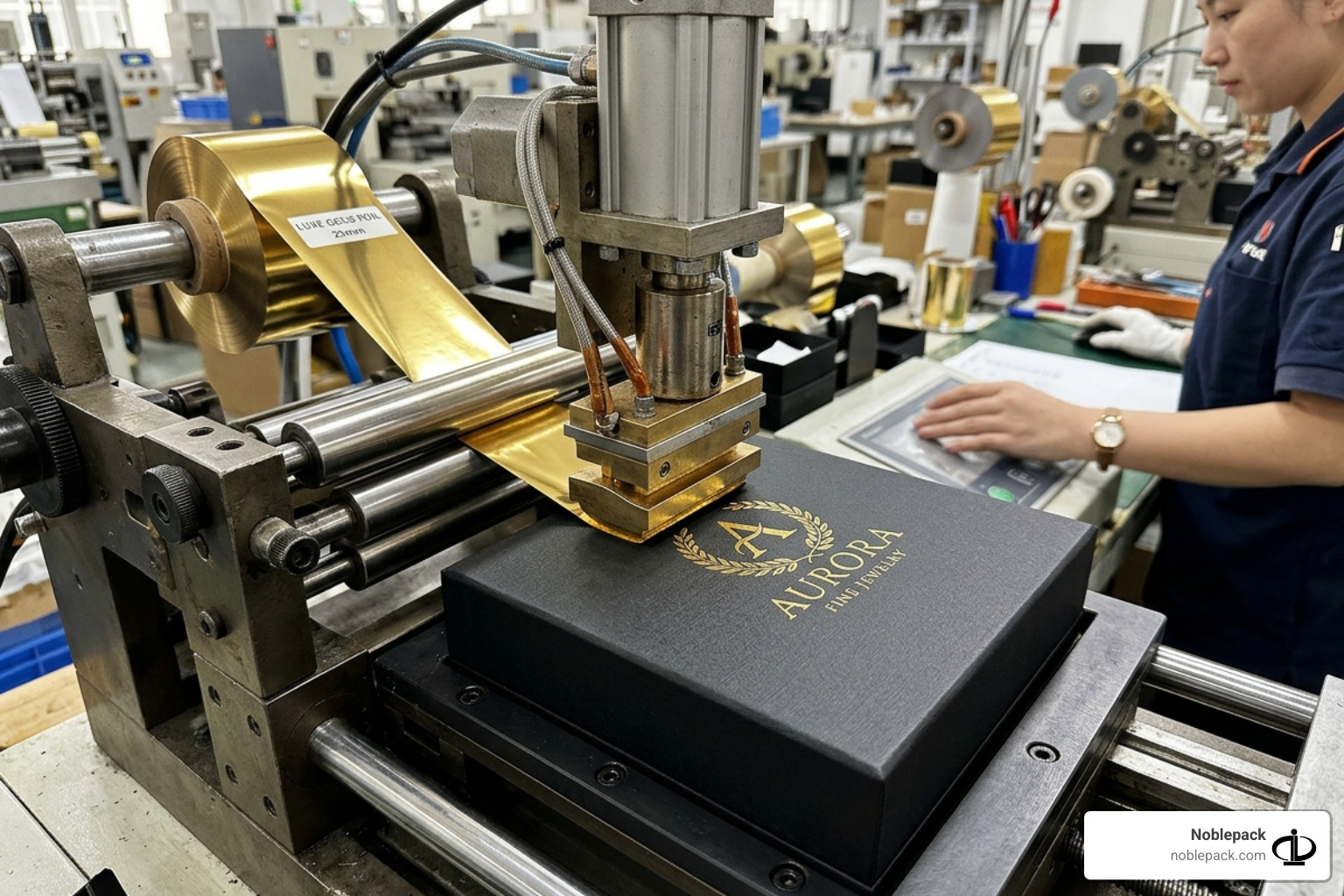
- Hot Foil Stamping: The industry favorite. A heated die presses a metallic or matte foil into the surface of the box. It creates a slight indentation and a brilliant shine that screams luxury.
- Debossing/Embossing: This creates a 3D effect without using ink or foil. It’s subtle, tactile, and very sophisticated.
- Digital Printing: Best for multi-color logos or complex designs. While it lacks the texture of foil, it offers incredible detail and often has lower setup fees for small runs.
Pro Tip: Expect a one-time setup fee (often around $99) for the creation of your custom metal plate (die). Once that’s made, per-unit imprint fees can drop significantly—sometimes as low as $0.30 per item for larger quantities.
Sustainable and Eco-Friendly Material Options
Sustainability is no longer a niche—it's a requirement for many modern consumers. Eco-friendly jewelry packaging options in the private label space have expanded rapidly.
Look for FSC-certified paper, which ensures the materials come from responsibly managed forests. Many of our "ECO" series boxes use soy-based inks and recyclable foam inserts. In 2026, many brands are even moving away from plastic-based foam entirely, opting for "ECO foam" or cardboard inserts that are 100% biodegradable.
Logistics, Costs, and Turnkey Solutions
Managing the logistics of packaging can be a headache. This is why "turnkey" solutions are becoming the preferred choice for jewelry entrepreneurs.
Production Lead Times and Shipping Consolidation
Standard lead times for branded private label orders typically range from 10 to 15 business days for domestic processing, or up to 25 days if the stock is being pulled from international hubs.
One of the biggest "hidden" costs in jewelry is shipping. Rigid boxes are essentially "shipping air"—they take up a lot of space but weigh very little. Smart brands use shipping consolidation. By having your jewelry manufactured and packaged in the same facility (or nearby), you can save up to 40% on freight costs by shipping "retail-ready" products rather than shipping empty boxes to your office and then shipping them out again.
To get a better sense of how we can help with your specific logistics, you can Contact Us - Noblepack CA.
Common Challenges in Private Label Jewelry Packaging
While private labeling is easier than bespoke, it’s not without challenges:
- Color Consistency: The "blue" on your screen might not match the "blue" of the paper. Always use Pantone Matching System (PMS) codes to ensure consistency.
- Inventory Management: It’s easy to over-order boxes and run out of storage space. We recommend a "tiered" ordering approach.
- Tangle-Free Shipping: There is nothing worse than a customer opening a beautiful box only to find a knotted necklace. Always ensure your jewelry gift bags or boxes have the correct slits or hooks to keep items secure.
Frequently Asked Questions
What are typical MOQs for private label orders?
For most private label jewelry packaging suppliers, MOQs start at 50 pieces for simple digital printing and go up to 500 pieces for more complex rigid boxes or custom-colored pouches. This range is specifically designed to be small-business friendly.
How does private label packaging integrate with manufacturing?
Many modern suppliers offer "turnkey" services. This means they can take your jewelry, place it into the branded boxes, add SKU barcoding, and even handle fulfillment. This "retail-ready" approach allows you to focus on design and marketing while the supplier handles the heavy lifting of assembly.
Can I customize the interior inserts of private label boxes?
Absolutely. While the outer box is a stock size, the interior is highly customizable. You can choose from:
- EVA Foam: High-density and protective.
- Velvet Pillows: Best for watches and bangles.
- C-Circle Displays: Ideal for showing off the "arc" of a necklace.
- Anti-Tarnish Materials: Crucial for silver jewelry, these inserts are treated to prevent oxidation during storage and transit.
Conclusion
The journey from a "jewelry maker" to a "jewelry brand" is paved with the details of your presentation. Private label jewelry packaging offers the most efficient, cost-effective, and professional way to make that transition.
At Noblepack, we specialize in helping brands find that perfect balance. Whether you are looking for our premium Sardinia collection to give your brand a Mediterranean flair, or you want to take advantage of our discounted clearance items on discontinued premium products to save on costs, we have the inventory to support your vision.
Ready to elevate your brand? Explore custom jewelry packaging and start building an unboxing experience your customers will never forget.