
How to Choose Reusable Bags That Get Used Again
Start with the job the bag needs to do. For groceries or heavier purchases, look for a sturdy base, reinforced stitching, and comfortable handles. For travel or quick errands, choose a lightweight bag that folds small. If the bag will carry food, check that it is easy to clean. The most eco-friendly choice is one you can use often, not just one made from a particular material.
For a jewelry boutique, that may mean choosing a tote customers will keep for errands rather than a bag they use only to carry a purchase home. I'm Dannah Davies, and I'll walk you through the materials and features that make that choice easier.
Environmental Impact and Lifecycle Assessment of Reusable Bags
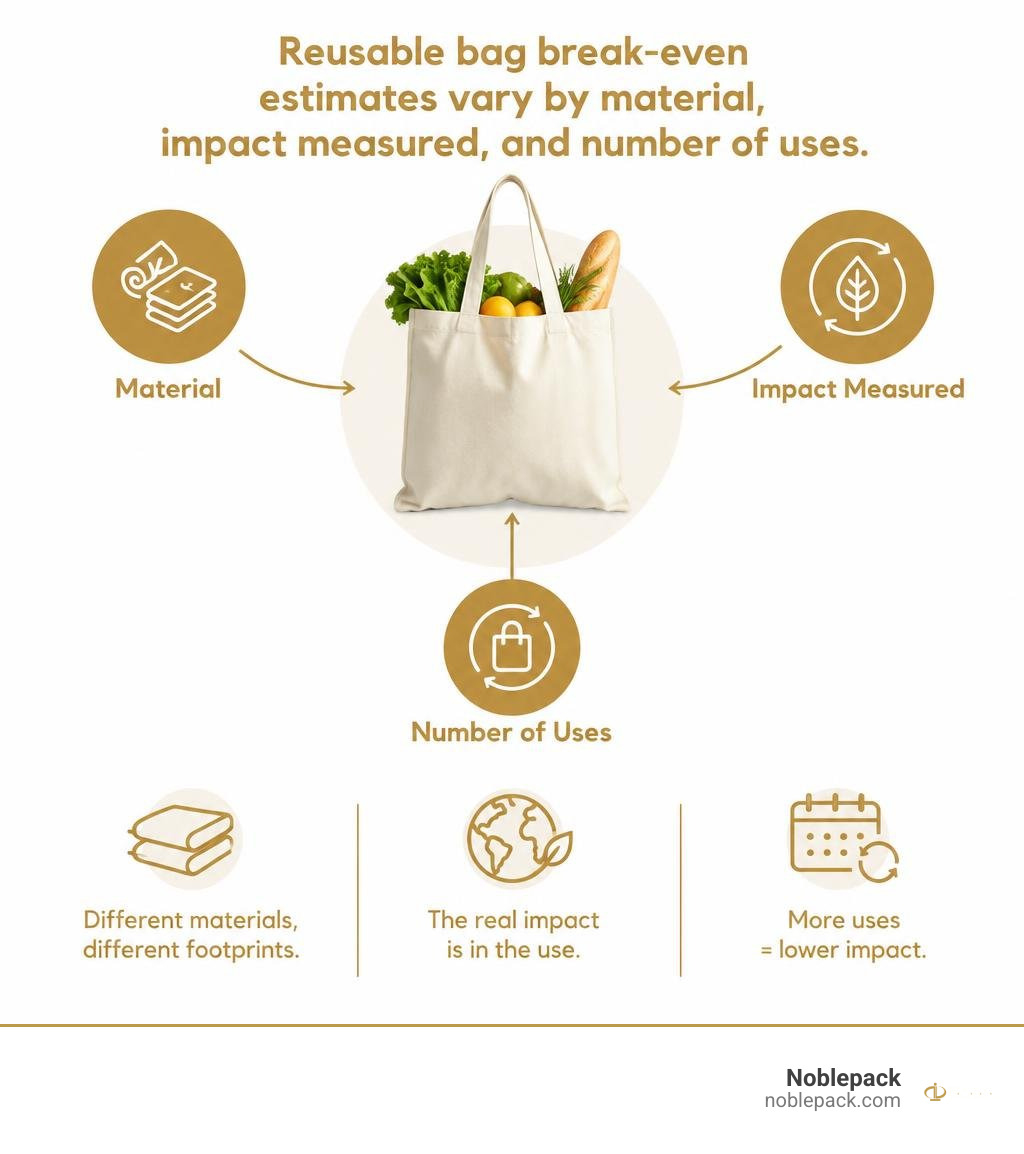
When we look at the lifecycle analysis of everyday carry items, the true sustainability of a bag is not measured solely by what it is made of, but by how many times we actually use it. Producing any durable carrier requires upfront resources—raw agricultural cultivation, energy-intensive textile weaving, or polymer processing.
A single reusable bag requires the same amount of manufacturing energy as roughly 28 traditional single-use plastic shopping bags or 8 paper bags. Because of this initial carbon footprint, simply accumulating dozens of green totes in a closet does not help the planet. In fact, studies show that reusable options must be used over 100 times before they become definitively better for the environment than standard disposable plastic bags across all lifecycle metrics, including water use and greenhouse emissions.
Unfortunately, consumer habits often fall short of this target. For example, research indicates the average conventional cotton bag is discarded after only 51 uses. Over its intended operational lifespan, however, a single well-made carrier can easily replace hundreds, if not thousands, of disposable plastic sacks.
| Bag Material Type | Production Energy vs. Single-Use Bag | Typical Lifespan | Minimum Uses to Offset Impact | Recyclability / Biodegradability |
|---|---|---|---|---|
| Single-Use Thin HDPE | Baseline (1x) | 1–2 uses | 1 use | Low recycling rate; non-biodegradable |
| Kraft Paper | 3x to 4x baseline | 3–5 uses | 4–8 uses | High recyclability; fully biodegradable |
| Non-Woven Polypropylene | 10x to 15x baseline | 2–4 years | 10–20 uses | Recyclable in specific commercial streams |
| Organic / Conventional Cotton | 80x to 130x baseline | 4–6 years | 100–131 uses | Biodegradable; compostable (untreated) |
| Jute / Abaca Fiber | 20x to 30x baseline | 3–5 years | 20–40 uses | 100% biodegradable; highly sustainable crop |
| Ripstop Nylon | 15x to 25x baseline | 5+ years | 30–50 uses | Synthetic; long-term reuse priority |
Global Legislation, Bag Bans, and Policy Evolution
Over the last two decades, consumer habits and municipal waste systems have shifted through targeted legislation. The United States alone has imported over 6.25 billion reusable bags for retail sale and giveaways since 1999. In many regions, government policies began with modest 5- to 10-cent fees on disposable checkouts to encourage shoppers to bring their own carriers.
However, policy evolution continues as earlier regulations reveal unintended loopholes. For example, plastic bag waste per capita in California actually rose by 47% between 2004 and 2021 when thicker "reusable" plastic film bags were allowed at checkouts instead of true long-term fabric carriers. In response, updated statewide legislation taking effect in 2026 bans all plastic checkout bags entirely, requiring grocers and retail merchants to transition strictly to certified 100% recycled paper bags or genuine fabric totes.
Material Breakdown: Fabric Types, Pros, and Cons
Choosing the right material ensures your bag will withstand daily friction without tearing, fraying, or harboring lingering smells.

| Material | Weight & Portability | Tensile Strength | Washability | Primary Advantage | Main Limitation |
|---|---|---|---|---|---|
| Organic Cotton Canvas | Medium to Heavy | High (35–50 lbs) | Machine washable (cold) | Soft, natural texture; durable | Shrinks if machine dried |
| Natural Jute | Medium to Heavy | Very High (40–55 lbs) | Spot clean only | Eco-friendly crop; stiff base | Coarse texture; not submersible |
| Non-Woven Polypropylene | Very Lightweight | Medium (25–35 lbs) | Hand wipe / hand wash | Inexpensive; easily molded | Degrades under high heat |
| Ripstop Nylon | Ultra-lightweight | Extremely High (45–65 lbs) | Machine washable | Folds into tiny pouch; water-resistant | Synthetic petrochemical base |
| Food-Grade Silicone | Compact / Pouch-sized | Puncture-resistant | Dishwasher safe | Heat resistant to 425°F; leak-proof | Higher initial cost |
Natural Fibers: Cotton, Canvas, and Jute
Natural plant fibers provide unmatched tactile elegance, breathability, and natural end-of-life biodegradability.
- Organic Cotton: Grown without synthetic pesticides, cotton certified under standards like GOTS (Global Organic Textile Standard) ensures both ecological and social supply chain integrity. Heavyweight canvas totes provide great tensile strength for books and dry goods. When you need a reliable everyday carryall, a classic Natural Cotton Tote Reusable Bag offers dependable shoulder comfort.
- Jute & Abaca Fibers: Jute is one of the most sustainable crops in the world, requiring minimal irrigation and no chemical fertilizers. Historically relied upon to transport heavy green coffee beans across continents, natural jute can endure years of abrasive friction. A Natural Jute Tote Bag with Bamboo Cane Handle provides strong structured sidewalls, while specialized carriers like a Jute Blend Wine Tote protect glass bottles during transit. Jute fibers also boast natural antimicrobial properties that resist odors over long periods.
Synthetic and Technical Materials: Nylon, Polypropylene, and Silicone
Synthetic materials provide water resistance, tight weave densities, and high strength-to-weight ratios.
- Ripstop Nylon: Originally developed for parachutes and outdoor mountaineering gear, diamond ripstop nylon uses cross-hatch reinforcement threads that stop small punctures from expanding into catastrophic tears. Premium nylon totes often feature PFC-free water-repellent coatings, keeping contents dry during rainy commutes.
- Non-Woven Polypropylene: This is the most common material used for budget-friendly grocery store totes. Spun-bonded plastic fibers create a flexible fabric that handles daily shopping duties at a very low manufacturing cost.
- Food-Grade Silicone & Technical Polymers: Platinum-cured, food-grade silicone is non-porous and free of BPA, BPS, lead, latex, and phthalates. These carriers are safe for the microwave, freezer, boiling water, and oven up to 425°F. For retail packaging and specialty dry food items, a Metallic Stand-Up Food Pouch with Clear Front provides an airtight, puncture-resistant barrier against moisture and air.
Key Durability Criteria and Structural Design Features
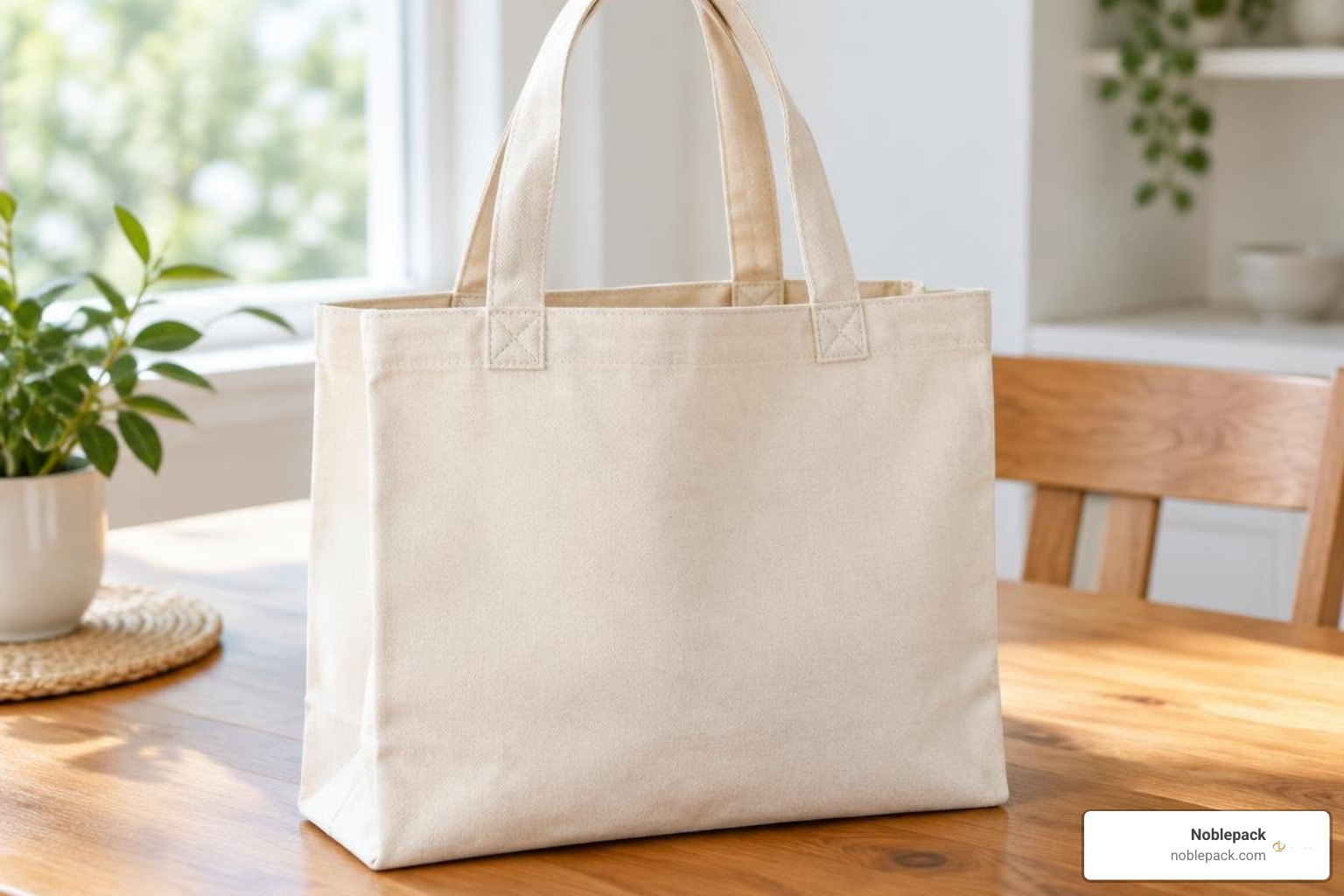
A bag that collapses into a frustrating tangle or breaks at the seams after three uses is neither practical nor sustainable. When evaluating everyday carriers, look for these key structural markers:
- Reinforced Seam Construction: Check the load-bearing stress points where the handles meet the bag rim. Look for cross-stitched box patterns (an "X" stitched inside a square) or industrial bartack stitching. Dual parallel rows of exterior lockstitching ensure seams will not split under 30-to-55-pound loads.
- Handle Ergonomics: Thin strap handles quickly dig into palms when carrying heavy canned goods or metal items. Choose wide, flat-woven webbing handles (at least 1.25 to 1.5 inches wide) or padded tubular handles. An ideal strap drop length of 9 to 11 inches allows you to comfortably carry the bag over your shoulder.
- Structured Base and Gussets: Flat, rectangular bases make packing much simpler. Bags designed with stiffened bottom inserts remain upright on supermarket checkout belts, kitchen counters, and in the trunk of your car.
Specialized Innovations and Modern Form Factors in Reusable Bags
The reusable market has expanded far beyond simple single-compartment sacks. Purpose-built carriers now incorporate specialized engineering to solve everyday pain points:
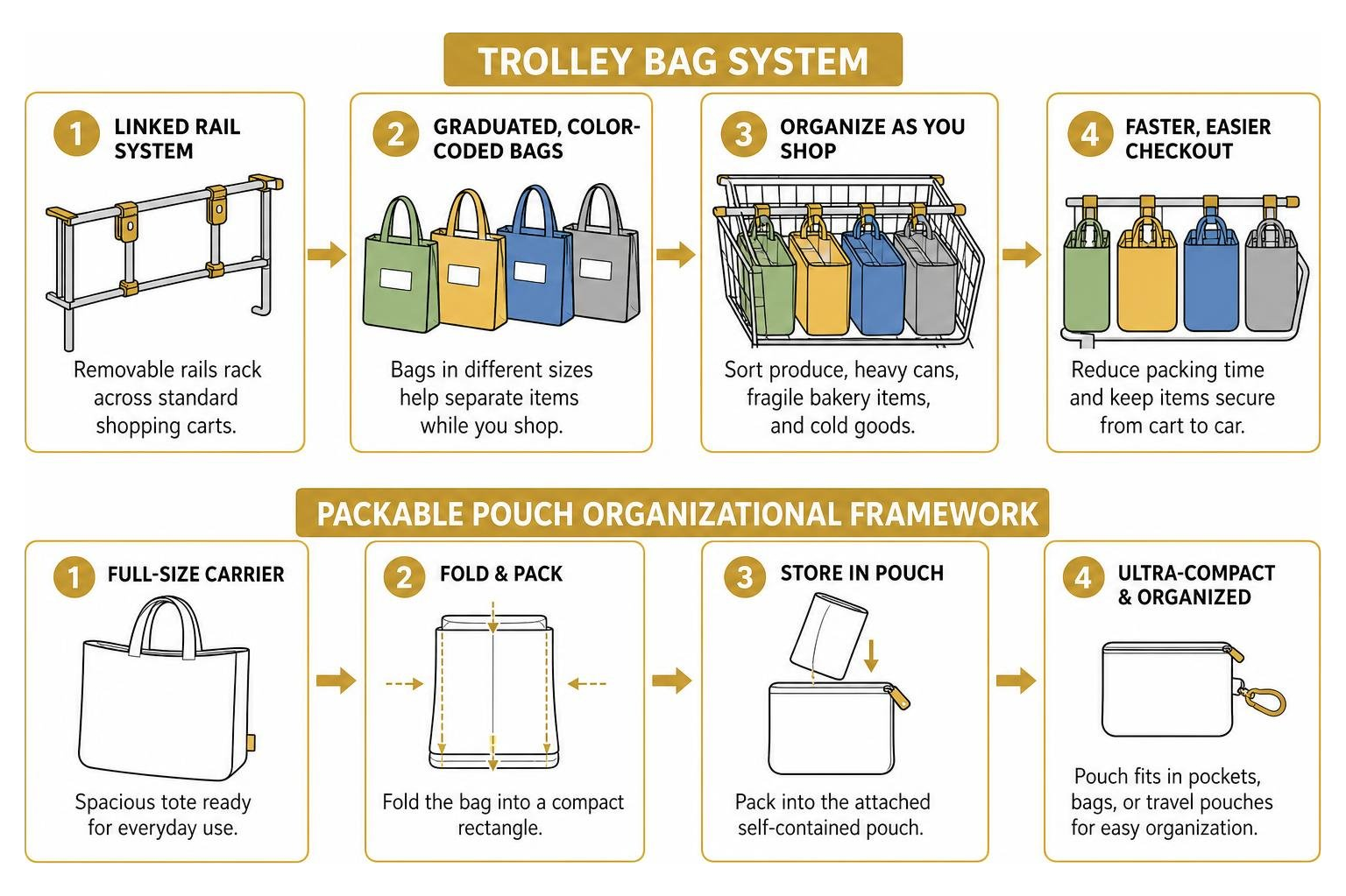
- Compartmentalized Trolley Systems: Innovations like Trolley Bags: Sustainable Reusable Shopping Bags use a series of graduated, color-coded bags linked by removable rails that rack across standard supermarket carts. Proven to save up to 40% of the time spent packing at the checkout, these systems allow shoppers to organize produce, heavy cans, fragile bakery items, and cold goods in real time.
- Thermal and Insulated Linings: High-density closed-cell foam cores wrapped in heat-reflective foil linings keep frozen groceries solid and hot takeout meals warm during extended commutes.
- Ultra-Compact Pocket Carriers: Technical micro-ripstop fabrics allow full-sized 20-liter shopping totes to pack down into self-contained pouches no larger than an egg. Pairing these with organizational tools like a Multi-Purpose Travel Pouch keeps your daily luggage, chargers, and cosmetics neatly organized on the road.
Purpose-Driven Selection Guide Across Daily Use Cases
Different routines demand distinct materials and functional shapes:
- Heavy Grocery Runs: Choose heavy-duty structured canvas or non-woven polypropylene totes with wide bottom gussets and reinforced handles rated for 40+ pounds.
- Fashion and Boutique Gifting: Choose breathable, elegant materials like a Soft Cotton Bag to protect fine jewelry, keepsakes, and delicate fabrics from surface scratches.
- Everyday Commuting & Errands: Keep ultra-lightweight ripstop nylon totes folded inside your daily backpack, purse, or glove compartment for impromptu shopping stops.
Best Reusable Bags for Grocery Shopping, Travel, and Food Prep
Using the wrong reusable carrier for fresh food can accelerate spoilage. Standard plastic wraps trap moisture and ethylene gas, causing leafy greens and berries to mold prematurely.
For fresh market trips, using Simple Ecology Reusable Produce Shopping and Storage Bags made from breathable organic cotton mesh allows natural air circulation and lets ethylene gas escape safely. At home, transition meal prep, marinated proteins, and chopped vegetables into leak-proof silicone pouches. High-grade silicone seals prevent freezer burn and let you reheat leftovers directly in the oven or boiling water without leaching chemicals.
Cleaning, Food Safety Risks, and Maintenance Guidelines
While reusable bags are great for reducing waste, they require basic hygiene to keep food safe.
Public health studies reveal that 97% of reusable bag users never wash them. As a result, laboratory tests showed that over 50% of unwashed bags carried coliform bacteria, and E. coli was detected in 12% of bags. Juices from raw meats, leaky seafood containers, and unwashed root vegetables can transfer bacteria onto ready-to-eat produce, bread, or packaging.
Additionally, product safety history highlights the importance of quality manufacturing: major retailers have previously issued safety recalls after discovering elevated levels of lead in the decorative inks of cheaply produced promotional bags.
To keep your bags safe and fresh, follow this maintenance routine:
- Cotton and Canvas: Machine wash in warm or hot water with regular laundry detergent; air dry or tumble dry low to avoid shrinkage.
- Synthetic Nylon and Polypropylene: Wipe down surfaces with a disinfecting wipe, or hand-wash in warm water with mild dish soap. Air dry completely before folding away.
- Food-Grade Silicone Pouches: Place upside down on the top rack of the dishwasher, or wash with hot soapy water. For stubborn odors, soak the pouch in a 50/50 mixture of warm water and white distilled vinegar, or place it in direct sunlight for a few hours.
- Prevent Cross-Contamination: Dedicate specific bags for raw meats and seafood, and use separate totes for fresh produce and dry pantry goods.
- Storage Habits: Avoid leaving grocery bags inside a hot, damp car trunk, which can accelerate bacterial growth. Instead, store them in a clean bin by the front door or in an indoor entryway closet.
Frequently Asked Questions
How many times do I need to reuse a bag to offset its carbon footprint?
The environmental break-even point depends directly on the material. A lightweight non-woven polypropylene bag typically offsets its manufacturing footprint after 10 to 20 uses. Standard cotton totes require roughly 100 to 131 uses to offset their intensive agricultural water and land footprint compared to single-use plastic. High-durability ripstop nylon and jute bags balance out after approximately 25 to 40 uses.
What is the safest way to clean and sanitize grocery bags?
For natural cotton and canvas, run them through a hot water wash cycle using everyday laundry detergent. For non-woven polypropylene, insulated coolers, and laminated totes, wipe down all interior seams and surfaces with an antibacterial disinfectant spray or warm soapy water, then let them air-dry thoroughly before packing them away.
What structural features prevent grocery bags from tipping over in the car?
Look for bags constructed with a wide, rectangular base and sewn-in bottom floorboards or rigid plastic base inserts. Totes with structured sidewall piping and reinforced corner gussets hold their open shape independently on floorboards, preventing items from rolling out during transit.
Conclusion
Building a truly sustainable lifestyle isn't about collecting a closet full of promotional totes—it is about choosing durable, high-quality carriers and using them consistently. By matching the right material to your specific daily tasks, verifying reinforced seam construction, and keeping your bags clean, you can replace thousands of single-use disposables over a bag's lifetime.
Whether you need sturdy totes for everyday errands or protective packaging for fine merchandise, explore Noblepack's eco-friendly reusable bags to find durable, sustainable solutions designed to last.