
Why Sustainable Jewelry Packaging Is the Future of Your Brand
Sustainable jewelry packaging is how modern jewelry brands protect their products and the planet — using recyclable, biodegradable, or compostable materials instead of traditional plastics and foam.
Here are the most popular sustainable jewelry packaging options:
- Recycled kraft paper boxes — curbside recyclable, widely available in bulk
- Organic cotton or linen pouches — reusable, soft, GOTS-certifiable
- Molded pulp boxes — plastic-free, biodegradable, premium feel
- Wool felt pouches — over 90% biodegradable, doubles as gift presentation
- Kraft mailers with honeycomb paper wrap — replaces bubble wrap for shipping
Today's buyers don't just care about the jewelry. They care about the whole picture — how a piece was made, and how it arrives at their door.
The numbers back this up. 78% of consumers say sustainability influences their purchasing decisions. 73% of Gen Z shoppers are willing to pay more for sustainable products. And the global market for paperboard jewelry boxes is on track to grow from $84.5 million in 2024 to $118.6 million by 2034.
For jewelry retailers and boutique owners, this isn't just an ethical shift. It's a business opportunity. Brands that make the switch to eco-friendly packaging signal quality, values, and trust — all at once.
The good news? You don't have to sacrifice premium presentation to go green. The best sustainable packaging today looks and feels just as luxurious as traditional options — often more so.
What is Sustainable Jewelry Packaging vs. Traditional Packaging?
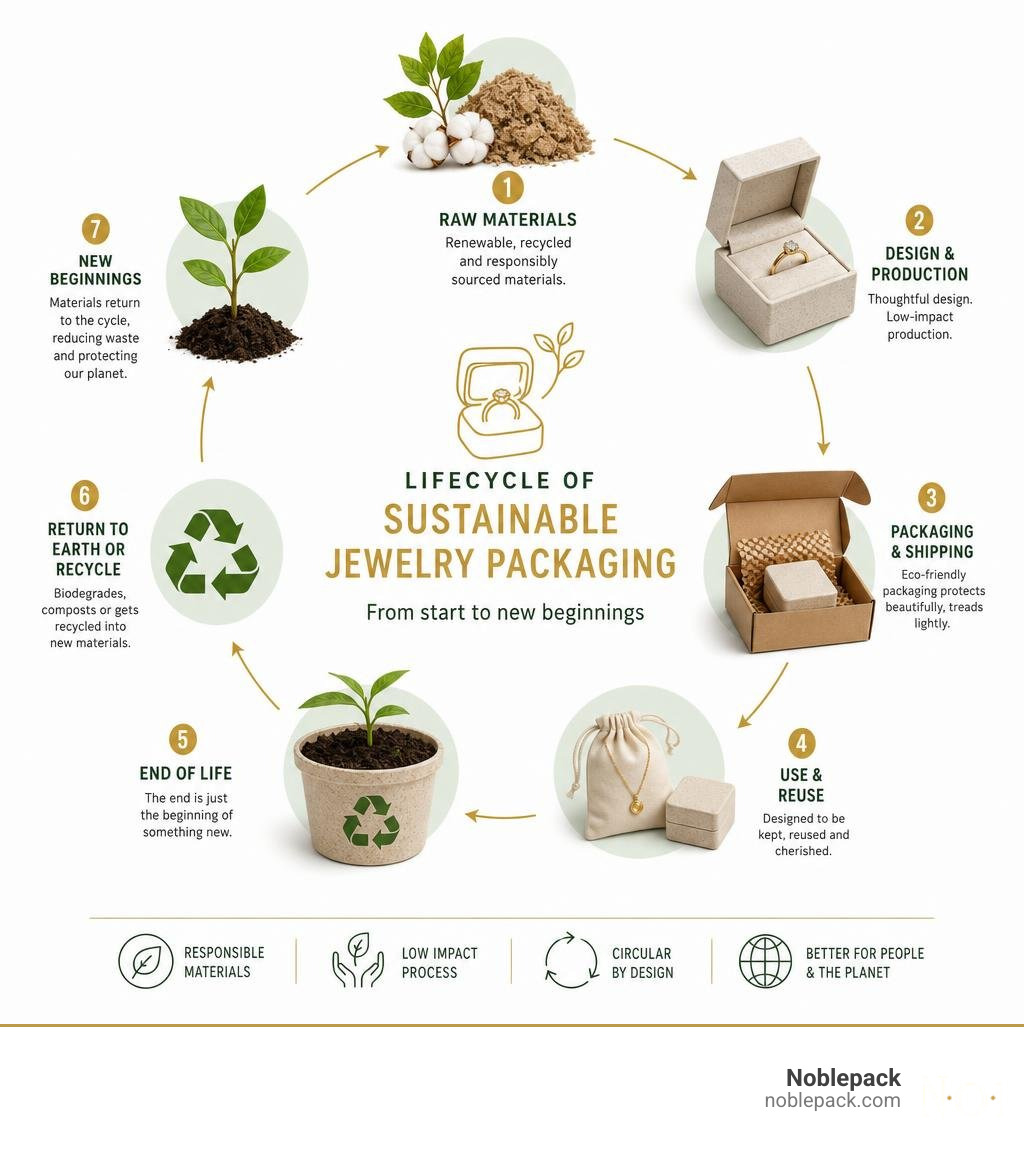
To understand why the shift to green packaging is sweeping the jewelry industry, we first have to look at how we design boxes and mailers. Traditional packaging relies on a linear "take-make-waste" model. A factory extracts raw oil, turns it into a plastic ring insert, ships it, and the customer throws it in the trash, where it sits in a landfill for 500 years.
Sustainable packaging, on the other hand, embraces circular design. Circular design means we plan for the entire life cycle of the box before we even make it. We ask: Where did this material come from? How long will it be used? And most importantly, where will it go when the customer is done with it? By choosing materials that can easily return to the earth or find new life in a recycling bin, we drastically reduce our collective environmental impact.
Defining Sustainable Jewelry Packaging for Modern Brands
For a modern brand, sustainable jewelry packaging is any wrapping, box, pouch, or shipping container designed to minimize environmental harm. This involves two major phases:
- Responsible Material Sourcing: Using renewable resources (like bamboo or organic cotton), FSC-certified virgin wood fibers, or post-consumer recycled (PCR) waste.
- End-of-Life Disposal: Ensuring the packaging is easy for the customer to recycle, compost at home, or reuse for years to come.
When we select materials, we must consider their long-term footprint. You can learn more about how different substrates interact with our ecosystems in our detailed guide on how do various packaging materials affect the environment.
The Environmental Impact of Traditional Jewelry Boxes
Traditional jewelry packaging is notoriously tough on the environment. Classic rigid boxes often look beautiful, but under that pretty paper exterior lies a thick plastic frame. To make matters worse, the interior is typically lined with polyurethane foam or polyester velvet inserts. These materials are incredibly difficult to separate, making the entire box completely unrecyclable.
Furthermore, the manufacturing of virgin plastics and synthetic foams releases high amounts of greenhouse gases. When these boxes are discarded, they contribute to the millions of tons of plastic waste entering our oceans and landfills annually.
Here is how traditional materials compare to modern, eco-friendly alternatives:
| Packaging Component | Traditional Material (High Impact) | Eco-Friendly Alternative (Low Impact) | Primary Benefit |
|---|---|---|---|
| Outer Box Structure | Virgin plastic or laminated rigid board | Recycled cardboard or molded pulp | Biodegradable, uses up to 95% less energy to produce via upcycling |
| Interior Cushioning | Polyurethane foam or plastic vacuum trays | Molded pulp, mycelium, or wool felt | 100% compostable and plastic-free |
| Pouch / Wrap | Synthetic microfiber or polyester velvet | Organic GOTS cotton, linen, or bamboo | Reusable, biodegradable, and organic |
| Branding & Ink | Petroleum-based inks & plastic laminates | Soy-based, water-based, or algae inks | Non-toxic, does not contaminate the paper recycling stream |
Why Transitioning to Sustainable Jewelry Packaging Matters
Making the transition to green packaging is no longer just a trend for niche bohemian brands. In 2026, it is a core business strategy that directly impacts customer loyalty, brand reputation, and your bottom line.
Meeting the Demands of Eco-Conscious Consumers
Consumer habits have shifted permanently. Modern buyers — led by Gen Z and Millennials — actively seek out brands that share their ethical standards.
- 78% of consumers care about sustainability when making purchasing decisions.
- 73% of Gen Z buyers are willing to pay more for sustainably sourced products.
- 66% of all buyers actively prefer products that arrive in green packaging.
- Up to 7% of consumers are willing to pay a premium of more than 10% extra just to ensure their packaging is eco-friendly.
When you adopt sustainable branding, you are not just saving trees; you are building an emotional connection with your buyers. An elegant, eco-conscious unboxing experience tells your customers that you care about the details. It turns a simple purchase into a shared statement of values, which dramatically boosts customer retention and social media word-of-mouth.
Navigating Global Regulations and Compliance
If consumer demand doesn't convince you to make the change, global legislation will. Governments worldwide are cracking down on retail waste.
In Europe, the EU Packaging and Packaging Waste Regulation (PPWR) has introduced strict mandates. By 2030, all packaging must be recyclable, empty space in shipping boxes must be restricted to a maximum of 50%, and plastic packaging must contain at least 35% recycled content.
In the United States, several states have enacted Extended Producer Responsibility (EPR) laws. These laws make brands financially responsible for the lifecycle of the packaging materials they put into the market. Transitioning to lightweight, highly recyclable paper and natural fibers now protects your business from future compliance penalties and rising waste taxes.
Eco-Friendly Materials and Innovations in Jewelry Packaging
The packaging industry has exploded with material innovations. Today, we have access to incredible resources that protect delicate precious metals and gemstones without harming the earth.
Recycled Cardboard and Kraft Paper Solutions
The absolute workhorse of eco-friendly packaging is recycled paperboard. Using upcycled cardboard is incredibly efficient — did you know that upcycling paper uses 95% less energy than producing entirely new materials from virgin wood?
For high-quality wholesale boxes, we highly recommend sourcing products with FSC (Forest Stewardship Council) certification. This ensures that any virgin fibers used are harvested from responsibly managed forests that support local communities and protect wildlife.
Many of our popular eco-friendly packaging boxes are made from 90% to 100% post-consumer recycled kraft paper. They are completely biodegradable, naturally charming, and can be easily tossed into any standard curbside recycling bin by your customer.
Organic Fabrics and Reusable Pouches
Pouches are an exceptional packaging choice because they are inherently reusable. Instead of throwing a box away, customers keep fabric pouches to store their jewelry while traveling or to organize their daily accessories.

When selecting fabrics, look for GOTS (Global Organic Textile Standard) certified organic cotton, linen, or hemp. These crops are grown without harmful synthetic pesticides and require far less water to process than conventional cotton.
Another fantastic innovation is organic wool felt. High-quality wool felt (often sourced with a 90% organic wool and 10% organic polyester blend) is over 90% biodegradable. It is naturally water-resistant, breathable, and incredibly soft, offering premium protection for scratch-sensitive metals like polished gold and sterling silver.
Next-Gen Biomaterials: Mycelium and Seaweed
If you want to position your brand at the absolute cutting edge of design, next-gen biomaterials are the way to go.
- Mycelium: This is the root structure of mushrooms. Manufacturers grow mycelium in custom molds filled with agricultural waste. In just a few days, it forms a lightweight, shock-absorbing packaging insert that has a beautiful, velvet-soft texture. It is 100% home-compostable and serves as a direct, non-toxic replacement for plastic foam inserts.
- Seaweed Packaging: Seaweed-based bioplastics are rapidly emerging as a clean alternative to traditional plastic polybags. They are fully biodegradable, dissolve safely in water, and do not leave behind harmful microplastics.
How to Balance Luxury Aesthetics with Sustainable Jewelry Packaging
A common misconception is that sustainable packaging has to look "rustic" or cheap. Many designers worry that unbleached kraft paper will make their high-end diamond rings look less valuable.
In reality, sustainable jewelry packaging has become the new definition of luxury. Modern luxury is quiet, thoughtful, and highly tactile. By focusing on exquisite textures, smart structures, and elegant branding, you can create an eco-luxe unboxing experience that feels incredibly premium.
Eco-Luxe Printing and Finishing Techniques
Traditional luxury packaging often relies on plastic laminations (which give boxes a glossy look but make them unrecyclable) and heavy metallic foil stamping. To achieve a high-end look sustainably, we recommend using clean, modern alternatives:
- Eco-Friendly Inks: Swap out petroleum-based inks for soy-based, water-based, or carbon-negative algae inks. These inks produce rich, vibrant colors without leaving toxic residues during the recycling process.
- Embossing and Debossing: Instead of adding plastic-heavy metallic foils, press your logo directly into the paperboard. Embossing (raising the paper) and debossing (indenting the paper) create stunning, tactile three-dimensional designs that catch the light beautifully.
- Eco-Friendly Foils: If you absolutely must have a metallic shine, opt for certified recyclable cold foils or plastic-free hot stamping techniques that do not interfere with paper repulping.
To complete the presentation, wrap your boxes in beautifully printed eco-friendly wrapping paper. For our full curated range of green wholesale options, explore the Noblepack Sustainable Jewelry Packaging collection.
Minimalist and Smart Structural Design
Sometimes, the most sustainable design choice is simply using less. A minimalist approach reduces material waste, lowers shipping weight, and looks incredibly sophisticated.

Consider these structural design strategies:
- Right-Sizing: Ensure your boxes are perfectly proportioned to the jewelry pieces inside. This eliminates the need for excess filler materials and keeps your package lightweight.
- Glue-Free Assembly: Many traditional boxes require toxic chemical glues to hold their shape. Modern eco-boxes utilize clever origami-inspired folding patterns and elastic bands to lock together without a single drop of adhesive.
- Nesting Designs: Choose boxes that ship flat or nest tightly inside one another. This drastically reduces the physical space required for transport, which lowers shipping costs and slashes your brand's carbon footprint before the packaging even reaches your shop.
Frequently Asked Questions about Eco-Friendly Packaging
Transitioning your supply chain can feel overwhelming. Here are quick answers to the most common questions jewelry retailers ask us.
What certifications should I look for in sustainable packaging?
To avoid "greenwashing" and ensure your packaging is genuinely eco-friendly, look for these trusted third-party certifications:
- FSC (Forest Stewardship Council): Guarantees that paper and wood products come from responsibly managed forests. You can learn more from the official Forest Stewardship Council website.
- GOTS (Global Organic Textile Standard): Verifies the organic status and ethical processing of textiles like cotton and linen.
- RJC (Responsible Jewellery Council): Ensures ethical, social, and environmental practices throughout the jewelry supply chain.
- Cradle to Cradle: Evaluates a product's safety to humans and the environment, as well as its design for future life cycles.
Is sustainable packaging more expensive for small brands?
While custom biomaterials can carry higher initial costs, transitioning to sustainable packaging does not have to break the bank.
- Start Small: Swap out your most popular packaging items first, such as your standard earring cards or shipping mailers.
- Buy Wholesale: Purchasing stock-efficient, ready-to-ship eco-boxes in bulk from wholesale suppliers dramatically lowers your cost per unit.
- Long-Term ROI: Because 73% of consumers are willing to pay more for green products, you can often offset minor packaging cost increases through higher retail margins and stronger customer loyalty.
How do I ensure my shipping mailers are also eco-friendly?
Your green presentation shouldn't stop at the jewelry box. The outer shipping container matters just as much.
- Ditch the Bubble Wrap: Replace plastic bubble mailers with paper padded envelopes lined with protective honeycomb paper wrap. Honeycomb wrap expands to absorb shocks during transit and is 100% curbside recyclable.
- Recycled Kraft Mailers: Use shipping boxes and mailers made from post-consumer recycled paperboard. Opting for high-recycled-content paperboard ensures your shipping process remains as green as your product packaging.
Conclusion: Elevate Your Brand with Conscious Luxury
The future of jewelry packaging is clear: elegance and ethics must go hand-in-hand. By transitioning to sustainable jewelry packaging, you protect the natural beauty of our planet while offering your customers an unboxing experience they can feel truly good about.
At Noblepack, we are committed to helping you make this transition seamless and affordable. Whether you are looking for gorgeous organic cotton pouches, biodegradable kraft boxes, or premium designs from our signature Sardinia collection, we have the wholesale solutions you need. We also offer incredible savings on discontinued premium products through our discounted clearance section — perfect for growing brands looking to test high-end packaging on a budget.
Ready to elevate your brand's presentation? Explore our full range of eco-friendly jewelry packaging today to find the perfect fit for your brand and discuss custom printing and logo imprinting options!