
How to Choose a Vintage Wooden Jewelry Box with Glass Doors
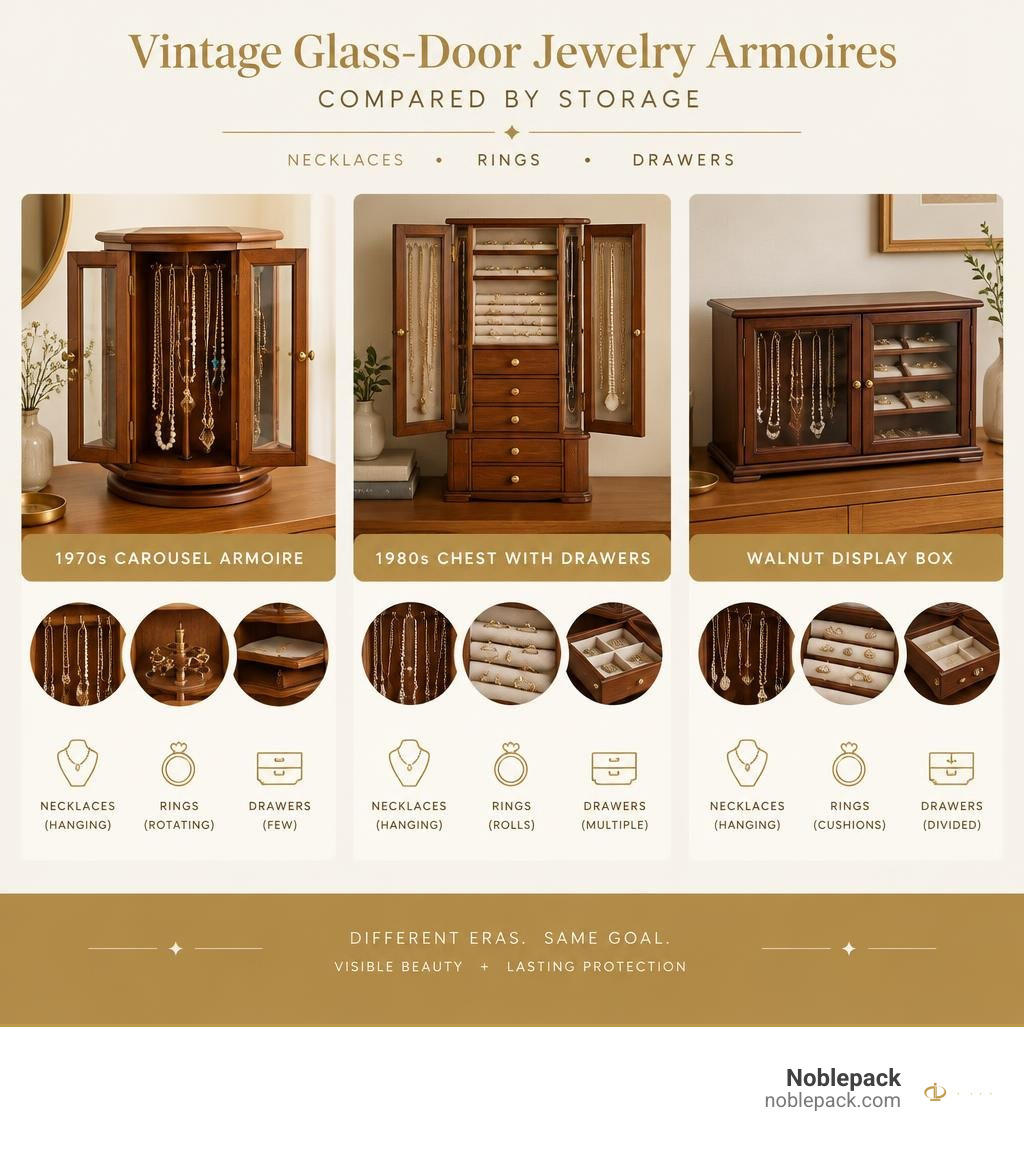
Start with the jewelry you need to store. A 1970s carousel armoire works well for necklaces, while a 1980s chest with drawers and ring rolls suits a mixed collection. A walnut display box may be the better choice if you care most about craftsmanship and appearance. For any style, check that the glass is intact, the doors close properly, and the lining is clean.
I’m Dannah Davies, and I’ll help you compare these styles so you can choose a box that looks good and works for your collection. Whether you are drawn to the rotating convenience of a mid-century carousel, the modular storage of a cherry-finished chest, or the heirloom presence of a Victorian Revival display box, understanding the structural details and interior formats will help you avoid reproductions that look charming but fail under daily use. A well-made vintage wooden jewelry box with glass doors should protect your pieces from dust, tangling, and humidity while remaining a beautiful focal point on your vanity.
Top Styles of the Vintage Wooden Jewelry Box with Glass Doors
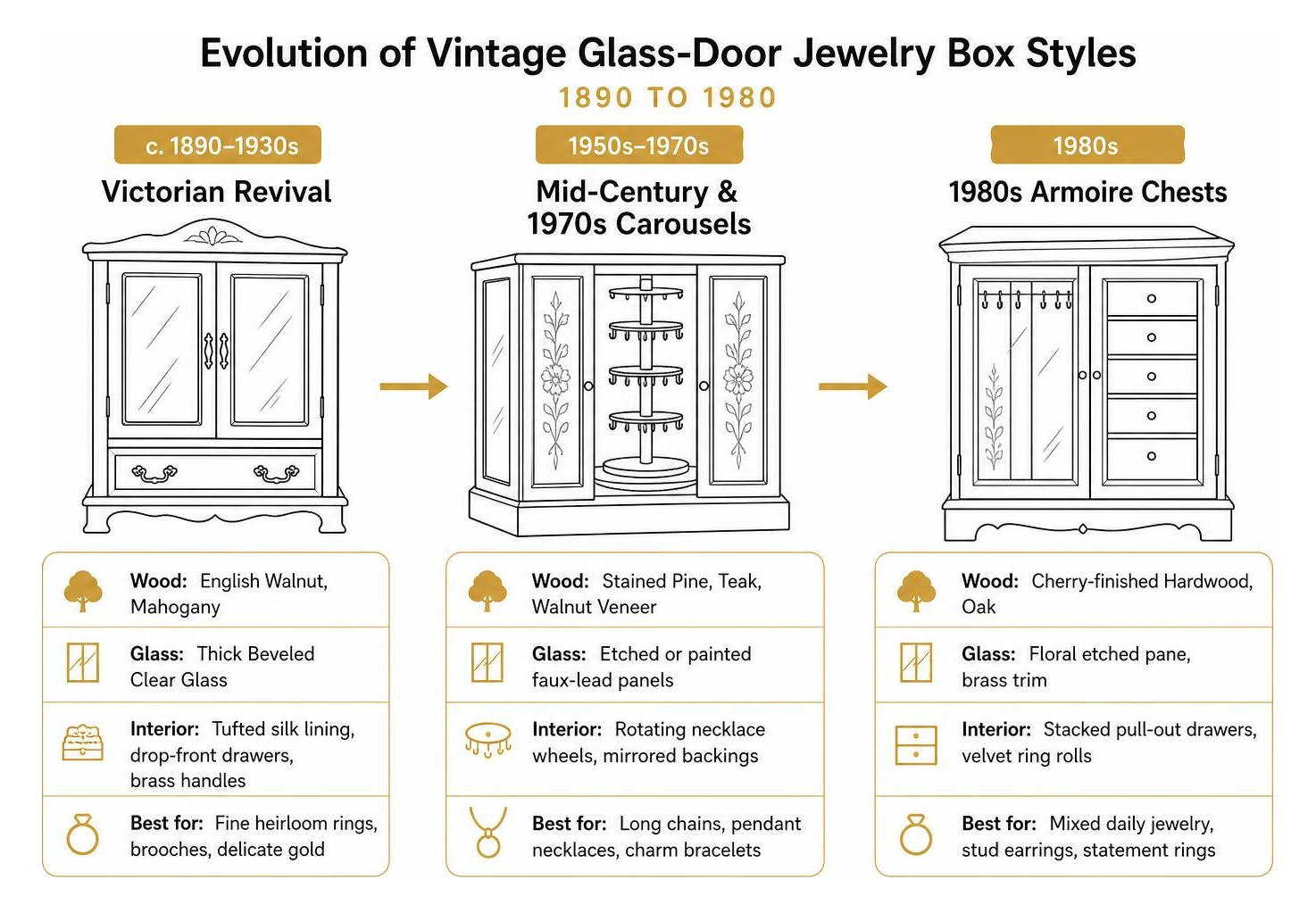
When shopping for an authentic vintage wooden jewelry box with glass doors, you will encounter distinct design movements spanning the late 19th century through the vibrant decades of the late 20th century. Each era balanced visibility and protection differently, using distinct timber species, glass treatments, and internal mechanics. Knowing the hallmarks of each period helps you identify a genuine piece, assess its storage capacity, and match it to the type of jewelry you wear most often.
| Era & Style | Primary Wood Species | Glass Treatment | Key Interior Features | Best Suited For |
|---|---|---|---|---|
| Victorian Revival (c. 1890–1930s) | English Walnut, Mahogany | Thick Beveled Clear Glass | Tufted silk lining, drop-front drawers, brass handles | Fine heirloom rings, brooches, delicate gold |
| Mid-Century & 1970s Carousels | Stained Pine, Teak, Walnut Veneer | Etched or painted faux-lead panels | Rotating necklace wheels, mirrored backings | Long chains, pendant necklaces, charm bracelets |
| 1980s Armoire Chests | Cherry-finished Hardwood, Oak | Floral etched pane, brass trim | Stacked pull-out drawers, velvet ring rolls | Mixed daily jewelry, stud earrings, statement rings |
Mid-Century Modern and 1970s Carousel Armoires
The 1970s popularized the standing tabletop wardrobe organizer. These pieces featured dual glass doors opening outward to reveal one or two central rotating carousels. Craftspeople decorated the glass panels with delicate floral etchings, amber tints, or raised-enamel accents designed to mimic leaded panels, such as those found on stained glass wardrobe designs.
Inside, a central spindle supported multi-hook brass wheels. Mirrored rear backings reflected natural light through the glass doors, creating a dynamic showcase while keeping pendant chains completely free of knots. The carousel mechanism was especially useful for long necklaces and charm bracelets, which could be rotated into view without being lifted or untangled. Many collectors prize these organizers for their combination of display appeal and practical access, and they remain among the most recognizable examples of a vintage wooden jewelry box with glass doors.
1980s Multi-Drawer Cherry Finish Chests
During the 1980s, vanity storage shifted toward rich cherry finishes, warm honey oaks, and high-capacity modular storage. These armoires featured single or dual full-length beveled glass doors framed in molded timber. Behind the glass, an asymmetric layout offered dedicated vertical necklace hanging on one side and a column of three to five stacked drawers on the other.
The brass teardrop pulls and plush, dusty-rose or cream velvet linings defined this period. For collectors with wide-ranging accessory collections, these versatile organizers provided a dedicated home for everything from cocktail rings to tennis bracelets. The stacked drawer format also made it easier to separate everyday pieces from occasional statement jewelry, a practical advantage that continues to make 1980s chests popular among vintage buyers.
Victorian Revival and Walnut Display Boxes
Drawing inspiration from late 19th-century cabinetry, Victorian Revival organizers highlight rich, dark grains and substantial joinery. Original antique units and early-century tributes, such as historical walnut and glass jewelry storage, frequently featured drop-front doors, domed tops, and tufted silk interiors.
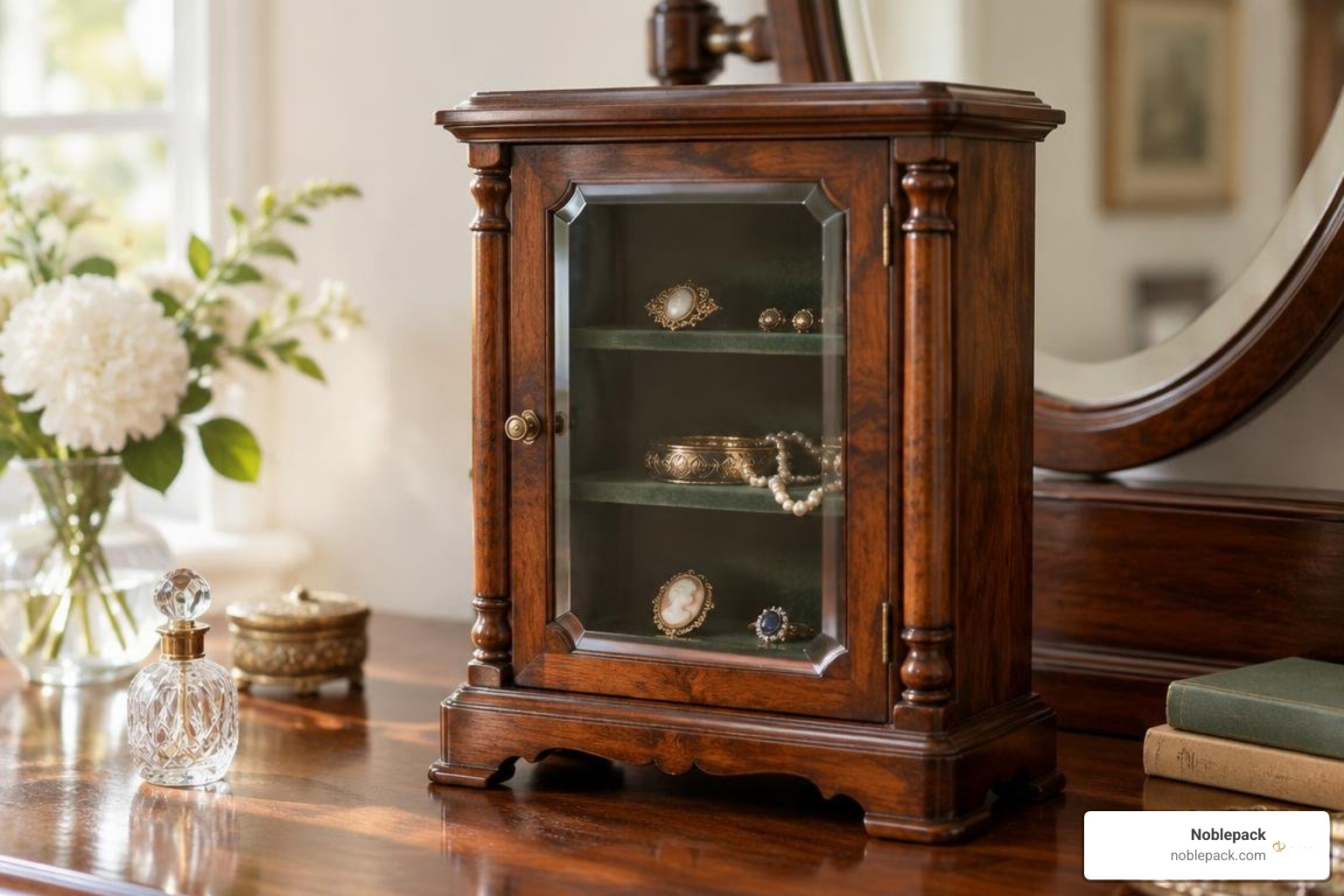
These chests relied on thick, hand-beveled glass that refracted ambient light across your vanity. While less compartmentalized than modern modular units, their heirloom presence and dense walnut construction make them prized display centerpieces. A well-preserved Victorian Revival box often becomes the visual anchor of a dressing table, and its solid timber frame can withstand decades of use when properly maintained.
Essential Features and Craftsmanship in Glass-Door Organizers
Understanding how vintage organizers were built helps you separate genuine collectible craft from flimsy mass-market reproductions. High-grade vintage boxes utilize solid hardwood framing or thick, balanced veneers that resist warping over decades of seasonal humidity shifts. The best examples combine sturdy joinery with carefully fitted glass panels, ensuring that the doors remain aligned and the interior stays protected from dust and moisture.
Fine vintage display boxes use brass butt hinges screwed directly into the timber frame, paired with friction-fit ball catches or miniature magnetic plates that keep glass doors flush. Inside, precise grid partitions organize delicate items, mirroring the functionality of a genuine wooden tray with earring inserts. These interior layouts were often designed around specific jewelry types, with dedicated zones for rings, earrings, necklaces, and bracelets.

Anatomy of a Vintage Wooden Jewelry Box with Glass Doors
Every element of a classic glass-front armoire serves a protective or decorative function:
- Beveled Glass Panes: Precision-angled edges disperse light across stored metals and gemstones.
- Etched Enamel Artwork: Frosted botanicals or raised gold scrollwork shield stored jewelry from direct vanity glare.
- Carousel Spindles: Smooth-gliding brass or nylon pivots let you spin necklace racks without catching chains on door frames.
- Padded Ring Wells: Closely spaced, foam-backed fabric rolls compress safely around ring bands, much like a specialized wooden double ring jewelry box.
- Felt Base Pads: Under-cabinet green or brown felt protects dresser tabletops from scratches.
Interior Linings and Compartment Formats
The interior lining of a vintage box shields precious metals from abrasion and atmospheric moisture. A quality lining also prevents fine chains and prongs from catching on rough wood or exposed hardware, which is why collectors pay close attention to the condition of the original fabric.
- Flocked Synthetic Velvet: Introduced widely from the 1970s onward, electrostatic flocked linings provide consistent cushion and resist crushing under heavier bangles.
- Tufted Silk and Satin: Found in pre-1950s and Victorian Revival boxes, natural silk offers a friction-free surface that will not snag delicate prongs.
- Dedicated Pendant Slots: Deep, velvet-lined drop zones accommodate long pendant drops, offering the same level of safety as a stand-alone wooden large pendant jewelry box.
Buyer's Guide: Evaluation, Care, and Restoration
Assessing a vintage jewelry chest requires careful inspection of both the external timber frame and the fragile moving components inside. A thorough evaluation should cover the glass panels, hinges, drawer joinery, and interior lining, since repairs to any of these areas can be costly and may affect the piece's collectible value.
Authenticating a Vintage Wooden Jewelry Box with Glass Doors
To verify the era and quality of a potential purchase, examine these structural benchmarks:
- Joinery Methods: Look for dovetailed or clean tongue-and-groove corner joints along the drawers rather than modern staples or hot-melt adhesive.
- Hardware Aging: Genuine brass hardware develops a mellow, uneven patina over time. Bright, perfectly uniform golden coatings typically indicate modern zinc-alloy replacements.
- Glass Consistency: Vintage glass may show minor variations, slight edge waves, or minute air bubbles, whereas contemporary reproductions use ultra-thin machine float glass.
- Maker Stamps and Foiling: Check drawer undersides and rear backboards for burned maker marks or foil inspection stickers from legacy manufacturing hubs.
High-luster wood finishes, such as those seen on a high shine mahogany color wooden single earring box, should be checked for signs of crazing or sun bleaching on exterior sides. Pay particular attention to the areas around the glass doors, where old finishes often show the earliest wear from repeated handling.
Cleaning and Maintenance Best Practices
Preserving vintage materials requires gentle, non-invasive cleaning techniques. The goal is to remove surface dust and light grime without introducing moisture or harsh chemicals that could damage aged wood, fabric, or adhesive.
- Glass Care: Never spray liquid glass cleaner directly onto the cabinet door. Liquid can seep behind the wooden retaining beading and dissolve the adhesive holding the mirrors or stain the interior velvet. Instead, mist an ammonia-free cleaner onto a microfiber cloth and wipe gently.
- Timber Conditioning: Buff exterior wood surfaces twice a year with a natural paste wax containing beeswax or carnauba. Avoid silicone-heavy aerosol furniture sprays, which create a sticky film that attracts dust.
- Lining Restoration: Lift dust, lint, and loose debris from velvet ring rolls using a soft, dry artist’s paintbrush or a low-tack lint roller. Never use wet cloths on flocked interiors, as moisture can break down vintage backing glues.
- Hinge Maintenance: If doors squeak or bind, apply a single drop of mineral oil to hinge knuckles using the tip of a toothpick, wiping away any excess immediately.
Frequently Asked Questions About Vintage Glass-Door Jewelry Boxes
What is the typical price range for vintage wooden jewelry organizers with glass doors?
In today's marketplace, standard 1980s cherry or oak multi-drawer jewelry armoires in good working condition generally range between $35 and $80. Unique 1970s dual-door carousel wardrobe boxes featuring hand-painted panels or stained-glass details command $75 to $150. Rare, museum-quality Victorian or Edwardian walnut boxes with functional original locks and keys frequently exceed $200 to $450. Condition, wood species, and the presence of original hardware all influence final pricing, so compare several listings before committing to a purchase.
How do you prevent tarnishing inside vintage wooden jewelry boxes?
Place anti-tarnish fabric strips or small food-grade silica gel packs inside the rear drawer corners to absorb excess ambient humidity. Ensure your jewelry box sits away from direct sunlight, heating radiators, and humid bathroom air, all of which accelerate wood movement and silver tarnishing. For pieces worn less frequently, store them in small sealed pouches inside the box to provide an additional barrier against airborne pollutants.
Which wood types offer the greatest durability and collectible value?
Solid English walnut, Honduran mahogany, and white oak offer exceptional longevity and structural stability. While vintage pine and composite veneer cabinets offer retro aesthetic appeal, solid hardwood armoires resist chipping and hold collector value for generations. Cherry-finished hardwoods from the 1980s also remain popular for their warm color and dependable drawer construction.
Conclusion
A vintage wooden jewelry box with glass doors blends practical jewelry organization with timeless vanity elegance. Whether you prefer a spinning 1970s carousel, a multi-drawer 1980s cherry chest, or a Victorian walnut display, these classic pieces elevate your daily dressing routine. Their combination of visible storage, protective linings, and period craftsmanship makes them enduring favorites among collectors and everyday jewelry wearers alike.
At Noblepack, we understand the importance of quality craftsmanship and reliable protection for your most treasured accessories. If you love timeless design and want dependable, elegant ways to store your collection, browse premium jewelry boxes to find the perfect complement for your vanity.