

Choose a Gold Bullion Tester by Risk, Not Just Price
The best gold bullion tester depends on what you sell, how often you test, and whether the item can be marked. For most jewelry retailers and small bullion buyers, use more than one method:
- Check weight, size, hallmarks, and magnet response first.
- Use a non-destructive electronic tester for coins, bars, and packaged bullion.
- Use an acid kit and touchstone only when a small scratch is acceptable.
- For high-value purchases, confirm results with a second method or a professional assay.
Acid kits are low-cost and useful for basic karat checks, but they test the surface and can leave a mark. Magnets are a fast screening tool, not proof of purity. Electronic conductivity and magnetic-susceptibility testers cost more, yet they offer faster, repeatable, non-destructive checks and can help identify common counterfeit risks, including dense tungsten-filled gold bars.
No single tool catches every fake. A reliable testing workflow combines visual inspection, accurate weight and dimensions, and at least one material-based test. That layered approach helps protect both your inventory and your customers' trust.
I'm Dannah Davies, and this guide will help you choose a practical bullion-testing setup for your counter, collection, or buying desk.
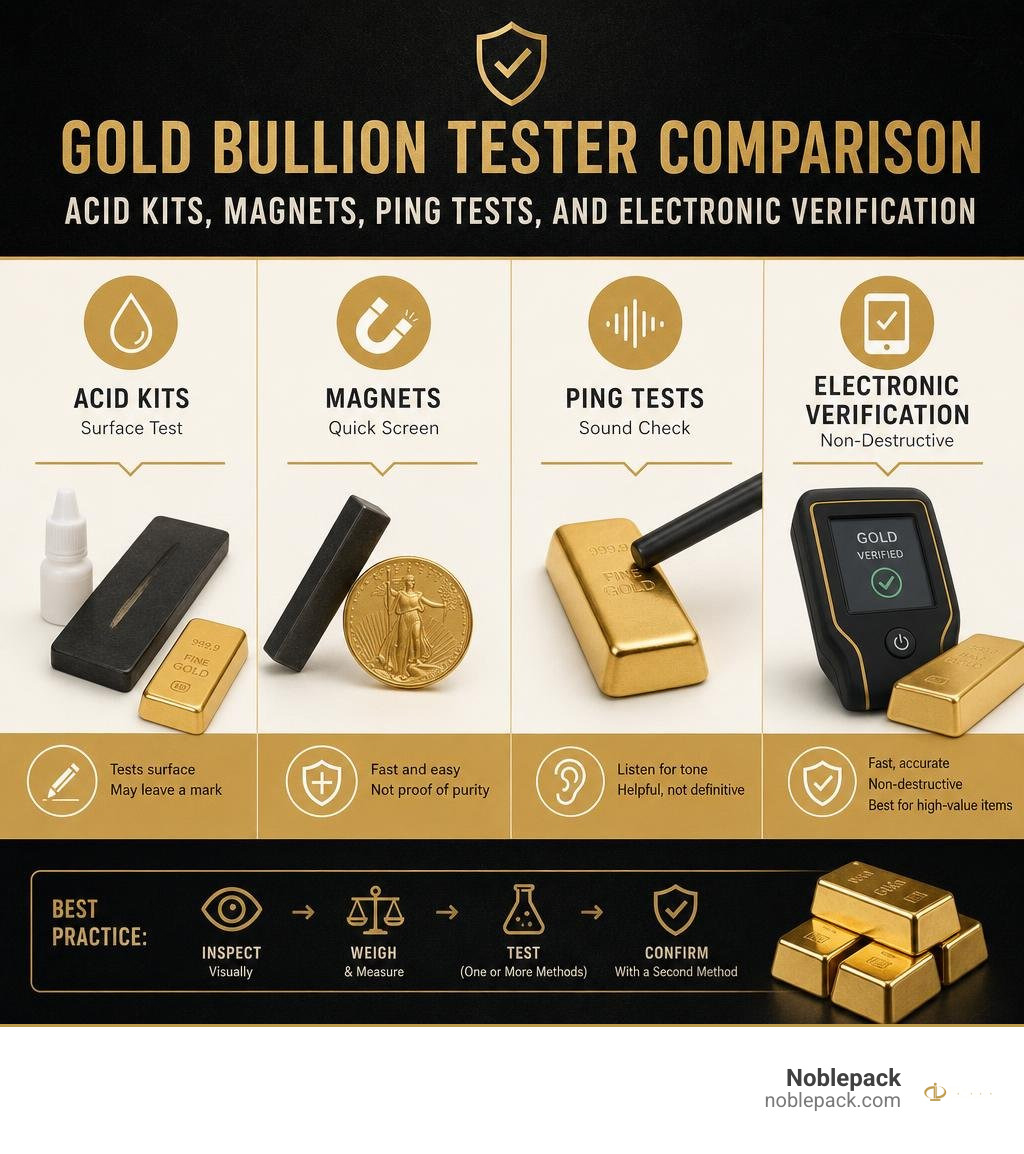
Primary Types of Precious Metal and Bullion Testers
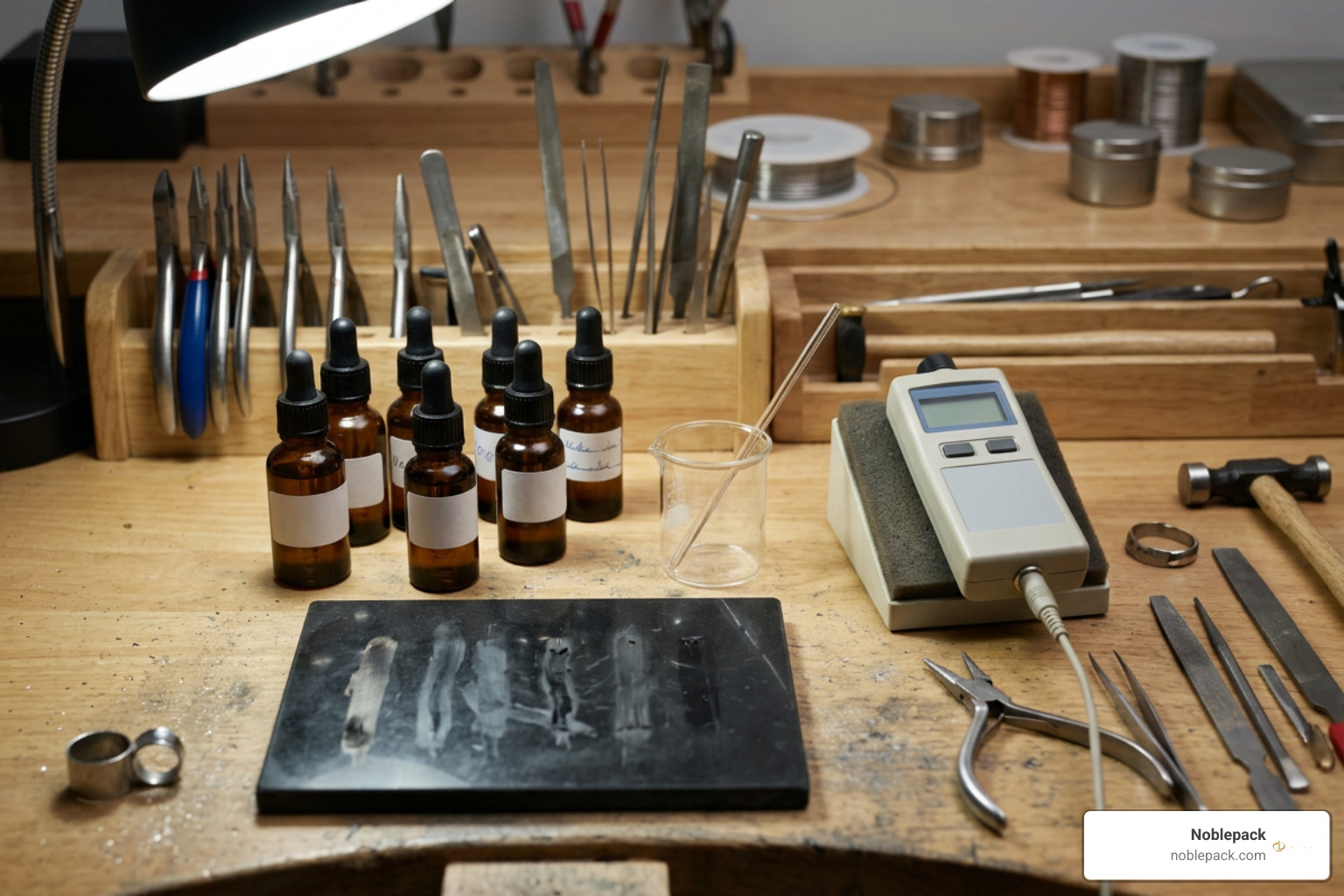
When evaluating authentication equipment, understanding how each device interacts with a metal sample is critical. Testing technologies fall into three broad categories: traditional chemical assays, physical screening tools, and electronic or electromagnetic verification instruments.
Chemical Acid Kits and Touchstones
Chemical acid kits represent the traditional baseline of precious metal verification. The standard method involves rubbing a sample across gold & silver testing plates to leave a distinct metallic streak, then applying specialized test acids for gold, silver & platinum formulated with calibrated nitric acid concentrations.
If the streak dissolves rapidly under a specific acid strength (such as 14K or 18K), the metal possesses a lower purity than marked. While budget-friendly (basic kits often cost $20 to $35), this method is inherently destructive to the sample's surface finish. It is best suited for scrap jewelry appraisal rather than collectible, premium coins or investment-grade bullion bars.
Basic Physical Tools: Magnets and Ping Testers
Physical screening tools provide immediate, zero-contact indicators of authenticity:
- Neodymium Rare-Earth Magnets: Pure gold and silver are diamagnetic (weakly repelled by magnetic fields). Strong N52 neodymium magnets help weed out base-metal counterfeits made of steel, iron, or nickel. Furthermore, advanced magnetic susceptibility devices detect tungsten inserts, which exhibit subtle paramagnetic attraction.
- Acoustic Resonance (Ping Testers): When struck gently, genuine gold and silver coins ring at precise, predictable acoustic frequencies due to their crystalline density. Pocket ping testing tools ($25 to $35) allow you to compare resonance against digital acoustic databases to flag lead- or zinc-alloy fakes quickly.
- Calipers and Dimensional Gauges: Counterfeits made of cheap, low-density base metals must be noticeably thicker or wider to match the exact gram weight of genuine gold.
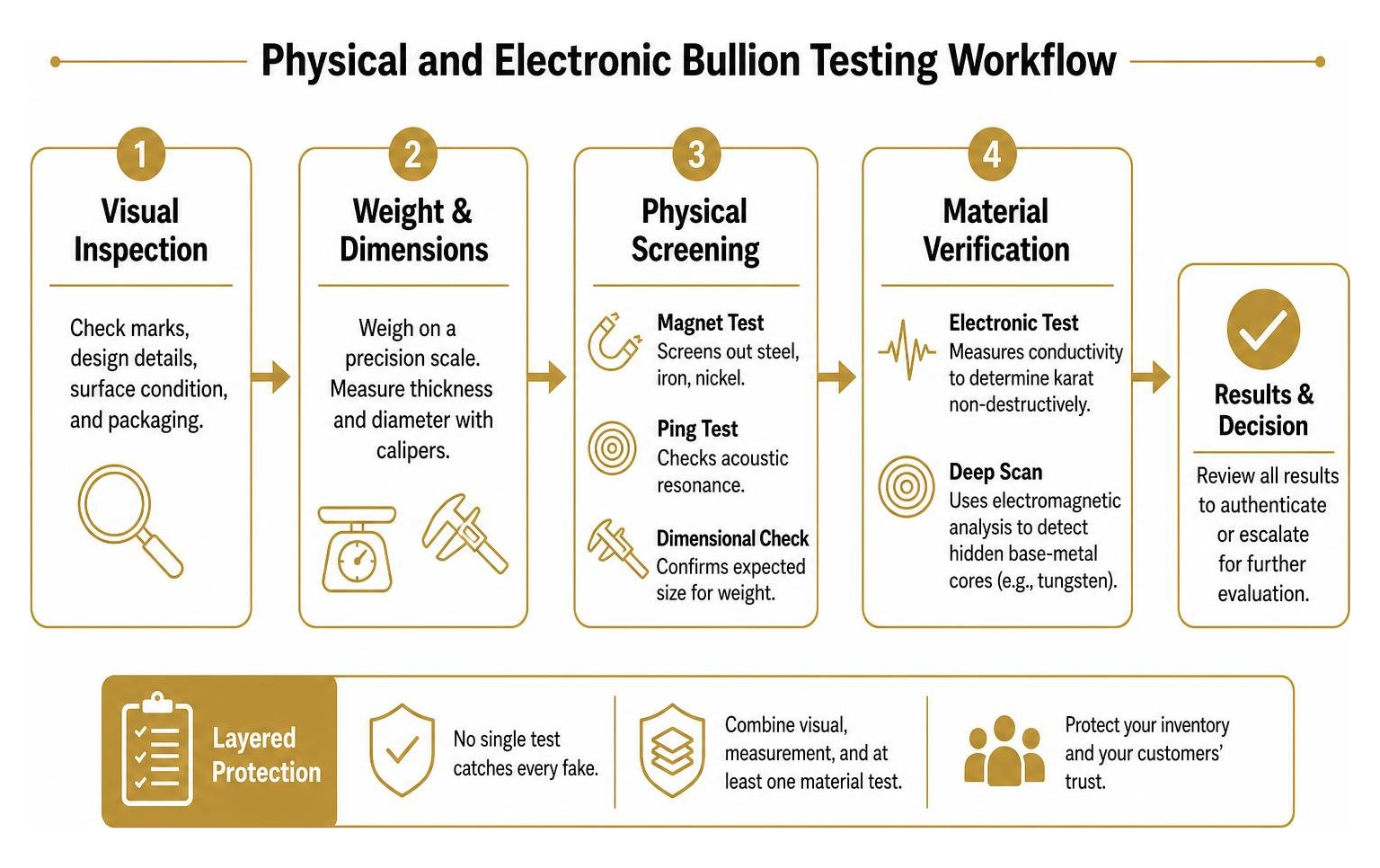
Electronic and Electromagnetic Verification Devices
Modern electronic testing instruments use resistivity, surface electrical conductivity, and electromagnetic eddy currents to evaluate purity without scratching the metal. Devices designed around surface conductivity determine karat ratings in seconds by reading electrical resistance across a probe tip.
More advanced electromagnetic devices pass eddy currents through the entire thickness of a coin or bar, allowing deep sub-surface analysis that detects hidden base-metal cores even through plastic blister packs or graded slabs.
How to Choose the Right Gold Bullion Tester for Your Needs
Selecting the ideal verification setup requires balancing testing volume, budget constraints, and the types of items you evaluate daily.
Selecting a Gold Bullion Tester for Beginners and Small Stacks
For hobbyists, retail jewelers, and entry-level investors handling raw items, an electronic karat analyzer offers an ideal balance of speed, accuracy, and affordability. Portable digital analyzers like the Auracle Pro provide clear karat readouts from 6K to 24K on yellow and white gold without messy chemical mixing.
Keeping an extra pen probe for AGT3 on hand ensures consistent conductivity readings during busy buying sessions. Beginners should combine a dependable electronic surface tester with a calibrated pocket scale and a strong magnet for reliable triple-check verification.
Choosing an Advanced Gold Bullion Tester for High-Volume Dealers
Commercial bullion dealers and pawn professionals face sophisticated counterfeits, including heavy cast bars with internal tungsten rods. High-volume operations benefit from multi-frequency electromagnetic verification systems and benchtop or handheld X-ray fluorescence (XRF) analyzers.
Advanced electromagnetic testers assess bulk electrical conductivity deep into the core of coins and ingots without opening assay packaging. While high-end instruments represent an investment ranging from $900 to well over $1,200, they prevent catastrophic five-figure losses from counterfeit bars.
Non-Destructive Bullion Verification Technologies Compared
| Testing Method | Verification Speed | Penetration Depth | Safe for Graded Slabs? | Detects Tungsten Cores? | Typical Price Range |
|---|---|---|---|---|---|
| Acid & Touchstone | 1–3 minutes | Surface only (destructive) | No | No | $20 – $45 |
| Acoustic (Ping Test) | 5–10 seconds | Full coin resonance | No | Partially (coins only) | $20 – $35 |
| Electronic Surface Pen | 2–5 seconds | Surface / thin layer | No | No | $300 – $600 |
| Eddy Current / PMV | 1–3 seconds | Deep / through-metal | Yes (most packaging) | Yes | $900 – $1,500+ |
| Specific Gravity | 3–5 minutes | Full volumetric density | No | No (similar densities) | $150 – $500 |
Eddy Current and Electromagnetic Conductivity
Phase-sensitive eddy current measurement works by inducing a localized alternating magnetic field within the bullion sample. The instrument measures the opposing magnetic response created by the metal's internal electrical conductivity.
Because genuine 24K gold, 22K Crown gold, .999 silver, and 90% coin silver each feature distinct electrical conductivity signatures, any deviation caused by base metals or foreign alloys immediately triggers an out-of-range reading. High-frequency probes inspect thin coins, while lower frequencies penetrate deeply into thick 1-ounce and 10-ounce bars.
Specific Gravity and Hydrostatic Weighing
Based on Archimedes' principle, specific gravity testing measures volumetric water displacement by weighing an item dry in air and then fully submerged in liquid:
$$\text{Specific Gravity} = \frac{\text{Weight in Air}}{\text{Weight in Air} - \text{Weight in Water}}$$
Pure 24K gold exhibits a specific gravity of roughly 19.3 g/cm³, while 18K gold measures between 15.0 and 16.0 g/cm³, and sterling silver rests near 10.3 g/cm³. This method confirms whether an unplated, homogeneous piece has the correct bulk density.
Detecting Tungsten Inserts and Thick Plating
Tungsten presents a unique counterfeiting challenge because its density (19.25 g/cm³) virtually mirrors pure gold (19.30 g/cm³). As a result, a tungsten-filled fake gold bar will pass both standard dimension checks and hydrostatic specific gravity tests.
Detecting tungsten requires subsurface inspection tools:
- Electromagnetic Eddy Current Sensors: Tungsten's electrical conductivity is significantly lower than that of pure gold, causing a noticeable conductivity failure.
- Magnetic Susceptibility Meters: Tungsten exhibits weak paramagnetism, whereas gold is diamagnetic, producing a measurable magnetic reaction under sensitive attraction-repulsion sensors.
- Ultrasonic Thickness Gauges: Sound travels through tungsten at a markedly different velocity than through gold, revealing internal boundary layers between the gold exterior and the base core.
Essential Accessories for a Complete Bullion Testing Kit
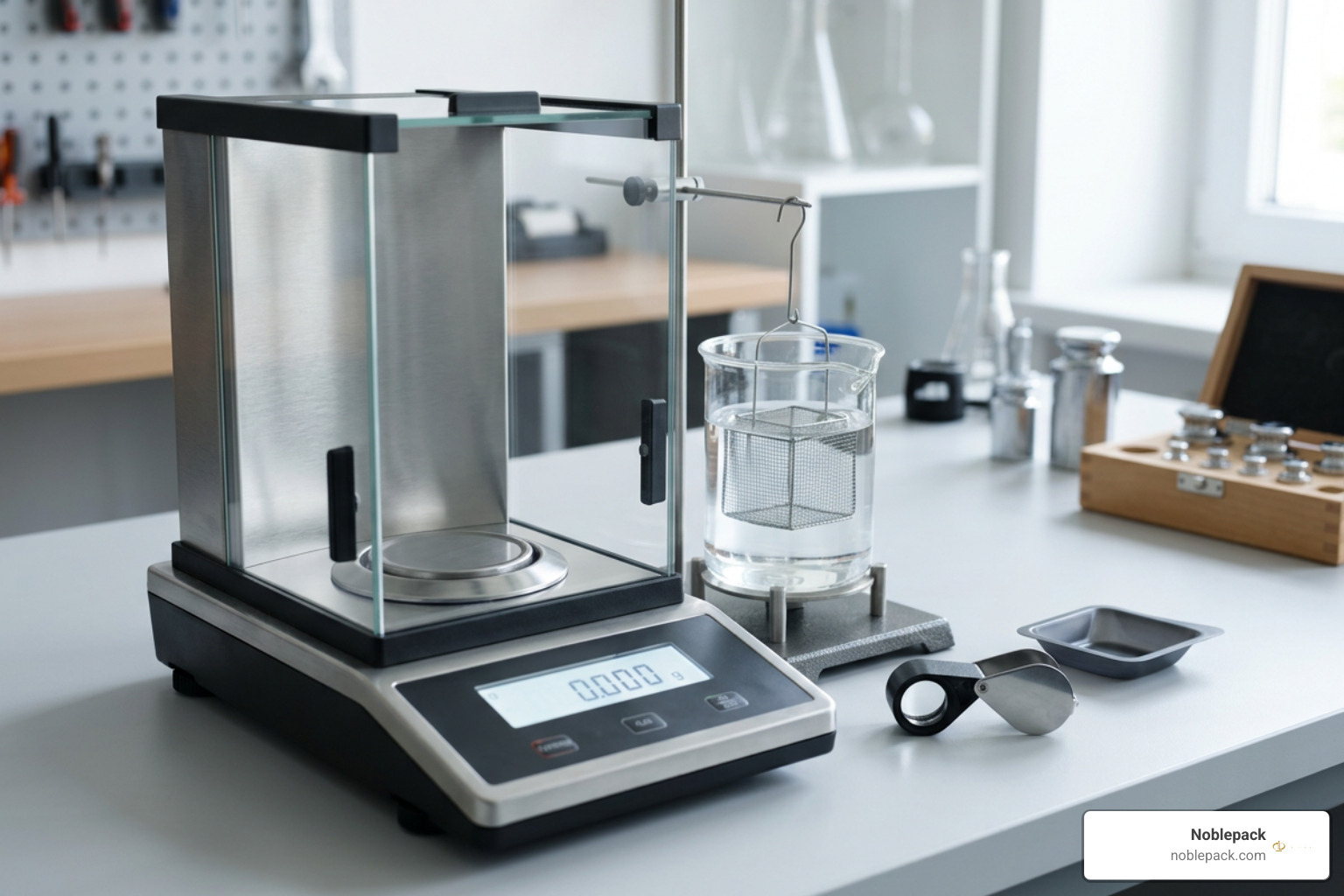
Reliable testing relies on supporting accessories that verify physical mass, edge reeding, and stamp authenticity.
Calibrated Digital Scales and Specific Gravity Kits
Precise mass measurement is your first line of defense. High-precision digital bench scales, such as the Ohaus SPJ Gold Scale, deliver 0.01-gram resolution essential for spotting underweight strikes and conducting hydrostatic weighing.
Explore our full catalog of scales to equip your workstation with high-capacity, high-accuracy instruments featuring dedicated tare functions and specific gravity cradles.
Optical Inspection Tools and Reference Gauges
Counterfeit dies often leave telltale imperfections in coin lettering, mint marks, and security reeding. High-magnification optical tools reveal these surface flaws quickly:
- 30X Achromatic Jewelers Loupes: Inspect micro-engravings, edge lettering, and surface textures for casting bubbles or uneven plating seams.
- Digital Calipers: Measure diameter and thickness to the hundredth of a millimeter, comparing dimensions directly against published mint specifications.
Best Practices and Bullion Testing Mistakes to Avoid
- Never rely on a single test: Always match physical dimensions, weight, magnetic reaction, and electronic readings before finalizing a transaction.
- Clean the contact surface: Oils, dirt, and protective lacquers can distort electronic pen probe measurements. Wipe testing areas clean with a soft microfiber cloth before taking readings.
- Allow temperature stabilization: Electrical conductivity shifts with temperature. Bring cold bullion bars to room temperature (68°F–75°F) before running electromagnetic scans.
- Do not scratch numismatic items: Avoid using touchstone slates or acid drops on proof coins, high-grade uncirculated strikes, or rare collectables, as scratches destroy collector premiums.
- Check calibration dates: Inspect testing liquids for cloudiness or expiration (replace every 6 months) and calibrate digital scales with certified reference weights regularly.
Frequently Asked Questions about Bullion Testers
How accurate are acid test kits compared to electronic testers?
Acid test kits accurately distinguish broad karat thresholds (such as determining whether a piece is 10K, 14K, or 18K), but they struggle with borderline alloy compositions and cannot provide decimal-grade purity readouts.
Digital electronic testers measure exact electrical resistance or conductivity curves, delivering precision down to single-karat increments without relying on subjective color changes.
Can a gold bullion tester detect tungsten inserts inside gold bars?
Basic acid kits, magnet wands, and specific gravity tests cannot identify tungsten inserts hidden beneath heavy gold plating because tungsten matches gold's density.
However, advanced electromagnetic eddy current verifiers, magnetic susceptibility scales, and ultrasonic pulse meters easily detect tungsten inserts by identifying shifts in electrical conductivity, acoustic velocity, and magnetic pull.
Will testing damage the numismatic or resale value of my bullion?
Chemical touchstone scraping and direct acid applications permanently mark metal surfaces, reducing collectible coins to melt value.
In contrast, non-destructive electromagnetic devices, acoustic ping analyzers, and optical calipers verify authenticity without physical abrasion, preserving pristine mint finishes and graded slab encapsulation.
Conclusion
Guarding against modern counterfeit bullion requires a disciplined, multi-layered verification strategy. Combining physical measurements with modern electromagnetic and digital testing tools allows you to buy, appraise, and trade precious metals with complete confidence.
Discover our gold testers collection to find reliable, professional-grade verification solutions built for jewelers, collectors, and precious metal dealers.