
Is Wooden Box Jewelry Storage Worth the Investment?
Yes - for premium jewelry presentation, a well-made wooden box is usually worth the higher upfront cost. Choose solid hardwood, a soft protective lining, and compartments that fit the jewelry you sell or store. These details help prevent scratches, reduce tangling, and turn everyday packaging into a display piece customers may keep for years.
For retailers and boutiques, wooden box jewelry organizers work especially well for rings, earrings, heirloom pieces, and gift-ready collections. A quality box can reinforce a premium brand feel far better than thin cardboard or plastic, while offering lasting storage after the sale.
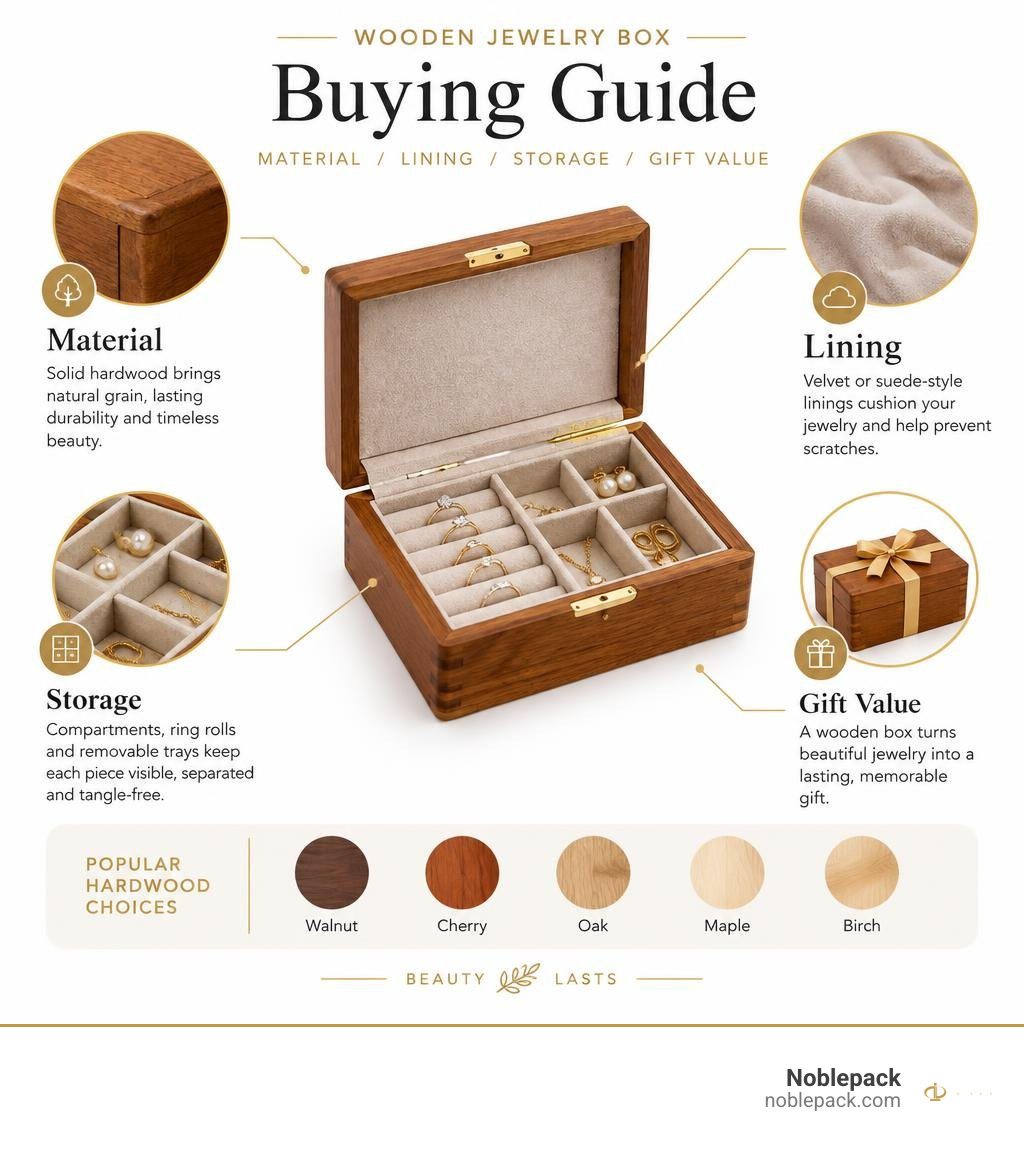
The difference is in the build. Solid walnut, cherry, oak, maple, and birch bring natural grain, weight, and durability. Velvet or suede-style linings cushion delicate surfaces. Ring rolls, necklace bars, removable trays, and divided drawers keep each item visible and separated.
Not every wooden box is a smart investment, though. Veneer-covered engineered wood can be attractive and more affordable, but handcrafted solid-wood boxes generally offer stronger construction, more distinct character, and better long-term gift appeal. This guide compares the features, materials, sizes, and price points that matter before you buy.
I am Dannah Davies, and I will help you identify which handcrafted wooden jewelry box offers the best value for your collection or retail presentation.
Why a Wooden Box Jewelry Packaging Box Outperforms Alternative Materials
When curating high-end jewelry displays or building a personal collection, the container that houses your pieces matters just as much as the gems themselves. In an era dominated by synthetic materials and disposable paper packaging, a genuine wooden box jewelry setup stands apart through sheer tactile weight, durability, and classic beauty.

The global jewelry packaging market has expanded rapidly, yet wooden packaging maintains a respected ~15% market share. While standard cardboard or synthetic gift boxes cost 20% to 30% less upfront, they inevitably wear down at the edges, scuff, and end up discarded. High-grade wooden boxes, by contrast, act as functional keepsakes that gain value and emotional resonance over time. For a broader look at how packaging choices shape brand perception, the packaging industry offers useful context on material trends and consumer expectations.
| Packaging Material | Structural Lifespan | Impact Resistance | Environmental Impact | Aesthetic Aging | Average Price Tier |
|---|---|---|---|---|---|
| Solid Hardwood | Decades to Generations | Very High (Scratch-repairable) | Renewable, Biodegradable | Develops rich patina over time | Premium ($120 - $700+) |
| MDF / Wood Veneer | 3 – 7 Years | Moderate (Edges chip easily) | High synthetic resin content | Veneer peels or bubbles | Mid-range ($40 - $150) |
| Clear Acrylic / Plastic | 2 – 5 Years | Low (Cracks & scratches easily) | Petroleum-derived non-biodegradable | Scuffs, clouds, and yellows | Budget to Mid ($20 - $80) |
Solid Hardwoods vs Engineered Wood and Synthetic Packaging
The primary divide in wooden storage lies between natural, solid timber and engineered boards such as medium-density fiberboard (MDF) wrapped in thin wood veneer. Solid hardwoods—such as American black walnut, heritage cherry, white oak, and sugar maple—possess dense cellular structures that resist impact, warping, and seasonal wear.
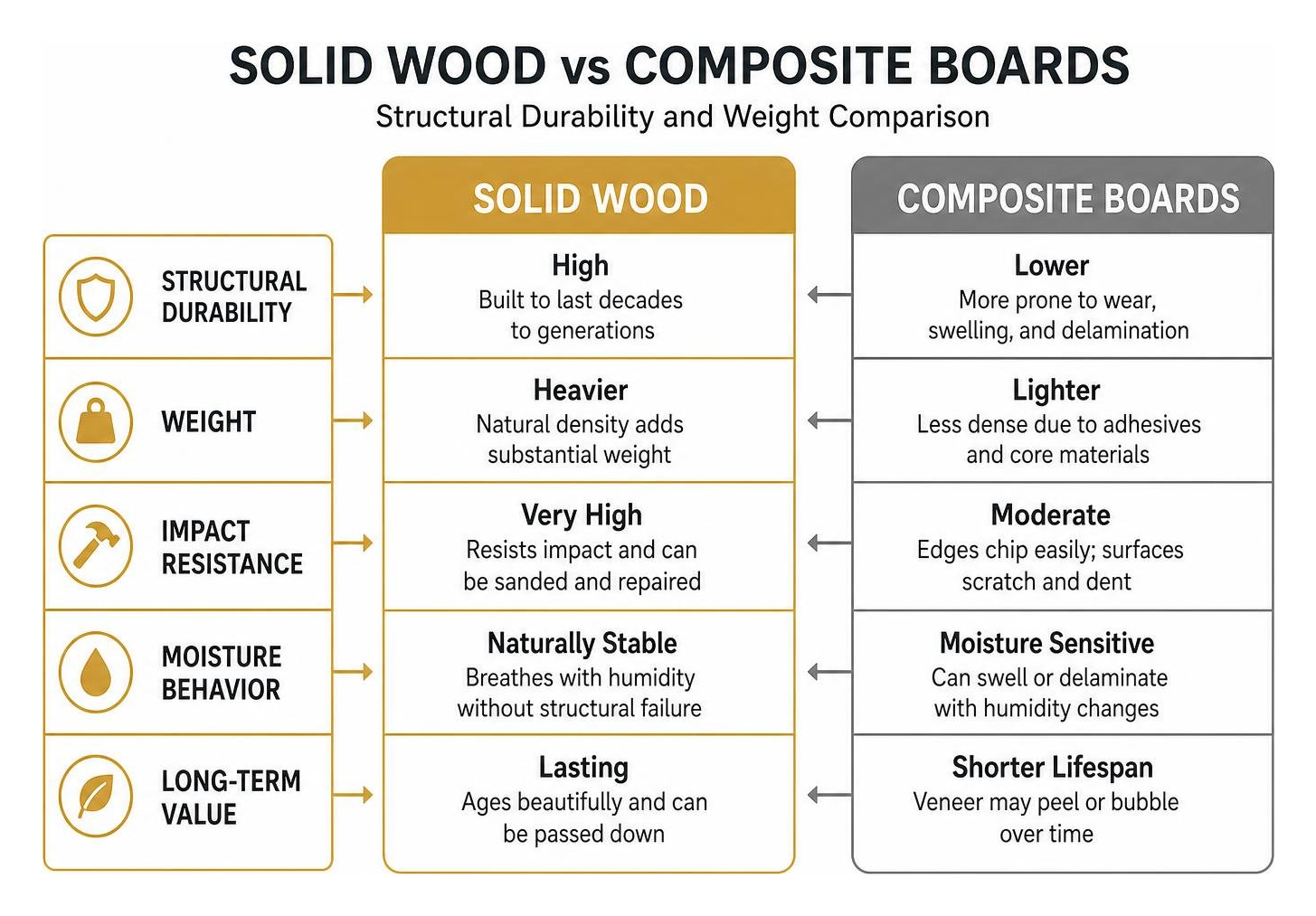
Engineered wood products rely heavily on synthetic glues and chemical binding resins. Over time, fluctuating indoor humidity can cause engineered boards to delaminate or swell, particularly around hinges and drawer channels. Solid hardwood naturally breathes, flexing imperceptibly with ambient moisture without structural failure. Furthermore, solid timber has a distinct visual presence: no two grain patterns or knots are identical, ensuring that every handcrafted chest is one-of-a-kind.
From a sustainability standpoint, well-sourced timber from responsibly managed forests leaves a far smaller environmental footprint than petroleum-based plastics or throwaway composite packaging. A solid wood organizer is made to last decades, keeping waste out of landfills.
Natural Microclimate and Tarnish Prevention
Fine jewelry requires stable conditions to maintain its luster. Moisture and airborne chemicals are the primary culprits behind oxidation on sterling silver, gold plating, and delicate alloy mounts.
A natural hardwood case creates a protective microclimate:
- Moisture Buffering: Wood naturally absorbs minor humidity spikes and releases ambient moisture slowly, moderating the interior microclimate around your jewelry.
- Thermal Insulation: Dense timber provides an insulating barrier against rapid room temperature swings, which can cause micro-condensation on gemstones.
- Sealed Perimeter: When closed, a precision-fitted wooden lid keeps airborne particulates and sulfur-bearing dust away from sensitive silver chains and polished mountings.
Key Craftsmanship Features of Premium Packaging Pieces
A wooden jewelry chest is only as reliable as its internal hardware and structural joints. Whether you're selecting single presentation boxes or full-sized tiered jewelry cases, looking closely at how the box is put together reveals whether it will hold up as an heirloom or break down within a few seasons.

Optimizing Interior Compartments and Linings for Wooden Box Jewelry Collections
The interior architecture of a jewelry box must balance soft protection with clean organization:
- Plush Lining Materials: High-grade options like velvet, ultra-soft suede, or untreated linen cushion precious stones and prevent surface micro-scratches on polished gold and silver.
- Ring Rolls and Stud Cushions: Rows of tightly fitted, padded rolls hold rings and post earrings securely in place, preventing diamonds from knocking against neighboring metals.
- Swing-Out Chain Bars & Necklace Hooks: Tangled necklaces are the quickest route to damaged links. Swing-out chain bars allow multi-strand necklaces to hang straight into protective catch-all pouches.
- Modular Dividers and Removable Trays: Layered, removable trays allow users to reconfigure compartments for large cuff bracelets, statement brooches, or luxury watches.
Joinery, Hinges, and Hardware Integrity
Mass-market boxes frequently fail at the joints and hinges. Premium wooden chests rely on proven woodworking joinery:
- Dovetail and Finger Joints: Interlocking wooden teeth distribute tension across the entire seam, eliminating reliance on glue alone and preventing corner splits.
- Corner Splines and Miters: Reinforced mitered corners provide clean, seamless geometric lines while maintaining rigidity.
- Solid Brass Hardware: Heavy-gauge brass quadrant hinges, mortise locks, and lid stays stop the lid from flipping backward and damaging the wood frame.
- Concealed Magnetic Closures: Compact presentation boxes often use high-strength neodymium magnets embedded inside the hardwood rim for a clean, secure snap closure.
Handcrafted Styles, Wood Species, and Decorative Inlays
Different hardwood species lend distinctive visual warmth and weight to jewelry packaging:
- American Black Walnut: Known for deep chocolate undertones, dense grain, and rich contrast. It polishes to a smooth finish and develops a golden patina with age.
- Heritage Cherry: Warm reddish hues that naturally deepen and darken when exposed to indirect room light over several years.
- White Oak & Birch: Light-toned, prominent straight grain with exceptional scratch resistance, perfect for modern minimalist or Scandinavian interiors.
- Figured Maple & Koa: Prized for chatoyancy and shimmering wave patterns across the grain, making them popular for high-end presentation lids.
Artisan Inlays, Accents, and Hand-Painted Wooden Box Jewelry Designs
Decorative techniques elevate storage boxes into standalone art pieces for dressers and vanity tables:
- Marquetry and Wood Inlays: Hand-fitted mosaics made of contrasting woods (such as wenge, beech, or maple) create geometric motifs, floral blooms, and retro borders.
- Hand-Painted Details: Fine floral, oriental, and botanical motifs painted over natural wood grain and sealed under protective wax finishes give each piece bespoke character.
- Metal Accents and Filigree: Traditional accents made with tin, aluminum, and brass filigree draw on historic chest-making techniques like Uzbek sandiq craftsmanship.
- Glass Tops and Linen Trays: Clear glass display lids let you view curated collections at a glance while keeping dust out.
Sizing and Tiered Packaging Configurations
Choosing the right format depends on how many pieces you own or plan to display:
- Single-Layer Keepsake Boxes: Compact footprint (~9 × 6 × 2.5 inches), lightweight (~1.3 lbs), ideal for daily-wear essentials, travel sets, or luxury gift presentations.
- Two-Drawer Jewel Chests: Balanced storage (~10 × 8 × 6 inches) incorporating an upper lift-out tray and a lower slide drawer for small to mid-sized collections.
- Three-to-Five Drawer Master Cabinets: Large, multi-tier chests featuring deep side-access chain cabinets, bracelet pillows, and lockable compartments designed to organize extensive heirloom collections.
How to Maintain and Preserve Fine Wood Packaging
Unlike synthetic or cardboard boxes that degrade with use, a solid hardwood box can be kept in pristine condition for decades with minimal maintenance.
Follow these simple care steps:
- Dust Regularly: Wipe the exterior gently using a clean, dry microfiber cloth. Avoid damp washcloths, which can introduce excess moisture to the wood grain.
- Apply Natural Wax Conditioner: Once or twice a year, massage a small amount of beeswax, jojoba oil, or natural wood wax into the surface. Buff along the direction of the grain to restore natural luster and nourish the timber.
- Keep Away from Direct Sunlight: Prolonged UV exposure can bleach rich walnut tones or dry out fine woods, leading to hairline surface cracks.
- Avoid High-Moisture Rooms: Do not store wooden jewelry chests in steamy bathrooms. Stable ambient humidity (40% to 55%) protects both the timber joints and fine silver inside.
Frequently Asked Questions About Wooden Jewelry Packaging
How do solid wood boxes protect silver and fine gems from tarnishing?
Solid wood boxes act as physical and atmospheric buffers. Dense timber reduces air exchange, shielding precious metals from airborne pollutants that accelerate tarnish. When paired with soft, anti-tarnish velvet or suede linings, the interior absorbs excess ambient humidity, creating a dry, stable setting for sterling silver, gold, and delicate gemstones.
What price range should you expect for an heirloom-quality wooden packaging box?
Handcrafted, solid hardwood jewelry chests generally range from $120 for compact, single-layer artisan designs to $400–$700+ for large, multi-drawer Amish-crafted chests. Key cost drivers include the wood species (solid walnut and cherry command higher prices than plywood or pine), the complexity of joinery (such as hand-cut dovetails), built-in brass hardware, and the labor required for custom hand-painting or marquetry inlays.
How do you choose the right drawer layout for mixed jewelry collections?
Start by assessing the types of jewelry you store most often. If your collection centers on necklaces, prioritize chests with dedicated swing-out chain bars or tall side doors with drop pockets to keep chains from tangling. If you wear mostly rings, studs, and tennis bracelets, choose a layout with padded ring rows, shallow grid dividers, and modular pull-out trays.
Conclusion
A well-crafted wooden jewelry organizer provides lasting protection, everyday convenience, and timeless beauty. By choosing solid hardwoods, reliable joinery, and plush interior linings, you turn basic jewelry storage into an heirloom display piece.
For retailers, boutiques, and collectors looking for packaging solutions that make a lasting impression, explore Noblepack's curated collection of jewelry packaging boxes to find presentation options suited to every style and budget.