
What a Gold Carat Checking Machine Tells You
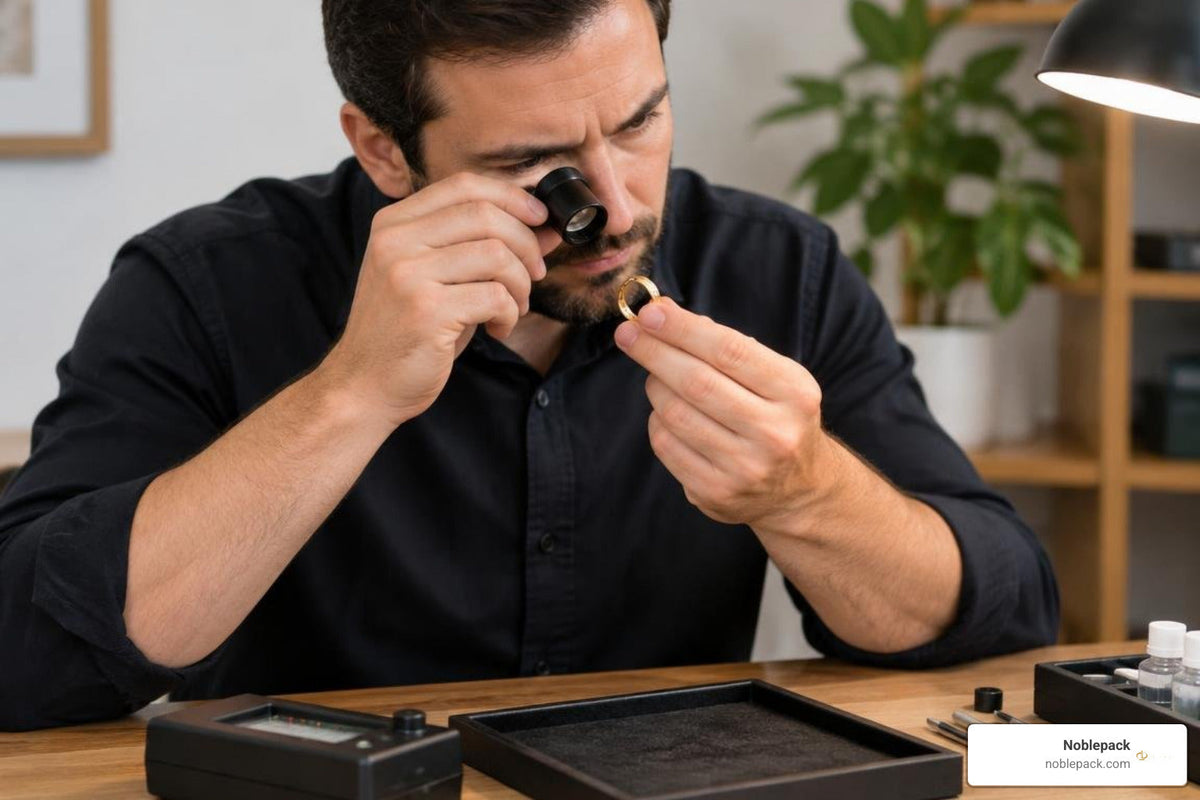
A gold carat checking machine estimates how much gold is in a piece of jewelry. That helps you check whether a ring marked 14K, for example, matches its hallmark before you buy or sell it. For jewelers, pawnbrokers, and estate buyers, this verification step also supports accurate pricing and protects your reputation when you present pieces in professional jewelry packaging.
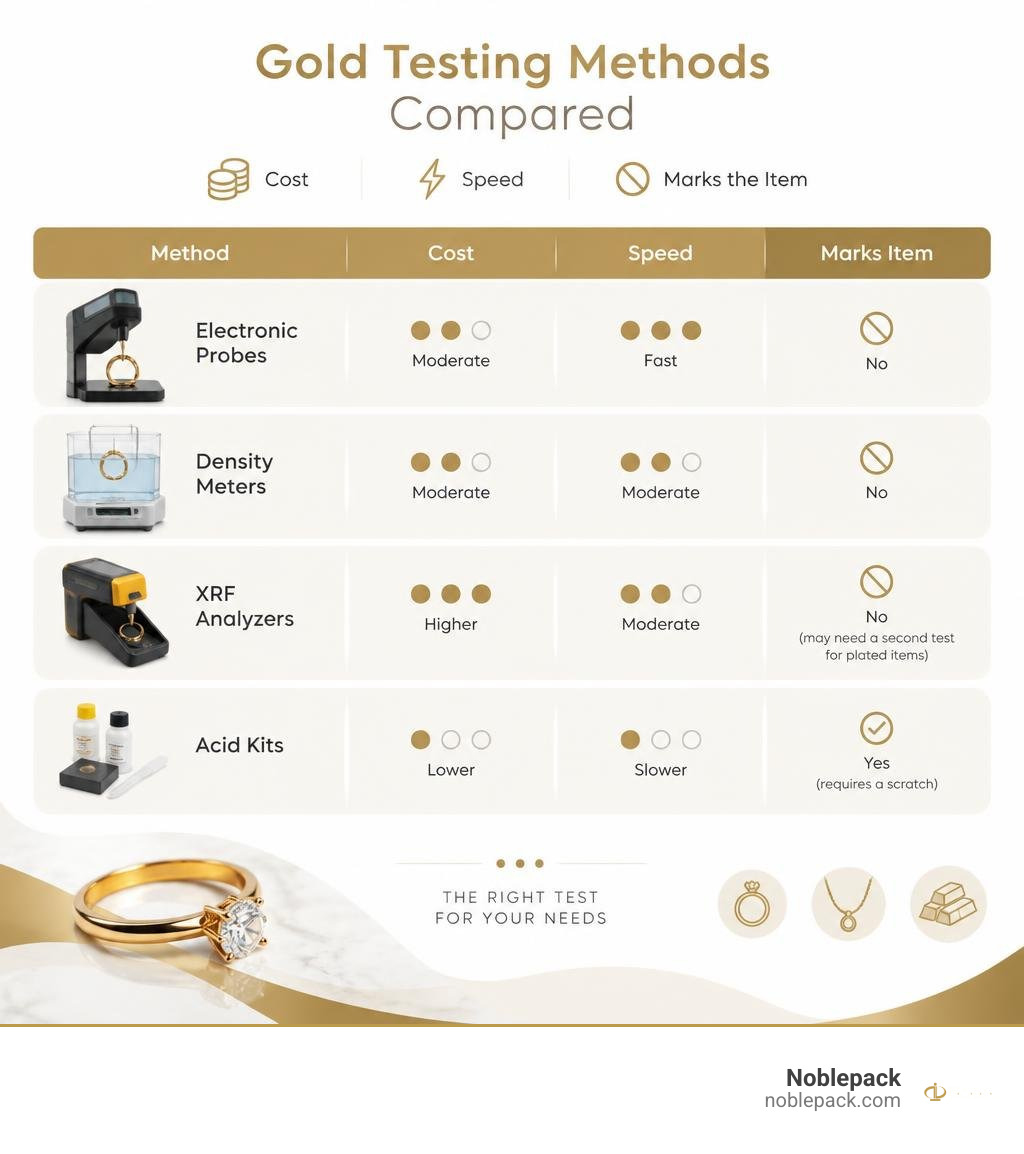
The right tool depends on what you need to test. Electronic probes offer quick checks at the counter. Density meters test suitable solid pieces without scratching them. XRF analyzers show the metals present at the surface, but a plated item may need a second test to confirm what is underneath. Acid kits cost less, though they require a scratch and careful handling.
I'm Dannah Davies, and I'll help you weigh these options against your budget and daily workflow.
Core Technologies Behind a Modern Gold Carat Checking Machine
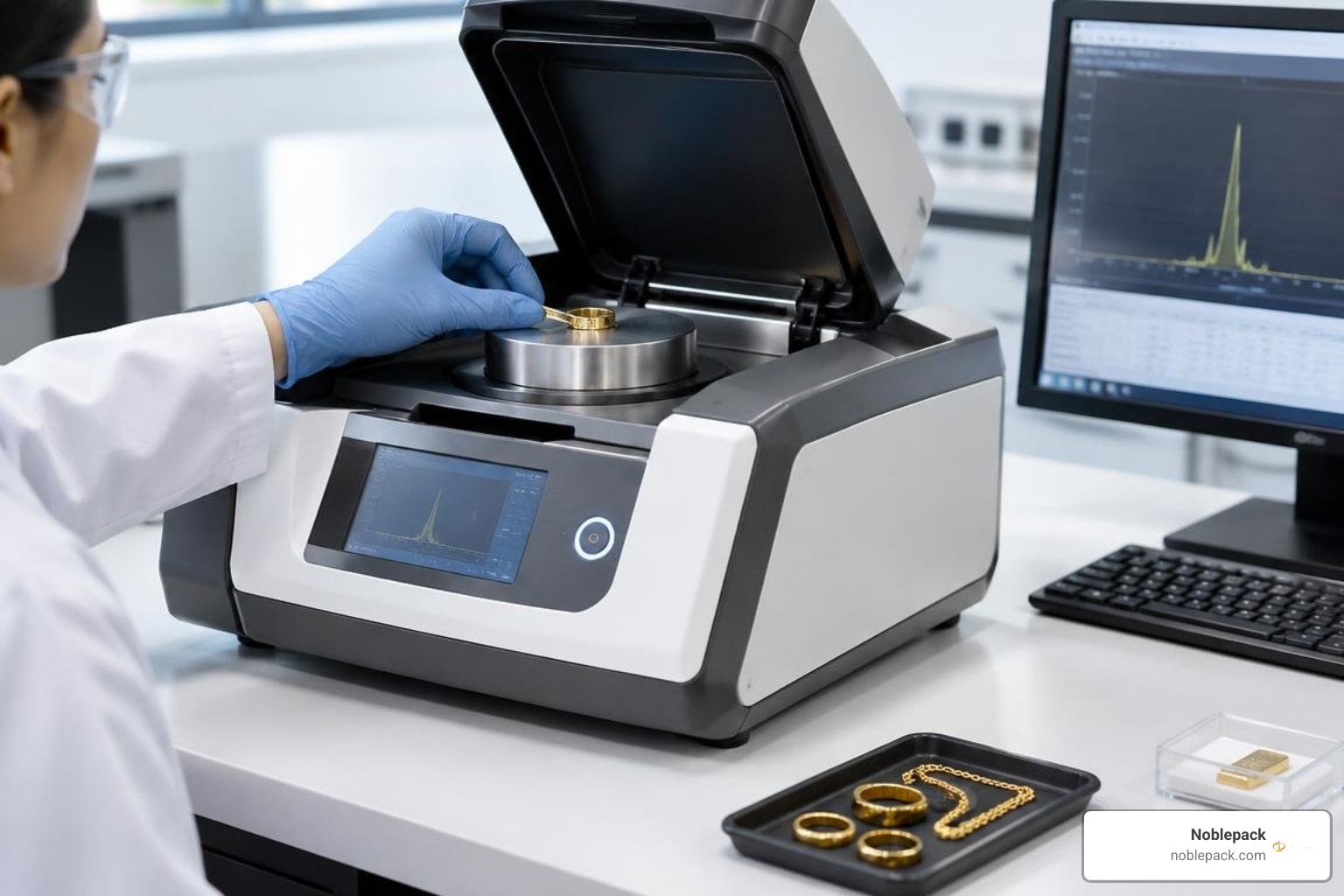
Understanding the science behind gold testing prevents costly mistakes. Different instruments interact with precious metals at different molecular levels. Whether you are authenticating estate pieces, assessing scrap, or preparing high-end jewelry for presentation, having the right technology on your workbench is essential. You can review a scientific overview of gold testing machines to see how industrial standards shape modern benchtop analysis.
Understanding How a Gold Carat Checking Machine Works
Every modern testing method relies on distinct physical or chemical properties to calculate purity:
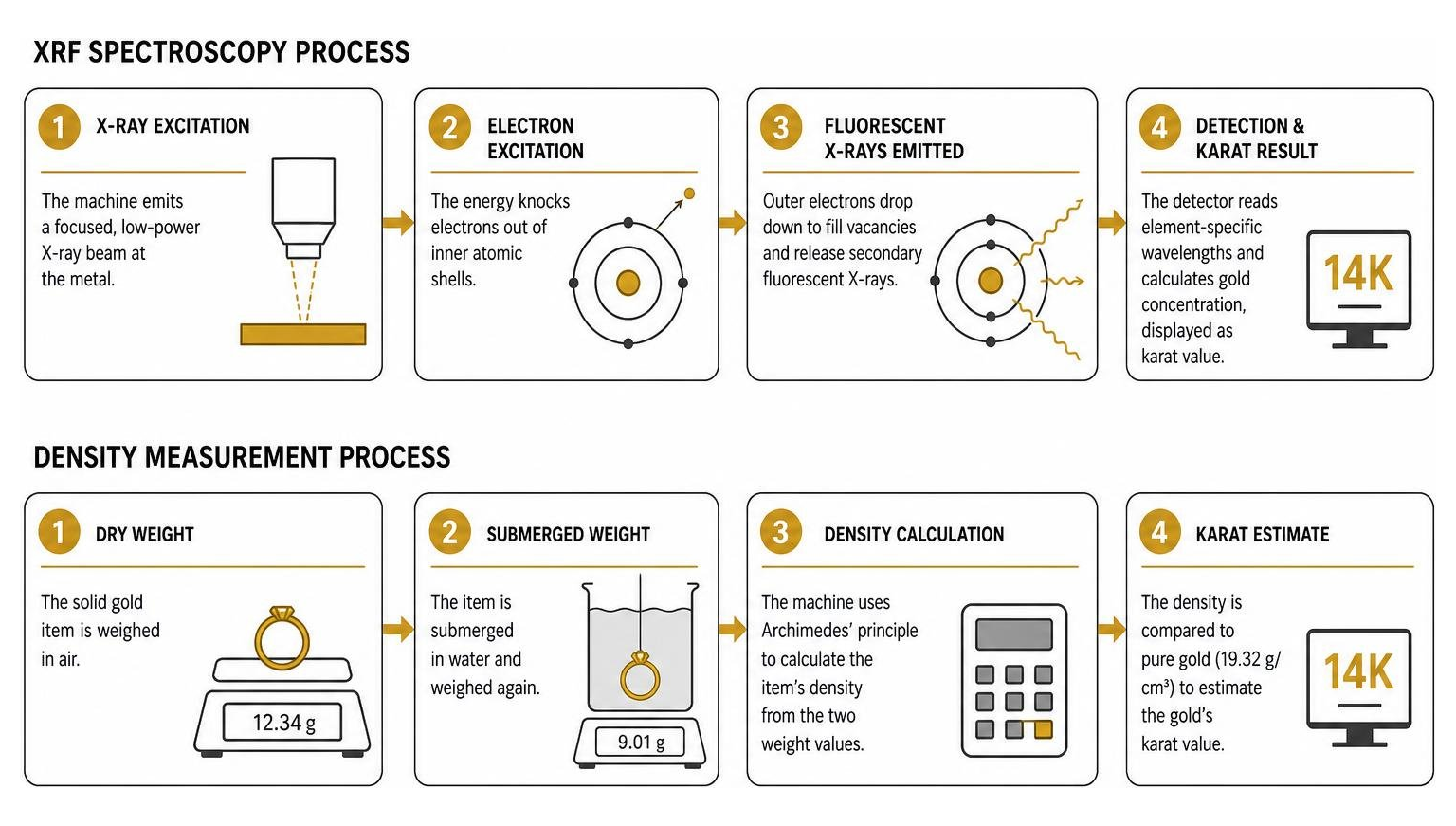
- X-Ray Fluorescence (XRF) Spectroscopy: The machine emits a focused, low-power X-ray beam toward the metal. This excitation energy knocks electrons out of their inner atomic shells. When outer electrons drop down to fill the vacancies, they release secondary fluorescent X-rays. Because every element emits distinct characteristic wavelengths, the onboard detector calculates the precise elemental composition and converts the gold concentration into standard karat values in roughly 30 seconds.
- Electrochemical & Surface Conductivity: Handheld pen probes apply a tiny electric potential across an electrolytic gel contact point. Pure gold resists oxidation and conducts electricity differently than copper, silver, zinc, or nickel alloys. The device measures this electrochemical response to establish surface karat ratings.
- Hydrostatic Density Measurement: Based on Archimedes' principle, this technique measures the specific gravity of an alloy by comparing its dry weight against its submerged weight in water. Because pure gold is exceptionally dense (19.32 grams per cubic centimeter), lower-karat mixtures display proportional drops in overall density.
Comparing Electronic, Hydrostatic Density, and XRF Testers
To choose the best machine for your counter, consider how each system performs in daily operation:
| Feature / Metric | Electronic Pen Testers | Hydrostatic Density Meters | Benchtop & Handheld XRF |
|---|---|---|---|
| Typical Cost Range | $250 – $1,200 | $500 – $2,500 | $12,000 – $38,000+ |
| Testing Speed | 2 to 5 seconds | 15 to 30 seconds | 10 to 60 seconds |
| Primary Mechanism | Surface conductivity & electrochemistry | Hydrostatic specific gravity | Energy-dispersive X-ray fluorescence |
| Testing Depth | Surface contact only | Entire volume (solid items) | 10 to 12 microns into the surface |
| Multi-Element Breakdown | No (shows Karat / Gold % only) | No (calculates purity by density) | Yes (detects up to 21+ individual elements) |
| Item Limitations | Cannot assess core of thick items | Ineffective on hollow items or gem-set jewelry | Measures surface layer; cannot read deep cores |
| Destructive Impact | 100% Non-destructive | 100% Non-destructive | 100% Non-destructive |
For density-based workflows, pairing an analytical setup with a reliable high-precision gold scale ensures your weight measurements remain steady down to the hundredth of a gram.
Non-Destructive Testing vs. Traditional Acid Methods
Traditional touchstone testing requires rubbing a piece of jewelry against an abrasive slate to leave a visible metallic streak, then applying nitric acid blends to observe the reaction. While affordable, acid testing has major downsides:
- Surface Damage: Scratching removes metal and leaves permanent marks on finished jewelry, devaluing fine estate items.
- Chemical Hazards: Fumes and corrosive acids require protective gear and test acid neutralizer solutions nearby to prevent skin burns and bench damage.
- Ambiguous Readings: Subtle color shifts can be hard to read without a specialized touchstone optical magnifier.
Electronic testers, density scales, and XRF analyzers eliminate chemical handling and protect the physical integrity of your inventory.
Spotting Counterfeits: Detecting Plating, Heavy Clad, and Tungsten Cores
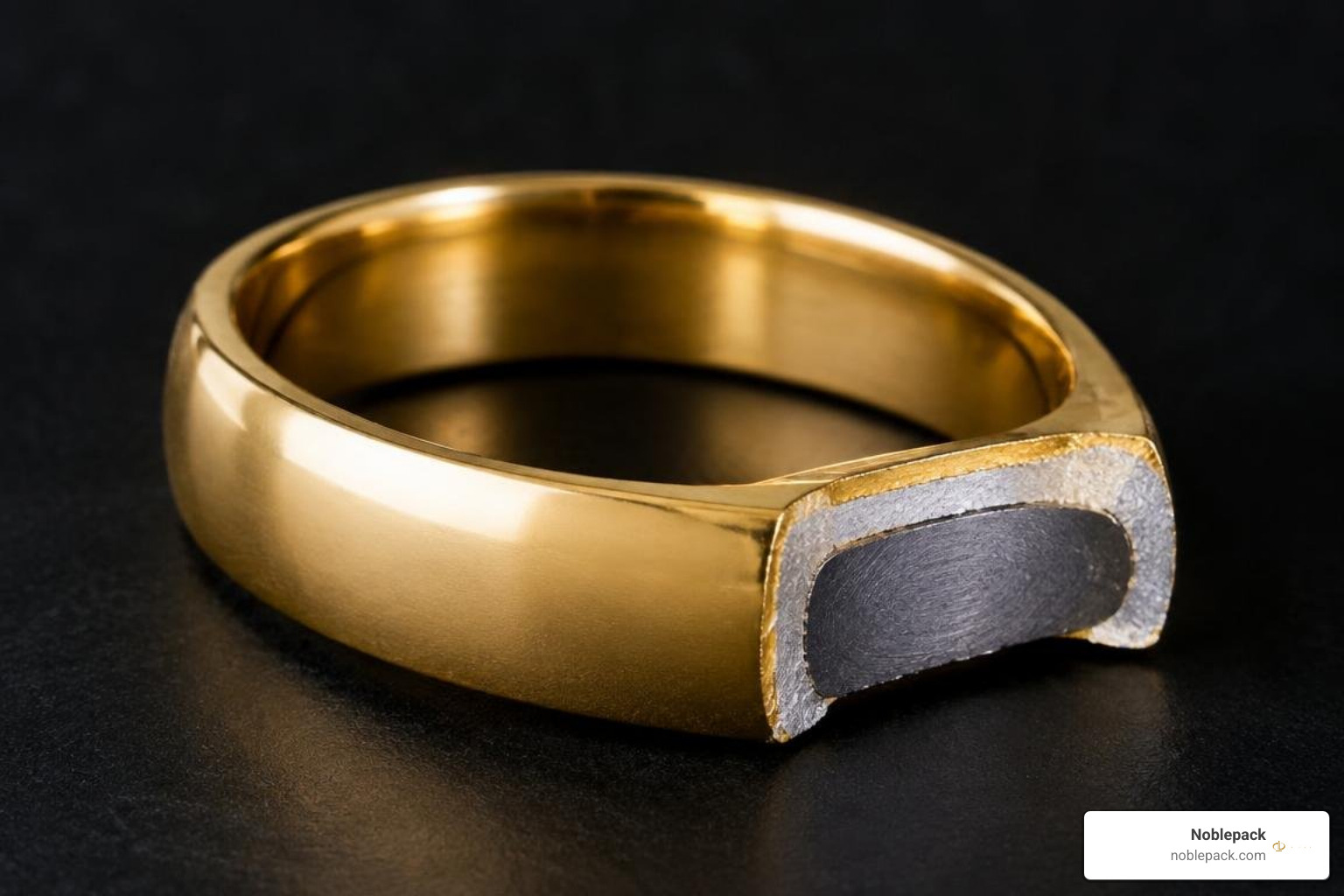
Modern counterfeiters produce sophisticated fakes that easily deceive the eye. From heavy micron-level gold plating over base metals to thick brass solders and tungsten-cored bullion, relying on visual hallmarks alone is a recipe for loss. Detailed Gold Karat Meter specifications show how benchtop analyzers counter these threats with micro-collimated beams and silicon drift detectors.
Surface Penetration Limits and Plating Recognition
No single surface test tells the whole story. XRF analyzers penetrate between 10 and 12 microns into a sample's exterior. While this is deep enough to flag flash plating and thin electroplating, thick mechanical cladding can mask a base-metal interior.
To spot heavy plating, professional devices use dual-signature algorithms that evaluate secondary backscatter and thermal conductivity. If an electronic tester produces inconsistent karat readings across different spots on the same item, heavy plating is likely present. Reviewing a gold and platinum jewelry appraisal guide can help you identify warning signs like uneven wear, suspicious solder joints, and uncharacteristic discoloration.
Core Material Analysis for Thick Bullion and Bars
Tungsten has an identical specific gravity to pure 24K gold (19.25 versus 19.32 grams per cubic centimeter), allowing tungsten-filled counterfeit bars to pass simple density tests. Detecting these sophisticated fakes requires a layered approach:
- Magnetic Susceptibility Scales: Pure gold is diamagnetic (repelled by magnetic fields), whereas tungsten is paramagnetic (weakly attracted). High-sensitivity magnetic balances detect tungsten cores instantly.
- Ultrasonic Velocity Meters: Sound travels through pure gold at 3,240 meters per second, but passes through tungsten at roughly 5,200 meters per second. Acoustic pulse meters flag mismatched core materials in seconds.
- Destructive Core Sampling: When processing high-risk bulk scrap lots, using a clean jewelry cutting kit to expose the core remains an effective final verification step before melting.
Key Buying Factors: Accuracy, Budget, and Workflow Needs
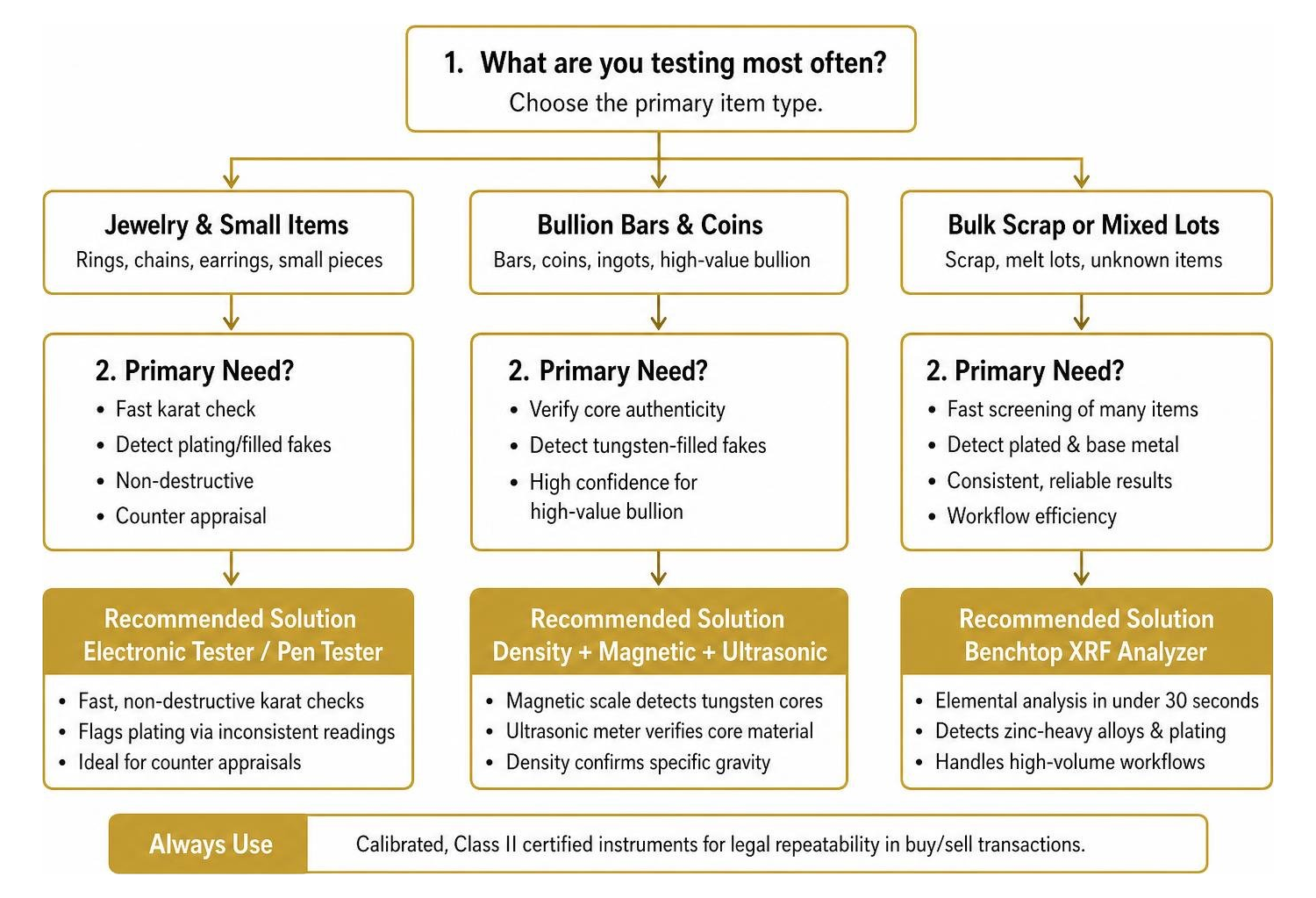
Selecting the ideal testing hardware requires balancing measurement speed, repeatability, and legal compliance. Professional trade environments benefit from instruments built to Class II certified weighing standards, which ensure the legal repeatability needed for commercial buy-and-sell transactions.
Matching Device Types to Industry Workflows
- Retail Jewelers & Estate Appraisers: Electronic pen testers provide fast, non-destructive counter appraisals. When pieces are sold, placing them in attractive presentation boxes creates an exceptional customer experience.
- Pawn Shops & High-Volume Gold Buyers: Benchtop XRF analyzers deliver rapid elemental breakdowns, catching zinc-heavy alloys, platinum group metals, and plated fakes in under 30 seconds.
- Precious Metal Refiners & Bullion Dealers: Density analyzers combined with ultrasonic and magnetic verifiers guarantee bulk bullion authentication without surface damage.
Calibrating Your Gold Carat Checking Machine for Consistent Accuracy
Keep your machine accurate over thousands of tests with these maintenance practices:
- Use Certified Calibration Standards: Electronic and XRF testers should be calibrated using verified 14K and 18K reference discs.
- Maintain Stable Temperatures: Electronic and X-ray sensors drift when exposed to rapid temperature changes. Operate your equipment within standard room temperatures (68°F to 77°F).
- Protect Sensor Probes: Store electrolyte pen probes upright with their protective caps secured to keep the electrolytic fluid from drying out. Clean testing surfaces regularly to remove polishing compounds and skin oils.
Frequently Asked Questions About Gold Carat Testers
How accurate is a gold carat checking machine compared to fire assay?
Fire assay remains the legal benchmark for precious metal refining, delivering accuracy down to 1 part per thousand. However, it requires melting a destructive sample drill. Modern benchtop XRF analyzers match this precision within 1 to 2 parts per thousand on solid alloys in just 30 to 60 seconds—without altering the jewelry in any way.
Can an electronic gold tester differentiate between 10K, 14K, and 18K white gold?
Yes. High-quality electronic testers feature dedicated multi-mode algorithms calibrated for yellow, white, rose, and green gold alloys. Because white gold contains nickel or palladium to bleach the color, the device adjusts its conductivity and electrochemical threshold scales to ensure accurate karat readouts.
Do portable gold testing machines require chemical consumables or probe replacements?
Most portable electronic testers rely on sealed electrolyte pen tips rated for 2,000 to 6,000 individual tests before requiring replacement. Aside from standard battery recharging and occasional sensor cleaning, they require no hazardous acids or liquid consumables.
Conclusion
Investing in the right testing equipment protects your business, builds customer trust, and safeguards your margins. Once you have verified the purity of your inventory, presenting each piece in elegant display packaging reinforces its value. Explore our collection of Noblepack professional gold testers and jewelry presentation supplies to elevate your showroom workflow.