

Brown Construction Paper Roll Uses for Big Projects on a Budget
A brown construction paper roll gives you one continuous sheet you can cut for murals, gift wrapping, table covers, packing, and short-term surface protection. For flexible wrapping, look for lighter paper. For projects that need to resist tearing, choose a heavier roll. If you are covering a large area, compare the cost per square foot, not just the price per roll.
Paper absorbs moisture, so test paint on a small piece first and do not rely on it to stop spills. I’m Dannah Davies, and I’ll help you match the roll to the job without paying for more paper than you need.
What Is a Brown Construction Paper Roll and Why Is It Essential?
When tackling large-scale DIY tasks, classroom decorating, or home renovations, individual sheets of paper simply do not cut it. A brown construction paper roll is an uncut, continuous length of unbleached paper stock manufactured to provide seamless coverage across wide surfaces. Unlike standard printer paper or lightweight cardstock, this roll format delivers strength, adaptability, and high tensile resistance at an accessible price point.
The secret behind its performance lies in how it is manufactured. Unbleached wood pulp retains natural cellulose fibers, giving the sheet an earthy brown hue and remarkable physical durability. Most standard options feature an unwaxed, uncoated surface that allows glues, markers, inks, and paints to adhere without beading up.
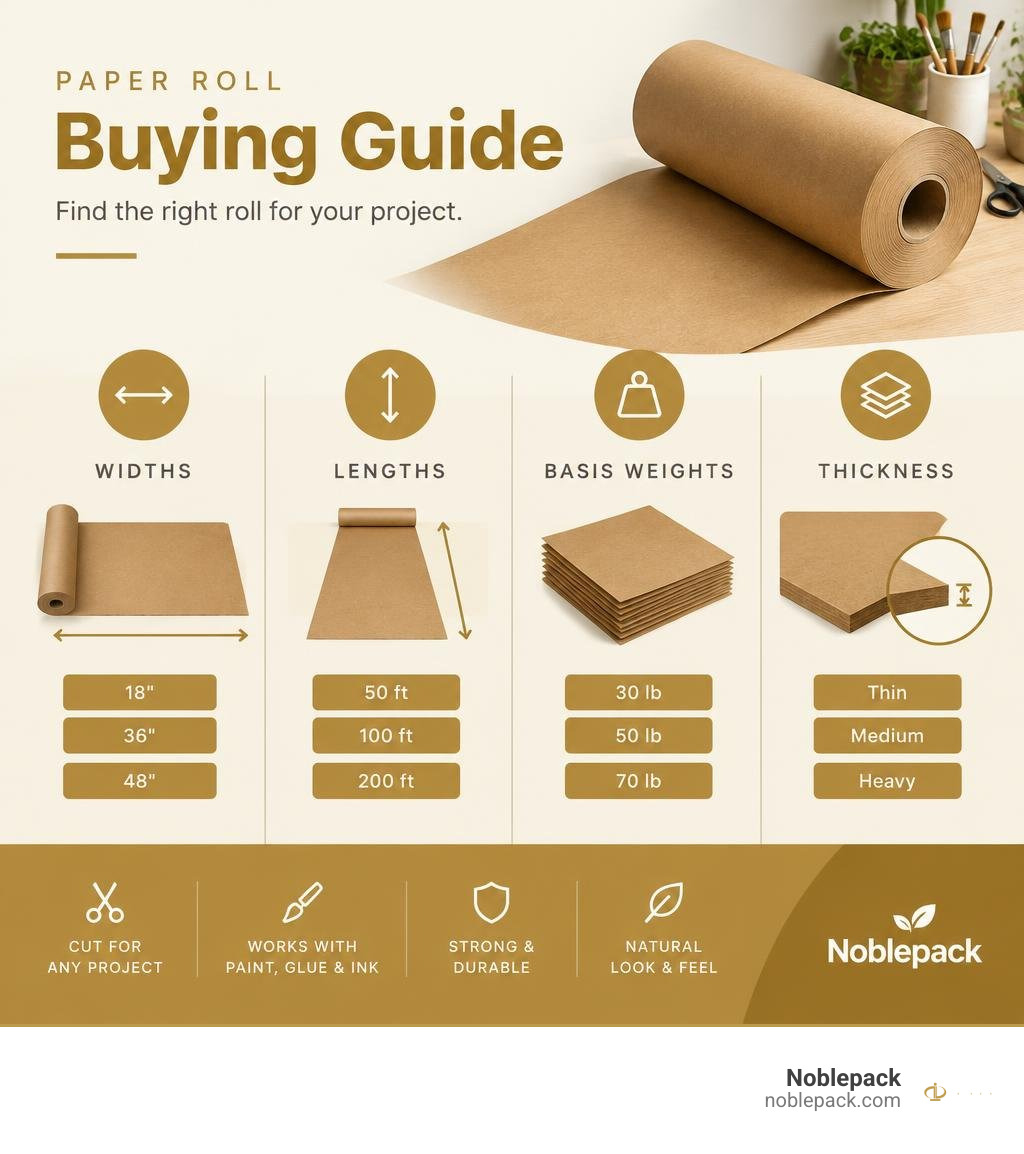
Understanding paper density helps ensure you select the right grade for your tasks. The industry measures paper weight using basis weight (expressed in pounds per ream) and metric grams per square meter (GSM). Thickness is often measured in mils (thousandths of an inch). A lightweight roll might measure around 30 lb (approximately 48 to 50 GSM), while heavier utility stocks range from 50 lb (78 GSM) up to rugged 75 lb grades measuring 7 mil to 10 mil thick. Choosing a roll manufactured from biodegradable recycled material ensures you get high performance alongside sustainable, eco-conscious materials.
Key Sizes, Basis Weights, and Thicknesses
Selecting the right paper begins with understanding standard dimensions and physical weights:
- 30 lb Lightweight Stock (approx. 48–50 GSM): Highly pliable, smooth, and easy to fold. This grade is ideal for gift wrapping, void fill cushioning in shipping boxes, masking small surfaces, and everyday classroom sketching.
- 50 lb Mediumweight Stock (approx. 78 GSM): Offers balanced durability and flexibility. Excellent for 3D origami, school bulletin boards, hanging banners, and tempera paint murals that require moderate moisture tolerance.
- 75 lb Heavy-Duty Stock (7 to 10 mil thickness): Extremely tough, tear-resistant, and rigid. Typically used as builders paper for floor protection during remodels, heavy parcel packaging, and rugged staging drop cloths.
Roll dimensions vary widely to match specific project scales. Common widths range from 18 inches, 24 inches, and 35 inches up to 36, 48, or even 60 inches. Roll lengths span anywhere from compact 30-meter (approx. 100 feet) household rolls to commercial rolls stretching 150 feet, 200 feet, 475 feet, or even 1,200 feet. A single 24-inch by 1,200-foot commercial roll yields a massive 2,400 square feet of continuous coverage, minimizing seams on expansive workspaces.
Environmental Benefits of Recycled Paper Stock
Opting for recycled brown paper creates immediate environmental benefits over plastic sheeting or virgin bleached paper:
- Recycled Feedstock: Many rolls utilize 100% post-consumer recycled pulp sourced from reclaimed cardboard boxes and paper packaging.
- Compostable & Biodegradable: Because the paper is unbleached and free of plastic laminates or synthetic wax, leftover scraps naturally decompose in municipal composting facilities or garden beds.
- Chemical-Free Processing: Unbleached brown stock skips chlorine bleaching agents, lowering toxic effluent during manufacturing.
- Circular Packaging: Used paper rolls easily enter standard curbside recycling streams, keeping unnecessary plastic films out of local landfills.
Comparing Kraft, Builders, Butcher, and Construction Paper Rolls
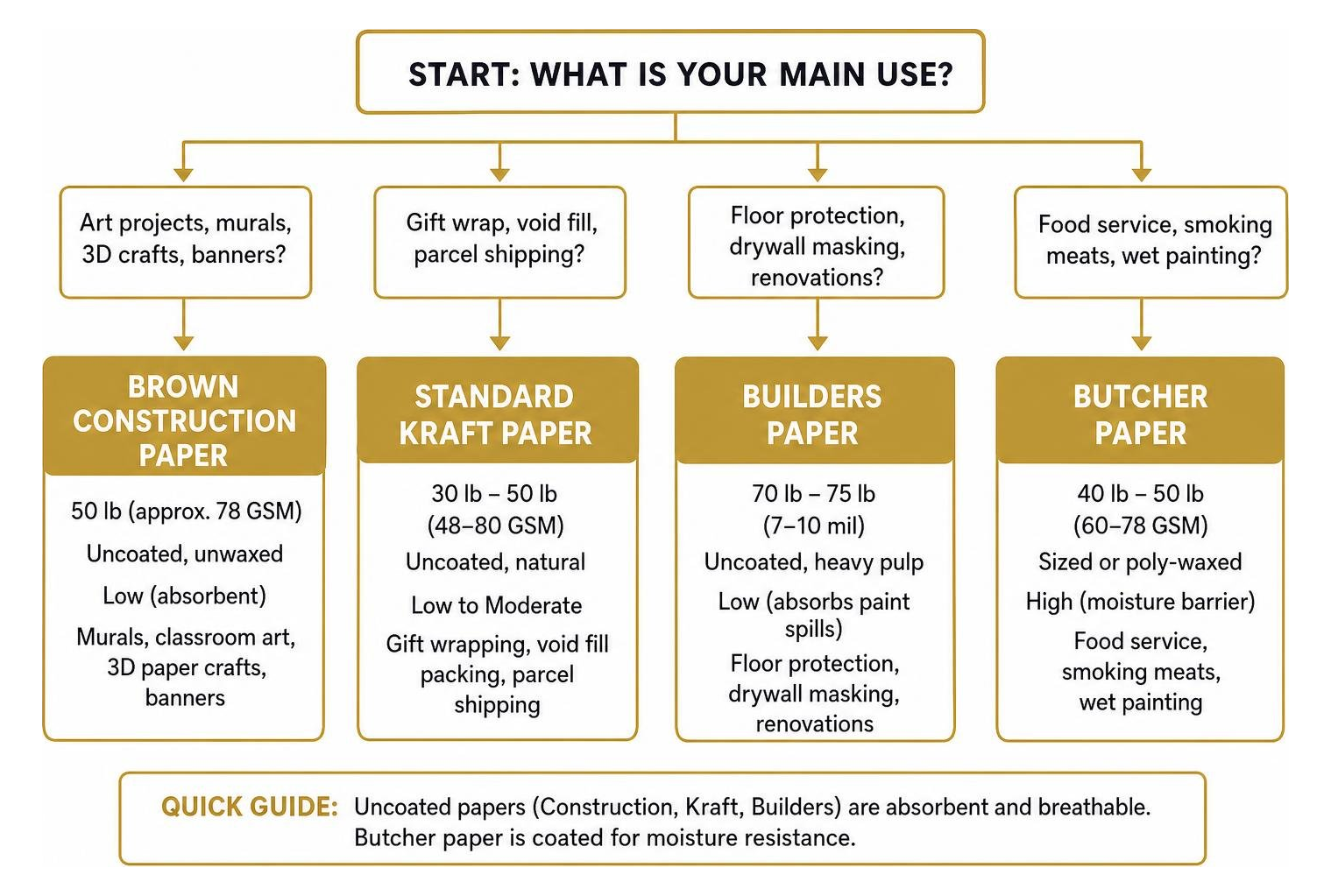
Not all brown paper rolls perform the same tasks. While people often use the terms interchangeably, differences in thickness, chemical treatments, and coatings define how each type performs under stress or moisture.
| Paper Type | Common Weight & Thickness | Surface Coating | Moisture Resistance | Best Used For |
|---|---|---|---|---|
| Brown Construction Paper | 50 lb (approx. 78 GSM) | Uncoated, unwaxed | Low (absorbent) | Murals, classroom art, 3D paper crafts, banners |
| Standard Kraft Paper | 30 lb – 50 lb (48–80 GSM) | Uncoated, natural | Low to Moderate | Gift wrapping, void fill packing, parcel shipping |
| Builders Paper | 70 lb – 75 lb (7–10 mil) | Uncoated, heavy pulp | Low (absorbs paint spills) | Floor protection, drywall masking, renovations |
| Butcher Paper | 40 lb – 50 lb (60–78 GSM) | Sized or poly-waxed | High (moisture barrier) | Food service, smoking meats, wet painting |
| Red Rosin Paper | Heavyweight sheet | Asphalt/resin treated | Moderate to High | Flooring underlayment, wind barriers |
Builders Paper and Heavy-Duty Floor Protection
Builders paper is engineered specifically for active construction and remodeling zones. Made from thick, compressed recycled pulp (typically 75 lb or 7 to 10 mil thickness), it protects hardwood floors, tile, and laminate against dirt, grit, paint drips, and dropped tools.
Unlike poly-coated drops or asphalt-saturated red rosin paper, standard builders paper remains breathable. This allows curing wood finishes and tile grouts to release moisture without trapping humidity beneath the surface. However, because it is uncoated, major liquid spills can soak through if left unattended. In heavy remodeling environments, securing the edges with low-tack painter's tape prevents tripping hazards and shifting under heavy foot traffic.
Uncoated Kraft Paper vs. Waxed Butcher Options
When choosing paper for crafting and presentation, consider the surface treatment. Standard kraft paper is left raw and porous, making it receptive to water-based inks, paints, glues, and stamps. Butcher paper, on the other hand, frequently receives internal chemical sizing or external wax/poly coatings to hold back meat juices and oils.
While butcher paper prevents paint bleed-through, its coated exterior resists standard adhesives and dry media. For artistic tasks and wrapping gifts, exploring traditional wrapping paper options or learning classic paper wrapping gift techniques ensures your paper accepts decorative tape, stamps, and ribbons cleanly.
Creative and Practical Uses for a Brown Construction Paper Roll
The beauty of a large brown paper roll lies in its versatile utility. You can keep one roll in your studio or garage and use it for artistic displays, packaging presentation, or messy renovation projects. Looking through historical newspaper archives on community art, oversized paper backdrops have long served as the foundation for community murals, interactive exhibits, and budget-friendly festival banners.
Large-Scale Art, Murals, and Classroom Displays
Teachers and camp organizers rely on wide paper rolls to transform bare walls into vibrant learning environments:
- Collaborative Murals: Roll out 15 to 20 feet of 36-inch paper across the floor for group finger painting, tempera illustrations, or chalk drawings.
- Bulletin Board Backdrops: The neutral brown hue offers an organic, earthy contrast that highlights colorful student assignments without visual clutter.
- 3D Sculptures and Origami: Mediumweight (50 lb) stock holds crisp creases and supports white school glue, making it sturdy enough for structural paper mâché frames, paper lanterns, and holiday wreaths.
Rustic Gift Wrapping and Event Table Runners
Brown paper has become a favorite design element for minimalist, eco-friendly event styling and rustic packaging aesthetics:
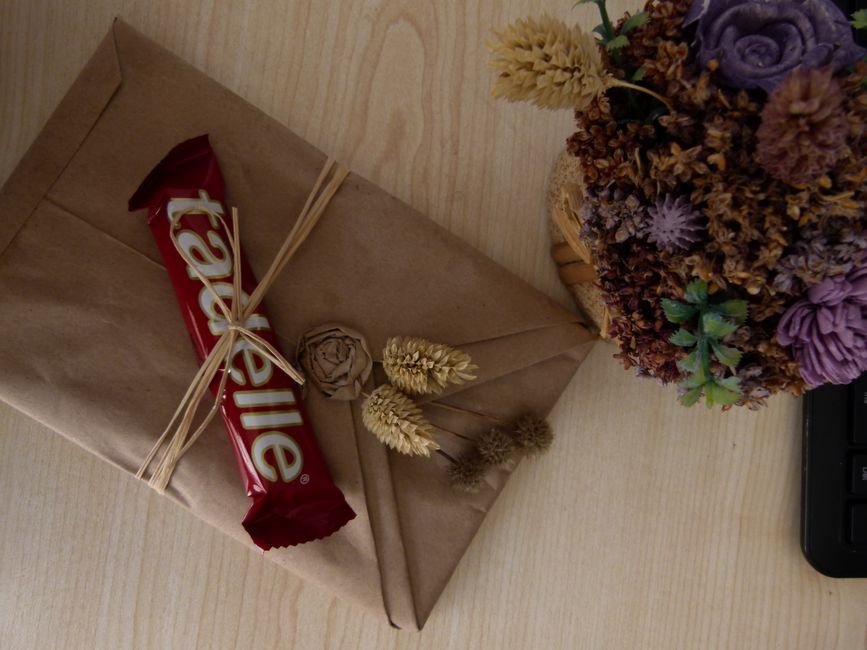
- Custom Gift Wrapping: Cut tailored sheets for boxes of any dimension. Pair your wraps with classic accents by exploring gift wrapping with string twine or decorating presents with big bows for festive charm.
- Handmade Patterns: Personalize plain surfaces using hand-carved potato stamps, calligraphy pens, or botanical foliage sprigs.
- Rustic Table Runners: Unroll a 18-inch or 24-inch strip directly down the center of banquet tables for weddings, Thanksgiving dinners, or birthday parties. Guests can doodle directly on the paper with crayons during dinner.
Temporary Surface Protection and Packing Cushioning
Beyond craft projects, continuous paper rolls serve everyday utility around the home:
- Mess-Free Craft Zones: Tape a strip across dining tables before kids start clay sculpting, slime making, or pumpkin carving.
- Moving Day Cushioning: Lightweight 30 lb stock crumbles easily into dense void fill to stabilize fragile ceramic dishware and glassware inside moving boxes.
- Furniture Scratch Defense: Wrap table legs and wooden chair rails during transport to safeguard against surface scuffs and friction marks.
How to Choose the Right Brown Construction Paper Roll for Your Project
To avoid buying the wrong paper grade, assess the demands of your project before selecting roll width, weight, and core size.
Evaluating Basis Weight and Tensile Strength
Matching weight to your specific application prevents torn paper or unnecessary bulk:
- Light-Duty Tasks (30 lb / 50 GSM): Best when flexibility is paramount. Ideal for wrapping odd-shaped packages, making book covers, and packing void fill.
- Medium-Duty Tasks (50 lb / 78 GSM): The gold standard for classrooms and art studios. Balances structural strength with easy folding, scoring, and cutting. If you are preparing luxury retail presentations, check out our practical gift box wrapping tips to see how paper weight impacts box corner definition.
- Heavy-Duty Protection (70–75 lb / 7–10 mil): Designed for impact buffering, subfloor preparation, drop cloths, and high-traffic pathways.
Safe Handling, Cutting, and Storage Practices
Handling large, heavy rolls requires a few practical safety precautions:
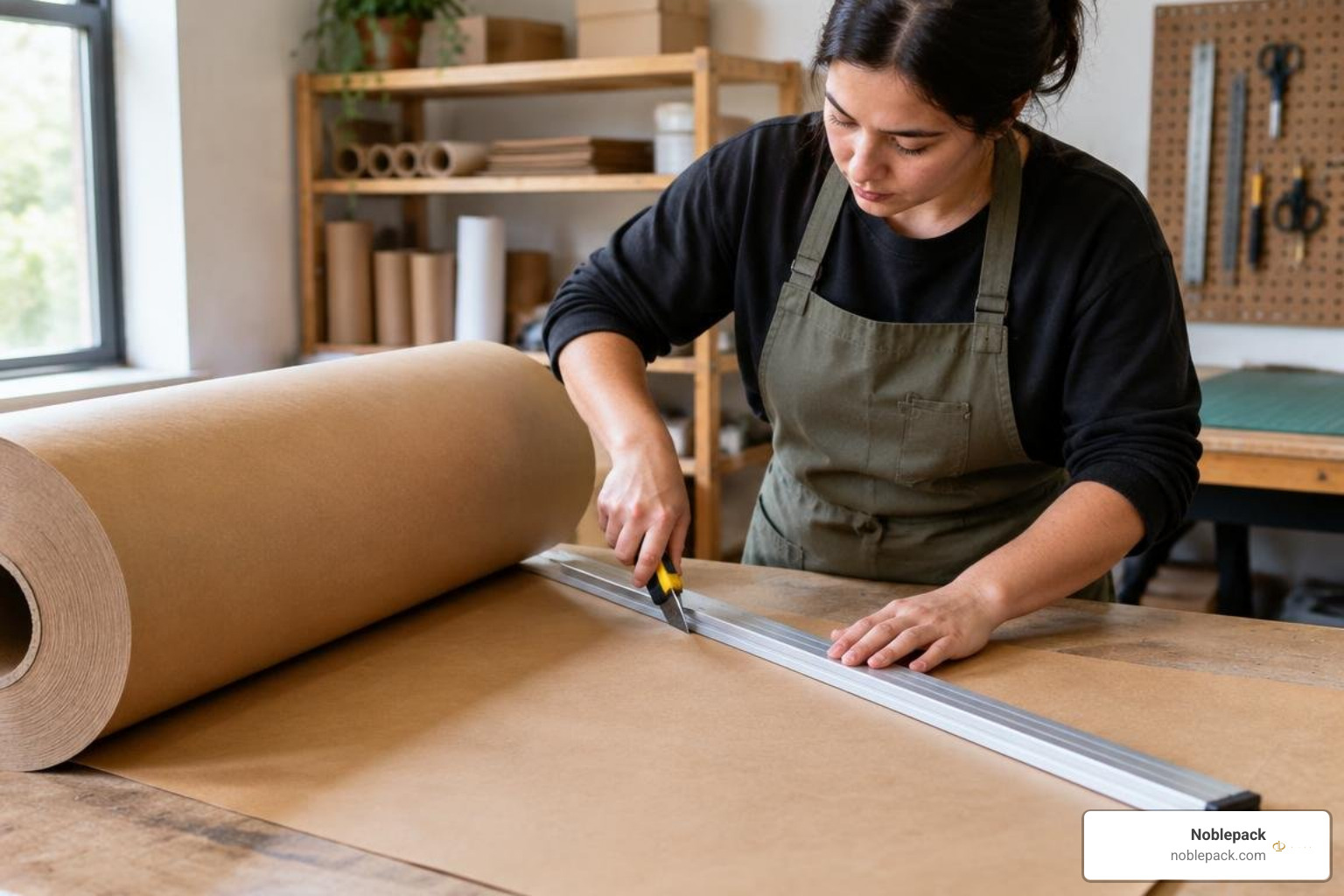
- Controlled Cutting: Avoid tearing rolls freehand, which creates jagged edges. Use an aluminum straight edge with a rotary cutter, utility blade, or sharp shears on a self-healing mat.
- Dispenser Mounting: Heavy rolls (some weighing over 20 to 50 lbs) should be mounted on a sturdy tabletop or wall-mounted paper roll rack equipped with a spring-loaded tear blade.
- Dry Storage Conditions: Keep paper rolls stored horizontally in a dry, climate-controlled space off bare concrete floors. Moisture softens cellulose fibers and can cause edge warping or mold growth over time.
Frequently Asked Questions About Paper Rolls
Can you use brown paper rolls for wet painting and glue crafts?
Yes, but with care regarding paper thickness. Mediumweight (50 lb) and heavyweight (75 lb) rolls handle tempera, acrylics, and water-based white glue reliably. However, because natural brown construction paper is porous and uncoated, excessive water or heavy watercolor washes will cause lightweight 30 lb sheets to wrinkle, buckle, and bleed through onto underlying surfaces. For heavy liquid painting, apply paint in thin layers or place a waterproof sheet underneath.
What is the difference between 30 lb and 75 lb paper rolls?
The primary difference lies in sheet thickness, stiffness, and puncture resistance. A 30 lb roll is thin, pliable, and easy to crumple, making it ideal for wrapping small parcels and filling moving boxes. A 75 lb roll (often sold as builders paper) is over twice as dense (7 to 10 mil thick), rigid, and highly resistant to abrasions, making it suited for heavy-duty floor and surface protection rather than intricate folding.
Is recycled brown craft paper biodegradable and compostable?
Yes. Uncoated, unbleached recycled brown paper breaks down naturally. It contains organic plant cellulose fibers that decompose in backyard compost bins or municipal facilities within several weeks, provided it has not been treated with synthetic dyes, glossy plastic coatings, or petroleum-based adhesives. You can even shred scrap pieces to use as carbon-rich brown mulch or as a weed barrier beneath garden soil beds.
Conclusion
A continuous brown paper roll remains one of the most versatile, budget-friendly supplies any crafter, educator, shipper, or homeowner can own. Whether you are laying down floor protection for a weekend remodel, staging an interactive art wall for kids, or packaging holiday parcels with rustic elegance, matching paper weight to your project ensures clean, professional results at minimal cost per square foot.
At Noblepack, we appreciate the power of thoughtful presentation and reliable protective materials. While you stock up on bulk craft paper for large-scale creative endeavors, explore our curated packaging collections, jewelry gift boxes, and mailers to find the perfect finishing touch for your cherished boutique items.